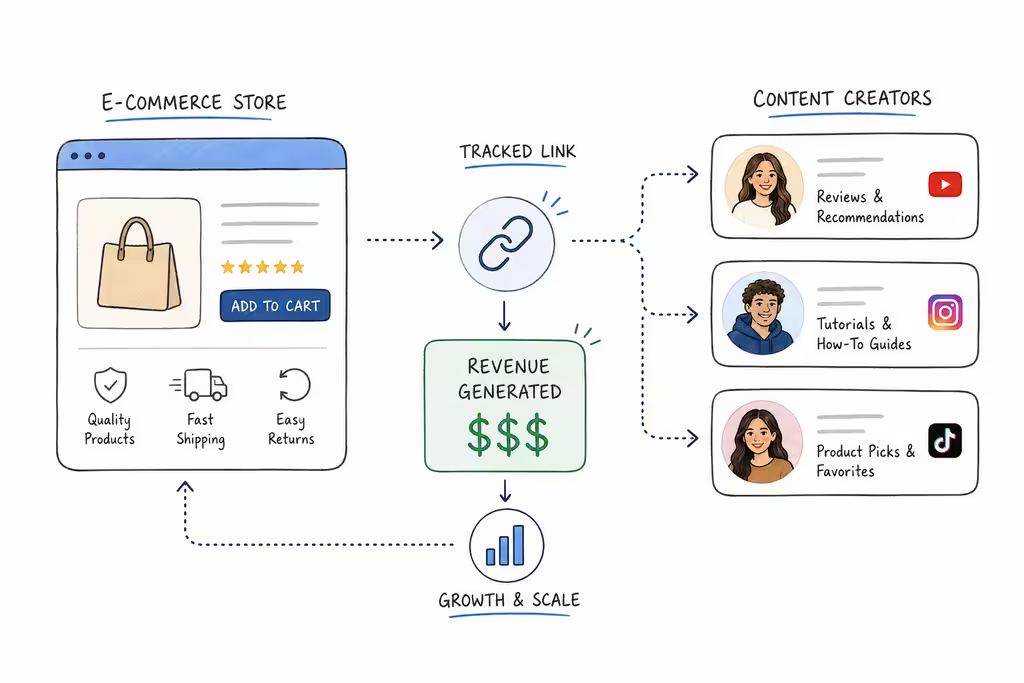

Affiliate marketing is now one of the largest performance channels in digital marketing, and the affiliate marketing statistics from 2026 confirm what has been building for several years: the channel is getting bigger, more measurable, and structurally different from how it worked even three years ago.
This blog post pulls together the most current affiliate marketing stats available across market size, ROI, publisher types, commission structures, and vertical performance. Where figures come from different methodologies or research bodies, that is noted directly.
Every affiliate marketing statistic here links to its source.

Table of Contents
Overview
| Metric | 2026 Figure |
|---|---|
| US affiliate marketing spend | $13.81 billion (EMARKETER, Sept 2025 forecast) |
| US affiliate-driven ecommerce sales | $241.03 billion |
| Global affiliate spend | $19.4 billion (Forrester 2026 Affiliate Marketing Forecast) |
| Global affiliate platform market | $23.84 billion (Grand View Research, platform infrastructure only) |
| Average ROI per $1 spent | $12 to $15 (Performance Marketing Association / Rakuten Advertising / Awin) |
| Brands running an affiliate program | 81% |
| Publishers participating in affiliate marketing programs | 84% |
| Creator affiliate revenue share on Awin | 19.5% of network revenue (up from 15.9% YoY) |
| Loyalty and rewards publisher share | 55% of all affiliate transactions H1 2026 (up from 48%) |
| Average affiliate marketer annual earnings | $51,639 |
| Active global affiliate publishers | approximately 3.2 million |
Affiliate Marketing Industry Market Size
US affiliate marketing spending has grown 49.8% since 2021, according to the Performance Marketing Association. EMARKETER’s September 2025 forecast projects $13.81 billion in US affiliate marketing spending for 2026, up 11.3% year-over-year, in a year when overall US e-commerce is growing at 6.7%.
Affiliate marketing is growing at nearly double the pace of the underlying e-commerce channel it runs through.
The affiliate marketing sales figure is considerably larger than the affiliate spending number. EMARKETER puts affiliate-driven US e-commerce sales at $241.03 billion for 2026. Globally, Forrester’s 2026 Affiliate Marketing Forecast estimates $19.4 billion in worldwide affiliate marketing spending, up from $17.1 billion in 2025. North America leads with 42% of global affiliate spend.
There is a second way to measure the global affiliate marketing industry: platform infrastructure rather than advertiser spend. Grand View Research estimates the affiliate marketing platform market at $23.84 billion in 2026.
Retail accounts for around 44% of global affiliate marketing revenue. Fashion is the most represented single vertical, making up 23% of all affiliate marketing programs. Health and wellness industries capture 11.1% of affiliate marketing campaigns, with strong performance from supplements and personal care.

ROI and Affiliate Marketing Success
The Performance Marketing Association’s 2025 Industry Study puts average affiliate marketing ROI at $12 for every $1 spent. Rakuten Advertising and Awin data extends this range to $12 to $15 for affiliate marketers across most verticals. The full range across PMA data is $11 to $21 per dollar spent depending on category.
74% of brands generate between 11% and 30% of their total revenue from affiliate partnerships. 65% of retailers report that their affiliate marketing programs contribute up to 20% of annual revenue. 71% of brands find affiliate marketing cost-effective compared to other digital marketing channels as part of their overall marketing strategy.
45% of CMOs rank affiliate marketing among their top three channels for measurable ROI in their overall marketing strategy. Marketing experts and industry reports consistently confirm that affiliate marketing strategies deliver stronger cost-per-acquisition than most paid media channels for e-commerce and SaaS business owners.
For context: the average ROI on paid search in digital marketing is typically cited at $2 to $3 per dollar spent. The affiliate marketing figure is significant, though the two channels serve different points in the customer journey and should not be read as direct substitutes.
Consumer Behavior and Affiliate Marketing
Consumer behavior data helps explain why affiliate marketing works as well as it does for e-commerce sales.
74% of online shoppers visit non-retail sites before making a purchase decision. This is the moment where affiliate marketing programs operate: review sites, comparison content, creator recommendations, and newsletter affiliate links all intercept consumer behavior before the shopper reaches the brand’s own website.
83% of consumers confirm that coupons influence their purchase decisions, and 50% of shoppers use digital coupons when shopping in-store. These marketing statistics explain the continued dominance of coupon and cashback publishers as the top affiliate traffic source by transaction volume.
39% of shoppers buy products faster when they have a coupon, which gives the coupon affiliate traffic source a measurable impact on purchase velocity as well as conversion rate.
Nearly half of consumers say creator content influenced their purchases, which is the consumer behavior data behind the creator affiliate marketing trend covered in more detail below.
The Publisher Mix Is Changing
This is probably the most consequential structural shift in affiliate marketing right now, and the affiliate marketing stats show it clearly.
Loyalty and rewards affiliate publishers, coupon sites, cashback platforms, and similar closed the first half of 2026 responsible for 55% of all affiliate transactions, up from 48% a year earlier. They remain the dominant affiliate traffic source by transaction volume.
But the fastest-growing publisher category is content creators. On Awin, the creator affiliate revenue share rose from 15.9% to 19.5% year-over-year. Impact’s 2026 Partnership Benchmark Report shows creator affiliates generating 3.7x more revenue per follower than traditional display affiliates.
Creators with 10,000 to 100,000 followers generate $0.42 in attributable affiliate marketing revenue per follower per month, compared to $0.11 for traditional content/display affiliate publishers on a comparable audience-equivalent basis.
Creator affiliate marketing revenue grew 47% year-over-year in 2026 and now accounts for 24% of total affiliate marketing spending, up from 11% in 2022. 59% of brands plan to allocate 25% of their affiliate budgets to creators in the next 12 months, reflecting a deliberate shift in affiliate marketing strategy rather than organic drift.
44% of B2C marketers achieve their best performance results through micro-influencer partnerships compared to other influencer marketing or affiliate marketing campaigns. For affiliate marketing success in consumer categories, micro-influencer affiliate partnerships consistently outperform both macro influencer campaigns and traditional affiliate publisher relationships on cost-per-acquisition.
TikTok Shop affiliate marketing revenue alone grew 89% year-over-year to an estimated $2.1 billion in attributed sales. YouTube Shopping affiliates generated roughly $1.6 billion in affiliate sales. Combined, social commerce affiliate marketing across TikTok, YouTube, and Instagram hit approximately $4.8 billion in 2026 and is projected to reach $7.4 billion in 2027.
61% of affiliate marketers who are content creators now earn from affiliate marketing programs. On average, affiliate marketing accounts for 21.2% of their total income.
For affiliate marketing strategies involving creators, the long-term relationship data matters more than the headline growth figure: by the eighth brand integration with the same YouTube creator, affiliate link click-through rates reach 1.8x the rate of the first integration. Long-term influencer partnerships outperform one-off influencer campaigns on affiliate marketing conversion data.
See our breakdown of how to find micro influencers for your brand and why you need affiliate influencer marketing for your business for more on how to structure these affiliate marketing programs.
Commission Rates by Vertical
The affiliate marketing statistics below aggregate median rates across Awin, Impact, ShareASale, and CJ Affiliate, with PartnerStack data used for B2B SaaS affiliate marketing programs.
| Vertical | Median Commission | Cookie Window | Click-to-Sale Conversion |
|---|---|---|---|
| Ecommerce (general) | 8.4% | 7 to 14 days | 1.2% |
| Fashion and apparel | 5 to 15% | 1 to 7 days | 3.8% |
| Beauty and cosmetics | 10 to 30% | 14 to 30 days | 5.4% |
| Health and wellness | 15 to 40% | 30 days | 2.8% |
| SaaS (recurring) | 22.5% of first-year revenue | 30 to 90 days | 1.5 to 2% |
| Finance (lead gen) | $52 per qualified lead | 30 days | varies |
| B2B services | $187 per qualified lead | 30 to 60 days | 0.8 to 1.5% |
| Education and eLearning | 15 to 30% | 30 to 60 days | 8.2% |
| Travel | 4.2% | 7 to 30 days | 2.1% |
Education and eLearning has the highest conversion rate of any tracked affiliate marketing vertical at 8.2%. The SaaS industry offers the highest affiliate marketing commission rates, with 71% of SaaS affiliate marketing programs paying recurring commissions as of 2026 PartnerStack data. The typical structure is 20 to 30% in the first 12 months, stepping down to 10 to 15% for months 13 to 24.
Affiliate marketers who lean into high-ticket or high-retention subscription affiliate products are reporting more predictable affiliate marketing revenue streams than those relying on one-time commission affiliate programs.
SaaS affiliate marketing revenue grew 34% year-over-year in 2026 versus 11% for e-commerce affiliate marketing. It is projected to cross $1.8 billion in 2027.
Travel is one of the most attractive affiliate marketing verticals despite its relatively low commission rate, because the high average booking values generate strong absolute affiliate sales even at 4.2%.
For more on structuring commissions competitively, see our guide on affiliate incentives.
What the Average Affiliate Marketer Earns
The average affiliate marketer earns $51,639 annually, or roughly $8,038 per month at the mean. Most affiliate marketers do not earn at that level, and the earnings distribution is heavily skewed toward the top.
| Monthly Earnings | Share of Affiliate Marketers |
|---|---|
| $0 to $100 | 8.4% |
| $100 to $500 | 23.4% |
| $500 to $1,000 | 13.1% |
| $1,000 to $5,000 | 28% |
| $5,000 to $10,000 | 3.7% |
| $10,000+ | 23.4% |
Source: affiliatestatistics.marketing
Most affiliate marketers, 57.5%, earn between $100 and $5,000 per month. The 23.4% earning over $10,000 per month are typically running affiliate marketing as a full affiliate business with multiple affiliate programs, diversified affiliate traffic sources, and significant content infrastructure.
The top 10% of affiliates, those generating $5 million or more in annual affiliate marketing revenue, account for 78% of total affiliate marketing channel spend. This has direct implications for how brands should prioritize affiliate marketing strategy: the bottom half of an affiliate program roster is unlikely to move program economics meaningfully.
35% of affiliate marketers report earning at least $20,000 per year from affiliate marketing. Affiliate marketers with more than three years of experience earn 9.45 times more than those just starting out. This is partly a product of compound audience and content growth, and partly the affiliate marketing strategy shift that happens when most affiliate marketers stop chasing volume and start focusing on niche authority and high-commission affiliate products.
For a realistic timeline of what affiliate marketers can expect, see our guide on how long affiliate marketing takes to work.
Average Affiliate Marketer Earnings by Niche
| Niche | Average Monthly Income |
|---|---|
| Education and eLearning | $15,551 |
| Beauty and skincare | $12,475 |
| Finance | $9,296 |
| Technology and SaaS | $7,418 |
| Arts and crafts | $1,041 |
| Pets | $920 |
The spread between niches is significant. The difference in average monthly affiliate marketer earnings between the top niche (education, $15,551) and the bottom tracked niche (pets, $920) is roughly 17x.
For affiliate marketers building a new affiliate business, niche selection is the single largest variable in earning potential, ahead of affiliate traffic volume or content quality. Marketing experts who study affiliate marketing success consistently point to niche specificity and audience trust as the two determinants that separate most affiliate marketers who earn well from those who do not.
Attribution, Affiliate Traffic, and Mobile
94% of brands are now adopting alternative attribution models to move beyond last-click attribution in their affiliate marketing programs. This is one of the most significant shifts in how the affiliate marketing industry measures affiliate marketing success.
52% of affiliate traffic now originates from mobile devices. For affiliate marketing programs that have not been optimized for mobile, this means a large share of affiliate traffic is converting at a lower rate than desktop affiliate traffic, simply due to poor mobile experience.
The average time-to-conversion in affiliate marketing is 8.3 days from affiliate link click to purchase, compared to 2.1 days for paid search. This attribution gap has direct implications for affiliate marketing strategies: cookie windows shorter than 14 days will miss a material portion of assisted affiliate sales in most e-commerce categories.
Video content with affiliate links converts at 3.1%, 47% higher than text-only affiliate link content, according to Impact’s Content Performance Report. For affiliate marketers deciding between content formats, this is one of the most reliable affiliate marketing stats available.
Amazon Associates remains the most widely deployed affiliate network, tracked on 40,197 sites as of August 2026, representing 45.42% of tracked affiliate network usage in Datanyze data. For most e-commerce affiliate marketers, Amazon Associates is still the entry point into affiliate marketing programs, though its commission rates are lower than most vertical-specific affiliate programs.
Commission payments within affiliate marketing spending shifted further toward performance-based structures in the first half of 2026. Commissions as a share of total affiliate marketing spending rose to 90%, up from 86% across 2025. Non-action payments like fixed placement fees fell 19% in the same period.
97% of brands now utilize AI in affiliate marketing operations, primarily for affiliate fraud detection, affiliate publisher discovery, and affiliate marketing campaign optimization. For most affiliate marketing programs, AI tools have moved from experimental to standard infrastructure in less than two years.
Affiliate fraud remains a cost in the affiliate marketing industry. Around 17 to 18% of affiliate traffic is flagged as invalid or fraudulent, costing the affiliate marketing industry an estimated $3.4 to $3.5 billion annually. For brands building affiliate marketing strategies, this makes fraud detection infrastructure a necessity rather than an optional addition.
B2B Affiliate Marketing Statistics
B2B affiliate marketing has grown significantly. 46% of B2B companies now run affiliate marketing programs, up from 32% in 2020. B2B affiliate marketing programs average conversion rates of 0.8% to 1.5%, lower than consumer categories, but the average deal value justifies the difference.
SaaS companies allocate 15 to 20% of their marketing budget to affiliate marketing commissions. Impact.com is currently the fastest-growing affiliate marketing platform for SaaS and tech affiliate marketing programs. Search interest for B2B affiliate marketing strategies has grown consistently on Google Trends since 2022, reflecting a shift from B2B affiliate marketing as a niche experiment to a mainstream marketing strategy.
For more on affiliate marketing trends in B2B, see our guide on affiliate marketing trends 2026.
Affiliate Marketing Industry Adoption
81% of brands worldwide run affiliate marketing programs. 84% of publishers participate in affiliate marketing programs as a monetization method. Active global affiliate publishers across all affiliate marketing programs reached approximately 3.2 million in 2026.
Fashion has the highest vertical concentration at 23% of all affiliate marketing programs. In retail and fashion, affiliate marketing programs drive over 25% of total online sales. The technology and software sector has over 70% adoption of affiliate marketing programs, with SaaS companies reporting 15 to 30% of online sales from affiliate marketers.
Beauty and cosmetics affiliate marketing adoption has grown 45% since 2020, with affiliates now driving 18% of industry sales. 61% of home and lifestyle brands use affiliate marketing partnerships for market expansion.
41% of marketers plan to expand their affiliate marketing programs into new verticals by the end of 2026.
What These Affiliate Marketing Statistics Mean for Brands
A few things stand out from these affiliate marketing stats.
The shift toward commission-only affiliate marketing spending, now 90% of brand affiliate spend, reflects better measurement infrastructure across the affiliate marketing industry. The affiliate marketing programs that retain quality affiliate publishers pair competitive base commission rates with bonus structures. See our guide on affiliate incentives for how to build an effective compensation model.
The creator affiliate marketing growth rate, 47% year-over-year, is the most structurally significant affiliate marketing trend. But the long-term relationship affiliate marketing statistics matter more than the headline: affiliate marketing conversions compound across repeated creator touchpoints. One-off influencer campaigns underperform what affiliate marketing is capable of when approached as a long-term affiliate strategy.
The attribution data is the most actionable finding for any business owner managing affiliate marketing programs today. At 8.3 days average time-to-conversion, a 7-day affiliate link cookie misses a meaningful slice of the affiliate marketing funnel. And with 94% of brands adopting alternative attribution models, the affiliate marketing industry is moving away from last-click attribution.
Brands that have not updated their affiliate marketing strategy to reflect this are misreading which affiliate marketing programs are actually generating online sales.
For more on how to build, structure, and measure affiliate marketing programs that reflect these realities, see our guides on how to set up an influencer affiliate program, how to find affiliates for your brand, affiliate contract compliance, and what affiliate marketing reports to ask your agency for.
Frequently Asked Questions
How big is the affiliate marketing industry in 2026?
Depending on what is being measured, affiliate marketing industry statistics range from $13.81 billion in US affiliate marketing spending (EMARKETER) to $19.4 billion in global affiliate marketing spend (Forrester) to $23.84 billion for the affiliate platform infrastructure market (Grand View Research). These general affiliate marketing statistics are not contradictory. The most commonly cited figure for total global affiliate marketing industry value is approximately $19 to $20 billion in 2026.
What is the average ROI for affiliate marketing?
The Performance Marketing Association puts the average at $12 for every $1 spent, across affiliate marketing programs included in its 2025 Industry Study. Rakuten Advertising and Awin data extends this to a $12 to $15 range across most affiliate marketers. The range by vertical is $11 to $21. This is an average across affiliate marketing programs, not a guarantee, and affiliate marketing success is heavily influenced by commission structure, publisher mix, attribution methodology, and how incremental revenue is measured. For more on getting the measurement right, see our post on what affiliate marketing reports to ask your agency for.
What are the best affiliate marketing niches in 2026?
By average monthly affiliate marketer earnings, education and eLearning leads at $15,551, followed by beauty and skincare at $12,475, finance at $9,296, and technology and SaaS at $7,418. By commission rate, the SaaS industry offers the clearest path for affiliate marketers who want predictable revenue streams, at 20 to 70% with recurring structures. By conversion rate, education and eLearning converts at 8.2%, the highest of any tracked affiliate marketing vertical. Health and wellness industries are also growing quickly as an affiliate marketing niche.
What is the average affiliate marketer income?
The average affiliate marketer earns $51,639 annually. However, most affiliate marketers earn less than that: 28% of affiliate marketers earn $1,000 to $5,000 per month, while 23.4% earn over $10,000 per month. The affiliate marketing statistics on experience are worth noting: affiliate marketers with more than three years in affiliate marketing earn 9.45x more than those just starting out. The top 10% of affiliate marketers account for 78% of total affiliate marketing channel spend. Most affiliate marketers who earn well have built a genuine affiliate business with niche authority, organic traffic, and diversified affiliate products across multiple affiliate marketing programs.
Is affiliate marketing still growing?
Yes. US affiliate marketing spending is growing at 11.3% year-over-year in 2026, nearly double the rate of the underlying e-commerce market. Creator affiliate marketing revenue grew 47% year-over-year. SaaS affiliate marketing revenue grew 34%. Search interest in affiliate marketing strategies has grown consistently according to Google Trends data. The overall affiliate marketing industry market is projected to reach $38.35 billion by 2030 at a 15.44% CAGR. These affiliate marketing trends show no sign of reversing.
For further reading on building affiliate marketing programs, see our guides on how to set up an influencer affiliate program, affiliate marketing trends 2026, is affiliate marketing legit, how long affiliate marketing takes to work, and the best affiliate marketing solution for ecommerce.