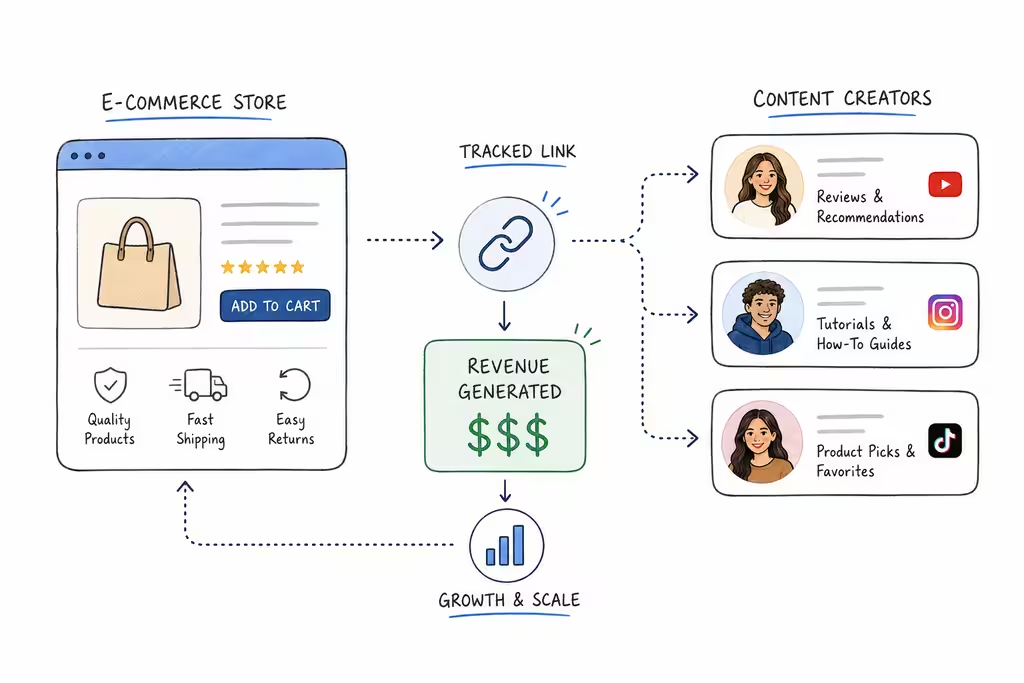

Many businesses launching their affiliate programs find themselves struggling to ensure affiliate partners stay compliant with all the terms of their affiliate agreements. This is a common challenge in affiliate compliance management — and one that can create serious consequences for your business, including financial penalties, regulatory scrutiny, and long-term damage to your brand’s reputation.
Affiliate contract compliance refers to the full set of legal requirements, disclosure rules, and honest marketing practices your affiliate marketing program must uphold to protect consumers, maintain consumer trust, and avoid legal action. Whether you’re managing a small affiliate network or scaling a complex affiliate marketing campaign across multiple markets, keeping affiliate activity aligned with your program’s terms is non-negotiable.
This guide covers why affiliate marketing compliance matters, the most common violations to watch for, and the best tactics for affiliate monitoring and affiliate compliance management.
Table of Contents
Why Is Affiliate Marketing Compliance Important?
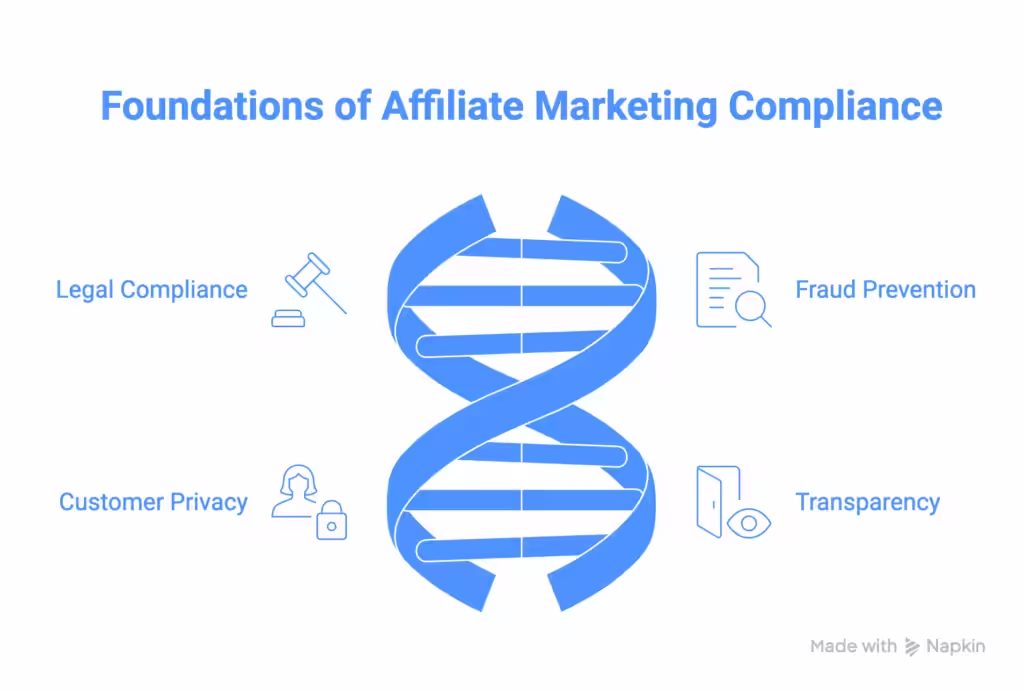
Keeping Up with Relevant Laws and Regulations
Affiliate marketing activities are subject to local and international laws and regulations governing advertising, data privacy, and consumer protection. If your affiliate partners fail to follow these marketing guidelines while promoting your brand, you may be held responsible and face regulatory penalties or other sanctions. Non compliance from a single affiliate marketer can trigger legal consequences that affect your entire program.
Your affiliate compliance policy should accurately reflect key legal requirements in your company’s home jurisdiction, as well as those applying to your affiliate partners and the markets you wish to target.
Some of the most important advertising regulations and regulatory requirements to stay aware of when creating and enforcing your affiliate agreements include:
- For the USA: Federal Trade Commission (FTC) guidelines, the California Consumer Privacy Act (CCPA), and the California Privacy Rights Act (CPRA)
- For the European Union: General Data Protection Regulation (GDPR), which governs data privacy compliance and explicit consent for data collection across EU member states
- For the UK: Advertising Standards Authority (ASA) CAP Code, which covers financial promotions and advertising practices across all marketing channels
- For Australia: Australian Consumer Law (ACL)
Failure to align your affiliate marketing program with these legal requirements exposes your business to financial penalties, legal action, and reputational damage that can undermine years of business growth.
Preventing Fraud
Affiliate fraud is one of the most significant compliance risks in affiliate marketing. Unethical affiliates may use deceptive practices such as brand impersonation, cookie stuffing, or generating fake clicks through prohibited promotional methods to earn undeserved commissions — either at your expense or at the expense of your customers.
Effective affiliate compliance management and continuous monitoring can greatly reduce affiliate fraud, protect your marketing budget, and preserve the integrity of your affiliate campaigns. Without proper affiliate policy monitoring in place, fraudulent affiliate activity can go undetected for months, causing substantial financial loss and damaging your affiliate’s reputation alongside your own brand’s reputation.
Ensuring Customer Privacy
Implementing and consistently applying policies designed to protect customer data and prevent its abuse not only helps you maintain compliance with privacy laws — including GDPR and the California Consumer Privacy Act — but also safeguards data security and strengthens consumer trust. Affiliates who mishandle customer data expose both themselves and your brand to regulatory scrutiny and legal consequences under data privacy regulations that apply across most major markets.
Data privacy compliance is an area where affiliate managers must be particularly vigilant, as affiliate activity often touches customer data through tracking links, affiliate link cookies, and referral programs that collect user information across affiliate networks and affiliate platforms.
Upholding Affiliate Transparency and Honest Marketing Practices
Transparency in affiliate marketing — including clearly disclosing the nature of the affiliate relationship with your brand, avoiding misleading claims, and providing truthful information about promoted products and services — is required by disclosure rules in most major jurisdictions. The Federal Trade Commission in the US and the ASA in the UK both require affiliate marketing disclosures on all affiliate content, from blog posts to social media posts.
Affiliate marketing disclosures are not optional. Beyond legal compliance, honest marketing practices and transparent affiliate campaigns build consumer trust and protect your brand’s reputation over the long term. Affiliate marketers who make misleading claims or fail to disclose their affiliate partnerships risk damaging both the affiliate’s reputation and your brand’s standing with existing customers and potential customers alike.
What Are the Most Common Affiliate Marketing Agreement Violations to Stay Mindful of?
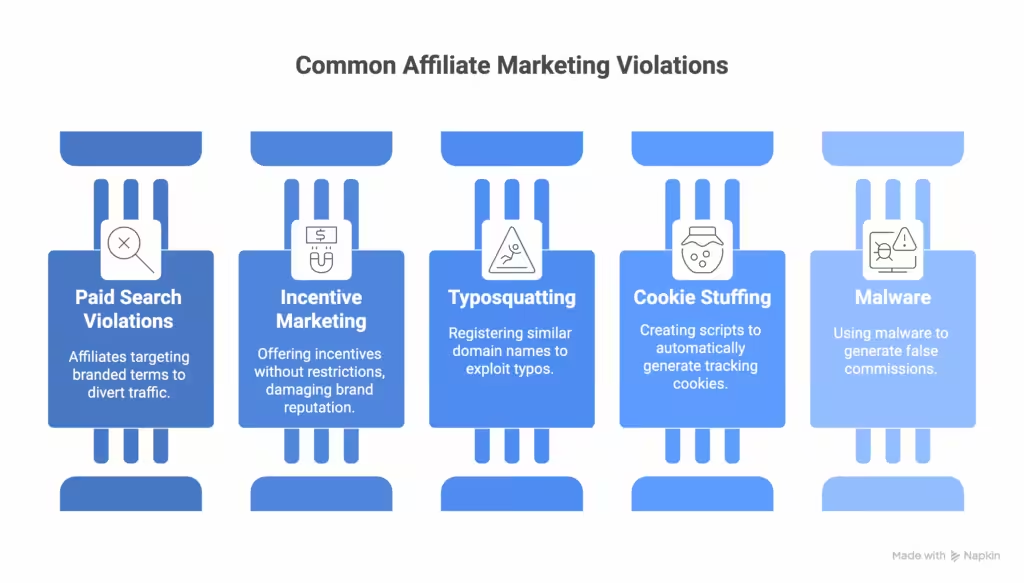
Most affiliate programs explicitly prohibit certain behaviors that affiliate marketers may use to gain an unfair advantage. These prohibited practices include:
Paid search policy violations. Some affiliate marketers intentionally target their partner company’s branded search terms to divert traffic and claim extra commissions. This is one of the most common affiliate marketing compliance violations and one of the hardest to catch without proper affiliate monitoring tools.
Incentive marketing. While offering incentives to take specific actions can be an effective marketing tactic, letting affiliate partners use it without restriction may violate your affiliate agreements and damage your brand’s reputation if not properly disclosed.
Typosquatting. Unethical affiliates may register domain names that are nearly identical to your brand’s, usually incorporating a common typo. The intent is to capture traffic from users who mistype the URL, placing tracking cookies before redirecting them to the correct site — allowing affiliates to claim referrals they did not genuinely earn.
Cookie stuffing and forced clicks. A common deceptive practice is creating scripts that automatically generate tracking cookies or load affiliate links without genuine user interaction, allowing affiliates to claim undeserved credit for referrals. This constitutes affiliate fraud and is a clear breach of most affiliate agreements.
Misleading claims and deceptive advertising. Affiliate content that makes unsubstantiated claims about your products or misrepresents the nature of an affiliate relationship violates both your affiliate agreements and the disclosure requirements set out by the Federal Trade Commission and other advertising regulators. Misleading claims are one of the most serious compliance risks in affiliate marketing, as they can attract regulatory scrutiny and class action risk.
Malware. Some unethical affiliates use malware to install programs that generate false commissions, compromising data security and customer data in the process. This is both a breach of affiliate agreements and a violation of data privacy compliance obligations.
Intellectual property rights violations. Some affiliate marketers use unauthorized brand assets, modified logos, or copyrighted materials in their affiliate content without permission, creating legal protection issues for your brand and potential liability under intellectual property rights law.
The Best Tactics for Affiliate Contract Compliance Management

1. Build a Strong, Comprehensive Affiliate Policy
Define the exact terms and conditions of your affiliate marketing program in clear, plain language — leaving no room for ambiguity. Cover all bases: marketing activities that are permitted, prohibited practices, disclosure rules, advertising regulations you expect affiliates to follow, and the legal requirements that apply to your key markets.
Provide concrete examples of how affiliate partners should handle specific situations, such as the proper way to formulate affiliate marketing disclosures and how to handle financial promotions.
Also define the consequences for non compliance clearly: reduced commissions, suspension, or full termination. Affiliate managers who enforce these consequences consistently signal that your affiliate compliance program is serious — which deters unethical affiliates before violations occur. For a deeper look at what to include in your affiliate agreements, see our full affiliate marketing compliance checklist.
2. Create an Affiliate Training Program
Many affiliate marketers with no prior experience may struggle to navigate compliance rules and cause breaches through ignorance rather than malicious intent. Educating affiliates from the start is one of the most cost-effective ways to maintain compliance across your affiliate network.
Implementing a training program that includes a resource library, webinars, and a communication channel for knowledge sharing helps your affiliate partners learn how to maintain compliance, understand your marketing guidelines, and align their affiliate activity with your brand culture and voice.
Making affiliate training a mandatory step of the onboarding process ensures that every affiliate marketer who joins your program understands the disclosure requirements, advertising practices, and prohibited promotional methods before they publish any affiliate content.
3. Conduct Regular Affiliate Audits
Regular affiliate audits are necessary to monitor your affiliates’ performance, tracking affiliate content and disclosures, and identifying compliance risks before they become legal consequences. Audit your affiliate campaigns for misleading claims, missing affiliate marketing disclosures, brand impersonation, and violations of your advertising regulations.
In addition to automated affiliate monitoring tools, hold manual monitoring reviews each quarter to ensure nothing has slipped through. Keeping detailed records of your audits and any corrective actions taken provides legal protection and demonstrates due diligence if your affiliate marketing program ever faces regulatory scrutiny.
4. Ensure Accurate Affiliate Disclosures
Affiliate marketing disclosures are one of the most critical parts of any compliance program. Disclosure rules in most major markets require affiliate content to clearly inform audiences about the affiliate relationship and any commercial interest in the products being promoted.
The FTC guidelines in the US and equivalent disclosure requirements in the European Union and UK are explicit on this point: affiliate marketing disclosures must be clear, prominent, and placed where consumers will see them before engaging with affiliate links.
To ensure accuracy and make compliance easier for affiliate partners, provide pre-approved disclosure templates that affiliate marketers can use directly. This removes ambiguity, reduces the risk of honest mistakes, and makes it far easier to enforce compliance across your affiliate network.
5. Use Affiliate Monitoring and Fraud Detection Tools
Affiliate compliance management at scale requires the right tools. Without proper affiliate monitoring in place, affiliate fraud, misleading claims, and disclosure rule violations can go undetected — particularly as your affiliate programs grow across multiple affiliate networks and affiliate platforms.
Most general affiliate management platforms, such as UpPromote, offer monitoring tools that help you manage your affiliate partners and track their marketing activities. For the most comprehensive affiliate compliance management, we also recommend using specialized tools for brand monitoring and affiliate fraud detection. BrandVerity is one of the leading options — or if you’re evaluating alternatives, see our breakdown of BrandVerity alternatives for affiliate policy monitoring to find the right tool for your program’s scale and compliance needs.
Try UpPromote with 20% discount
Get Our Help with Building Your Affiliate Program!
Ensuring affiliate compliance in affiliate marketing can be challenging, especially if you’re new to managing an affiliate marketing program and building the whole system from scratch. Affiliate compliance management is a necessary and ongoing part of any affiliate marketing campaign — and outsourcing it to a trusted specialist agency can save you significant time, reduce compliance risks, and protect your brand’s reputation.
At Vivian Agency, we have helped several businesses handle their affiliate programs from inception to results, with affiliate compliance built into every stage of the process — from writing comprehensive affiliate agreements and training materials to affiliate monitoring, affiliate fraud detection, and ongoing affiliate policy monitoring.
Want a success story of your own? Contact us and tell us what you need, and we’ll get right back to you. Or book a call for a direct conversation about your affiliate marketing program.
Frequently Asked Questions
What is affiliate contract compliance and why does it matter?
Affiliate contract compliance refers to the process of ensuring that all affiliate partners follow the terms set out in your affiliate agreements, including disclosure rules, advertising regulations, prohibited promotional methods, and data privacy compliance obligations.
It matters because non compliance from even a single affiliate marketer can expose your business to financial penalties, regulatory scrutiny, and legal action under laws like the FTC guidelines, GDPR, and the California Consumer Privacy Act. Beyond the legal consequences, poor affiliate compliance management damages consumer trust, weakens your brand’s reputation, and undermines the marketing efforts of the affiliates who are operating honestly within your program.
How do I know if my affiliates are violating their agreements?
The most reliable way to identify violations is through a combination of affiliate monitoring tools and regular manual audits. Automated tools like BrandVerity scan paid search results, websites, and social platforms for trademark bidding, unauthorized brand asset usage, and misleading claims in affiliate content.
Regular manual reviews of affiliate activity, particularly the affiliate content your top partners are publishing, catch disclosure rule violations and deceptive practices that automated tools can miss. Keeping detailed records of every audit and corrective action taken also gives you legal protection if a violation escalates into a formal complaint or regulatory inquiry. For a full breakdown of what to look for, see our affiliate marketing compliance checklist.
What should I do when an affiliate violates their contract?
Act quickly and document everything. As soon as a violation is identified, contact the affiliate marketer directly, explain the specific breach, and give them a defined timeframe to correct it — whether that means updating affiliate marketing disclosures, removing misleading claims, or stopping a prohibited promotional method. If the violation is corrected promptly, document the resolution and update your affiliate agreements or training materials to prevent the same issue recurring.
If the affiliate fails to correct the breach or repeats the violation, enforce the consequences defined in your affiliate compliance policy, including reduced commissions, suspension from affiliate campaigns, or full termination from the program. Unethical affiliates who are not removed promptly create compliance risks for your entire affiliate network and can damage your brand’s reputation with customers and regulators alike.