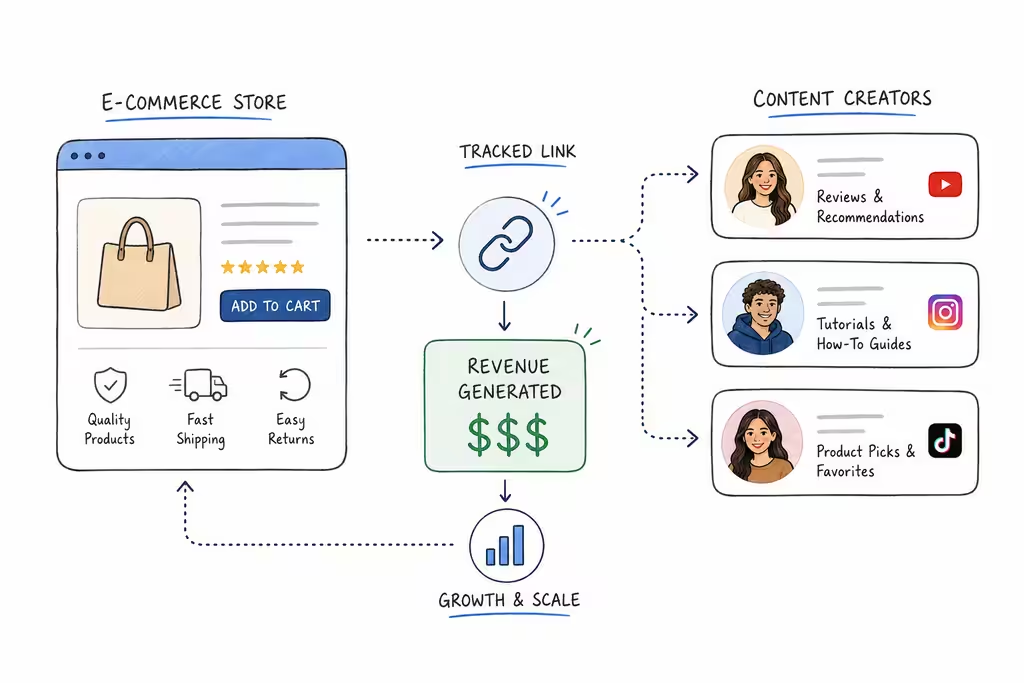

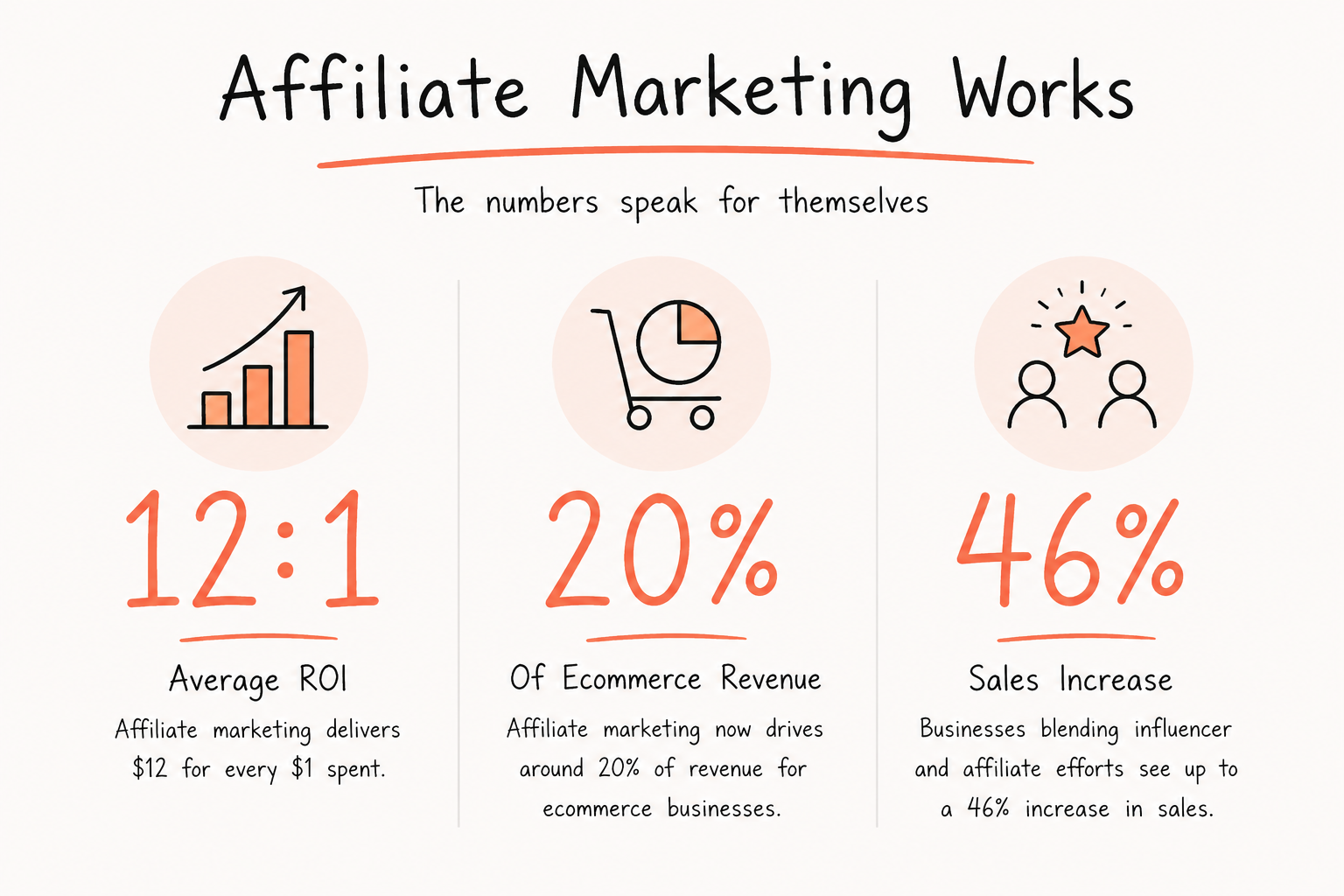
Affiliate marketing now drives around 20% of revenue for ecommerce businesses on average.
It delivers an average ROI of 12:1, compared to $3.31 for every $1 spent on Google Ads. It is the third-largest performance channel behind paid search and paid social. And ecommerce merchants are increasing affiliate marketing software budgets by 10 to 15% annually because the channel is consistently outperforming alternatives on cost per acquisition, customer lifetime value, and attribution transparency.
The challenge for most ecommerce businesses is not whether to invest in ecommerce affiliate marketing. It is finding the best affiliate marketing solution for ecommerce to build the program on, and how to structure the program so it drives genuine new paying customers rather than just capturing existing demand at checkout.
This guide covers the best affiliate marketing software and best ecommerce affiliate programs platforms available today: what each affiliate management platform does well, who it is built for, how to choose between them, and what to build on top of whichever solution you select.
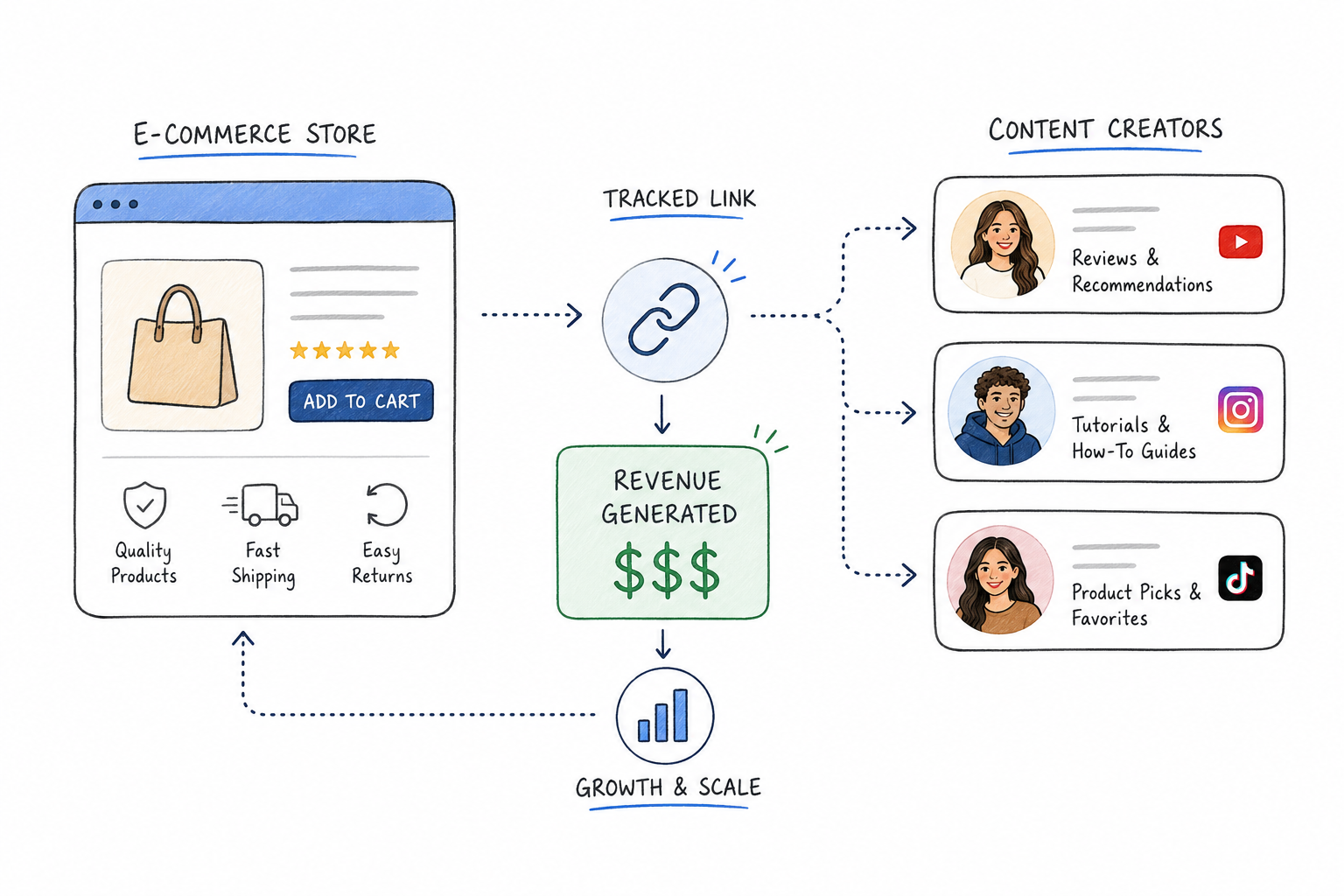
Table of Contents
Why Ecommerce Affiliate Marketing Is a Priority Channel
Customer acquisition costs for ecommerce businesses increased 40 to 60% from 2023 to 2025, now averaging $68 to $84 per paying customer.
Paid social costs are up. Paid search costs are up. Cookie deprecation is making retargeting less effective. And the online stores consistently growing ecommerce revenue without proportionally increasing paid media spend are those that have built mature ecommerce affiliate programs.
Ecommerce affiliate marketing contributes around 16% of global ecommerce sales, making it one of the largest performance marketing channels online. Businesses blending influencer and affiliate efforts are seeing up to a 46% increase in affiliate-driven sales. And 54% of marketers say affiliate programs deliver higher ROI than paid search, justifying continued reallocation toward affiliate management platforms.
For ecommerce businesses specifically, affiliate marketing works because of its structural advantages.
You only pay when a confirmed sale is generated. Your affiliate partners, whether content creators, review sites, coupon platforms, or micro-influencers, promote products to audiences at the moment of purchase consideration. And the features affiliates create on their website or social channels – review articles, TikTok comparisons, YouTube tutorials – continue driving traffic and more sales long after they are published.
The question for most online stores nowadays is not whether to launch an ecommerce affiliate program. It is which affiliate software to run it on.
Overview: Best Affiliate Marketing Solution for Ecommerce Brands
| Platform | Best For | Starting Price | Shopify Native | Network Included |
|---|---|---|---|---|
| UpPromote | Shopify stores wanting affiliate and referral in one tool | Free plan available | Yes | No |
| Social Snowball | DTC Shopify merchants building creator-led programs | $99/month | Yes | No |
| Refersion | Multi-platform ecommerce businesses at scale | $99/month | Yes | Yes (Refersion Marketplace) |
| Tapfiliate | Multi-platform merchants wanting flexible integrations | $119/month | Yes | No |
| Awin | Businesses wanting immediate access to a large affiliate marketplace | From $75/month + 2.5% fee | Yes | Yes (1M+ publishers) |
| Impact | Mid-market and enterprise ecommerce businesses | Custom pricing | Yes | Yes |
| Affise Performance | Enterprise brands, affiliate networks, and agencies seeking a scalable, fully customizable solution | From $499 | No | Yes (Affise Network) |
| Levanta | Amazon and Shopify marketplace sellers | Custom pricing | Yes | Yes |
| Modash | Shopify merchants running creator-affiliate hybrid programs | Custom pricing | Yes | No |
The Four Questions to Ask Before Choosing Your Affiliate Marketing Software
Before evaluating specific affiliate platforms, four questions will narrow your shortlist significantly.
What Ecommerce Platform Are You On?
This is the most important filter when selecting an ecommerce affiliate solution.
- If you are Shopify-only: UpPromote, Social Snowball, and Refersion give you the most frictionless setup and the deepest Shopify-native functionality.
- If you are on WooCommerce, BigCommerce, or multiple ecommerce platforms: Tapfiliate and Refersion avoid lock-in.
- If you sell on Amazon and Shopify simultaneously: Levanta is the only affiliate software that integrates with both marketplace infrastructures in a way that makes attribution meaningful.
Do You Want to Recruit Partners Yourself or Access an Existing Network?
This distinction separates two fundamentally different approaches to ecommerce affiliate management.
Self-managed affiliate programs, using affiliate software like UpPromote, Social Snowball, or Tapfiliate, require you to recruit your own partners through outreach, your own customer base, and inbound applications. The key benefit is control: you choose exactly who promotes your products, at what commission rate, and under what terms.
Network-based affiliate platforms, like Awin and Impact, give you access to an existing affiliate marketplace where partners can discover and apply to your ecommerce affiliate program. Networks provide a solution to the cold-start problem. The trade-off is that the partner mix often skews heavily toward coupon, cashback, and loyalty sites whose contribution to new paying customers is lower than their last-click attribution suggests.
What Is Your Affiliate Program Budget?
Costs for ecommerce affiliate marketing software range from genuinely free (UpPromote’s entry plan) to custom enterprise pricing (Impact, Levanta).
The total cost of running an ecommerce affiliate program on any affiliate management platform is the software fee plus the commissions you pay to partners. Median ecommerce commissions settled at around 8.4% of order value across the four largest networks in 2026. Factor both costs into your program economics before choosing affiliate software.
What Type of Partner Do You Primarily Want to Recruit?
Content creators and micro-influencers, coupon and cashback sites, and loyal customers who refer friends all require different ecommerce affiliate program structures and different affiliate management platform capabilities.
A program designed primarily around creator-affiliates needs strong gifting workflows, unique link and promo code management, and content tracking. A program built around a coupon partner mix needs a large affiliate marketplace and robust fraud detection. A program centered on customer referrals needs a seamless post-purchase enrollment flow.
The affiliate software that fits one of these approaches well often fits another poorly. Define your target partner type before evaluating affiliate platforms, not after.
The Best Affiliate Marketing Software for Ecommerce, Reviewed
UpPromote: Best for Shopify Stores Wanting Affiliate and Referral in One Tool
UpPromote is the most widely used ecommerce affiliate software for Shopify, with over 100,000 merchants on the affiliate management platform. It handles ecommerce affiliate program management, customer referral programs, and ambassador programs from one platform, which makes it the default choice for Shopify stores that want to manage partner programs without juggling separate tools for each.
Key Features:
UpPromote gives merchants the ability to promote products through multiple partner types, with customizable commission structures, automated payouts, and unique link generation for every partner. The affiliate management platform supports flat rate, percentage, tiered commissions, and product-specific rates, giving online stores the flexibility to structure payout structures differently by partner type.
Pricing: UpPromote’s free plan covers the basics for merchants just getting started. Paid plans start at $29.99/month (Growth), $89.99/month (Professional), and $199.99/month (Enterprise), each with a reducing percentage fee on affiliate sales. A 14-day free trial is available on all paid plans.
What makes it the right ecommerce affiliate solution:
UpPromote is Shopify-native, which means setup is significantly faster than affiliate platforms requiring custom integration work. Ecommerce affiliate tracking, automated payouts, partner portal access, and referral program mechanics are all handled from one platform.
For online stores running an influencer-affiliate hybrid program, UpPromote’s gifting workflow allows merchants to send products to creators before converting them to paid affiliate partners, which is one of the most effective approaches for building a creator-affiliate roster from scratch. This removes the manual headache of managing gifting and affiliate management in separate tools.
Partners who promote through UpPromote get their own website dashboard showing program performance, commission management, and unique link generation, which makes it easier to keep partners active and engaged.
See our guide on why you need affiliate influencer marketing for your business for a breakdown of how to structure influencer programs alongside affiliate management.
Where it falls short:
UpPromote does not include a built-in affiliate marketplace, which means all partner recruitment is self-managed. For online stores wanting immediate access to a large pool of existing publishers, Awin or Refersion are stronger options.
The percentage fee on affiliate sales can also become significant at scale. At the Growth plan’s 2% fee, a program generating $50,000/month in affiliate revenue pays $1,000/month in software fees on top of the subscription.
Best for: Shopify stores wanting a Shopify-native, all-in-one affiliate management platform and referral program tool with a genuinely accessible free entry point and flexible payout structures.
Social Snowball: Best for DTC Shopify Merchants Building Creator-Led Programs

Social Snowball is purpose-built for DTC Shopify merchants building ecommerce affiliate programs around creators, influencers, and their own customers. Its standout key feature is the Safelinks system, which prevents affiliate promo code leakage to coupon sites.
Coupon leakage is one of the most consistent problems in ecommerce affiliate marketing. A creator shares a coupon code intended for their audience. The code appears on RetailMeNot, Honey, and similar coupon aggregators. The online store pays affiliate commissions on purchases made by paying customers who were already going to buy, through a code they found on a coupon site rather than through the creator’s website or content.
Safelinks solves this by generating unique, single-use links that cannot be posted on coupon sites, protecting the success of your ecommerce affiliate program from last-click attribution distortion.
Key Features:
Social Snowball handles the full creator-affiliate lifecycle in one platform: post-purchase enrollment that automatically converts paying customers into affiliate partners, unique link and coupon codes generation, gifting logistics, content tracking, and creator payouts. This removes the manual headache of managing influencer programs and affiliate management separately.
Pricing: Social Snowball starts at $99/month for the Snow plan and $249/month for the Blizzard plan, with a 14-day free trial.
What makes it the right ecommerce affiliate solution:
For DTC merchants where incrementality and program performance matter, Social Snowball’s architecture is designed around the creator relationship. The post-purchase affiliate enrollment flow automatically converts paying customers into affiliate partners at checkout, which is one of the fastest ways to build a partner roster from your most motivated customers and drive growth from existing relationships.
Where it falls short:
Social Snowball is Shopify-only. It is not an option for online stores on WooCommerce, BigCommerce, or other ecommerce platforms.
It also does not include an affiliate marketplace, which means all partner recruitment is self-managed. For merchants wanting to combine a creator program with access to traditional publisher types, Refersion or Awin provide more flexibility.
Best for: DTC Shopify merchants prioritizing creator-affiliate programs where preventing coupon leakage and maintaining ecommerce affiliate program performance are critical to success.
Refersion: Best for Multi-Platform Ecommerce Businesses at Scale
Refersion is one of the most established ecommerce affiliate software platforms, with strong integrations across Shopify, WooCommerce, BigCommerce, and Magento. It combines self-managed affiliate program functionality with access to the Refersion Marketplace, an affiliate marketplace where partners can discover and apply to your ecommerce affiliate program directly.
Key Features:
Refersion handles the full ecommerce affiliate management lifecycle: partner recruitment through the affiliate marketplace or custom application forms, onboarding, commission management across multiple commission structures, automated payouts, fraud detection, and performance analytics. Partners who promote through Refersion get access to a dedicated website dashboard for tracking sales, accessing unique links, and managing coupon codes.
Pricing: Refersion’s Professional plan starts at $99/month, with Enterprise plans at custom pricing. A 14-day free trial is available.
What makes it the right ecommerce affiliate solution:
Refersion handles the whole ecommerce affiliate program lifecycle. Unlike Shopify-only affiliate platforms, Refersion works equally well across multiple ecommerce platforms, making it the right choice for online stores that sell across multiple storefronts or are planning to migrate.
Networks provide a head-start for partner recruitment. Refersion’s affiliate marketplace gives merchants immediate visibility to partners actively looking for ecommerce affiliate programs to promote in their category, which removes the cold-start challenge that self-managed affiliate software faces.
Refersion’s fraud detection and partner monitoring features are more developed than most entry-level affiliate marketing software, making it appropriate for online stores at a scale where fraudulent affiliate activity is a material concern for program performance.
Where it falls short:
Refersion’s interface is more complex than newer affiliate platforms like UpPromote or Social Snowball, with a steeper learning curve. Merchants with small teams or limited ecommerce affiliate management experience may find the onboarding process requires more investment than more streamlined alternatives.
Best for: Multi-platform ecommerce businesses at meaningful scale that need robust integrations across different storefronts, access to an existing affiliate marketplace for partner discovery, and more advanced fraud detection to protect program performance.
Tapfiliate: Best for Multi-Platform Merchants Wanting Flexible Integrations

Tapfiliate is flexible ecommerce affiliate software that works across Shopify, WooCommerce, BigCommerce, and over 30 other integrations. It is a self-managed affiliate management platform without a built-in affiliate marketplace, designed for online stores that want to build and manage their own partner programs without committing to a specific ecommerce platform.
Key Features:
Tapfiliate supports tiered commission structures, product-specific rates, recurring commissions for subscription products, automated payouts, unique link generation, and customizable workflows for partner onboarding and approval.
Partners get their own website dashboard for tracking sales and accessing affiliate links and coupon codes. Performance analytics are available both at the program level and per partner, making it straightforward to identify which partners promote most effectively and drive the most sales.
Pricing: Tapfiliate starts at $119/month on its Essential plan, with Pro at $149/month and an Enterprise tier at custom pricing. A 14-day free trial is available.
What makes it the right ecommerce affiliate solution:
Tapfiliate’s flexibility is its defining advantage for ecommerce affiliate management. Online stores on WooCommerce, or those running hybrid setups across multiple ecommerce platforms, get the same quality of integration and tracking that Shopify-native affiliate software delivers exclusively on Shopify.
The software supports recurring commissions for subscription products, making it appropriate for ecommerce businesses with more complex payout structures than a flat-rate commission can accommodate.
Where it falls short:
There is no built-in affiliate marketplace, so all partner recruitment is self-managed.
The pricing is also higher than UpPromote at equivalent functionality for Shopify-only merchants. For stores on a single ecommerce platform, UpPromote or Social Snowball will be more cost-effective affiliate software options.
Best for: Multi-platform ecommerce merchants that need software flexibility, clean integrations across different storefronts, and a self-managed ecommerce affiliate program without committing to a network-based affiliate management approach.
Awin: Best for Online Stores Wanting Immediate Access to a Large Affiliate Marketplace

Awin is one of the world’s largest affiliate networks, with access to more than 1 million vetted partners across content creators, influencers, coupon sites, loyalty platforms, and technology publishers. For ecommerce businesses that want to launch an affiliate program without building a partner roster from scratch, Awin’s affiliate marketplace solves the cold-start problem immediately.
Networks provide a key benefit here: your ecommerce affiliate program gets immediate exposure to partners actively searching for programs to promote in your product category.
Key Features:
Awin handles ecommerce affiliate management across the full program lifecycle: partner discovery through the affiliate marketplace, onboarding, commission management with flexible payout structures, automated payouts, and performance analytics. The affiliate management platform supports product-specific, category-based, and multitiered commission structures, giving online stores the ability to pay different rates for different partner types.
Partners who promote through Awin access a dedicated partner website portal with tracking sales data, unique links, and coupon codes.
Pricing: Awin Access starts at around $75/month plus a 2.5% tracking fee on a 3-month rolling contract.
What makes it the right ecommerce affiliate solution:
Awin’s affiliate marketplace is the largest and most diverse available to ecommerce merchants. Listing your ecommerce affiliate program on Awin gives you immediate visibility to partners actively promoting products in your category, which is the fastest way to drive growth in partner numbers and launch multiple campaigns simultaneously.
Where it falls short:
The partner mix on a large affiliate marketplace naturally skews toward coupon, cashback, and loyalty partners. Without active curation and program performance measurement, online stores on Awin can find themselves paying significant commissions to partners who are not genuinely driving new paying customers.
The tracking fee on top of the monthly subscription also makes Awin’s total software cost significantly higher at volume. At $75/month plus 2.5% of affiliate-attributed sales, a program generating $100,000/month costs approximately $2,575/month in software fees alone, before commissions.
Best for: Ecommerce businesses that want immediate access to a large, established affiliate marketplace to solve the cold-start problem, with the budget and affiliate management capacity to actively curate the partner mix for program performance.
Impact: Best for Mid-Market and Enterprise Ecommerce Businesses
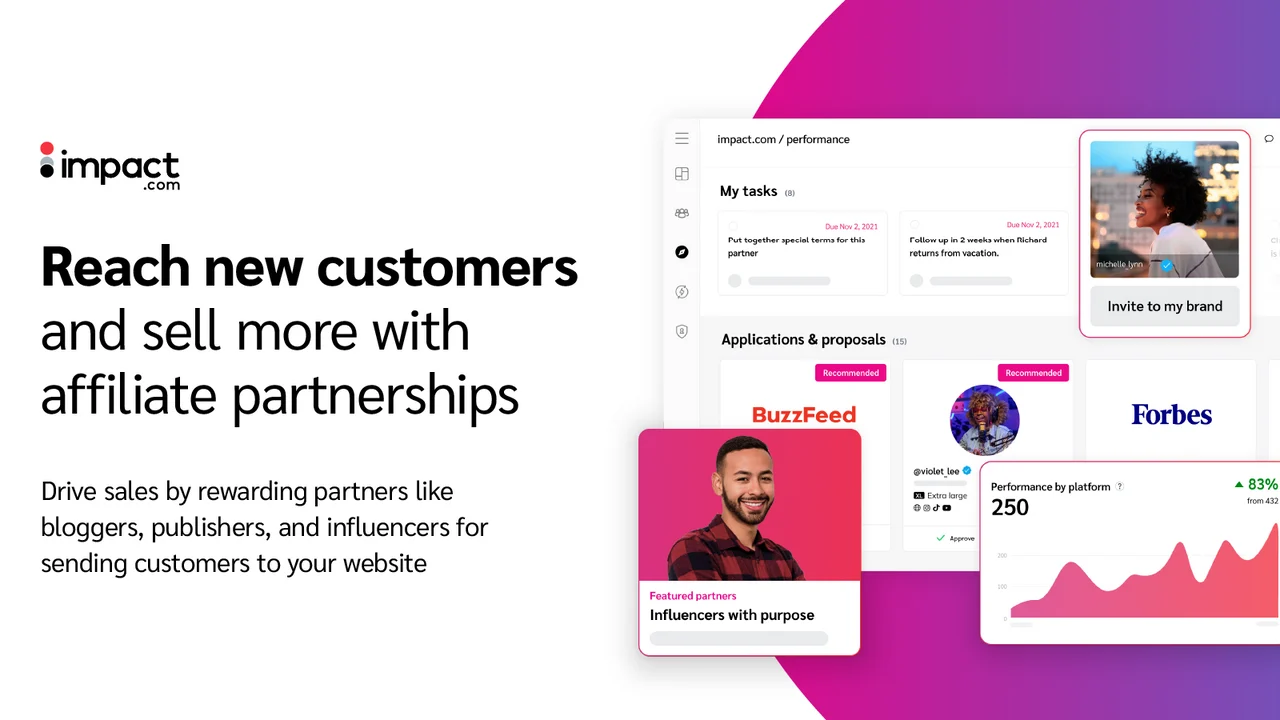
Impact is the partnership management platform of choice for mid-market and enterprise ecommerce businesses that need advanced attribution, sophisticated partner relationship management, and the ability to manage multiple partner types from one platform: affiliates, influencers, brand-to-brand partnerships, and strategic media partnerships, all with unified tracking and automated payouts.
Key Features:
Impact’s ecommerce affiliate management capabilities include server-side tracking, multi-touch attribution, incrementality testing, fraud detection, and real-time performance analytics. Partners get access to a dedicated website portal for tracking sales, accessing unique links and coupon codes, and managing their relationship with the program.
The software also supports customizable workflows for partner onboarding, approval, and commission management across multiple campaigns simultaneously.
Pricing: Impact uses custom pricing. It is not the right affiliate software for businesses in the early stages of building an ecommerce affiliate program. It is purpose-built for online stores at a scale where the sophistication of the affiliate management platform justifies the investment.
What makes it the right ecommerce affiliate solution:
Impact’s attribution infrastructure is among the most advanced available to ecommerce businesses. For online stores that have moved beyond last-click attribution and want to measure the genuine incremental contribution of each partner type to program performance, Impact is the strongest affiliate software available.
Its partnership management capabilities extend well beyond traditional ecommerce affiliate marketing. Merchants can manage influencer programs, brand-to-brand co-marketing, and strategic media placements alongside their ecommerce affiliate programs, all with unified reporting and automated payouts.
Where it falls short:
Impact is overkill for online stores in the early stages of ecommerce affiliate program building. Its complexity, pricing, and onboarding investment all assume a program already generating significant revenue and a team with the capacity to use the affiliate management platform’s advanced features.
Best for: Mid-market and enterprise ecommerce businesses that need the most advanced attribution infrastructure, multi-partner-type management in one platform, and performance analytics that support board-level ROI accountability.
Affise Performance: Best for High-Volume Ecommerce Brands and Proprietary Networks

Affise Performance is an enterprise-grade affiliate management platform built for ecommerce brands, proprietary networks, and performance agencies that handle massive traffic volumes and want to bring their partner infrastructure in-house. Unlike platforms that charge a percentage of every sale, Affise uses a predictable, usage-based pricing model—which directly protects profit margins as a program scales past the point where revenue-share fees become restrictive.
Key Features:
The platform is engineered for modern ecommerce attribution challenges. It supports robust server-to-server (S2S) tracking to bypass ad blockers and iOS privacy restrictions, alongside event-level analytics that follow the customer journey from add-to-cart through checkout.
For ecommerce promotions specifically, Affise includes dedicated promo code tracking and QR code tracking, product feed management, and native Shopify and WooCommerce integrations. The built-in anti-fraud suite proactively filters VPNs, proxies, fake traffic, and coupon abuse before it drains your budget.
On the operational side, Affise Pay allows you to automate multi-currency payouts to thousands of global partners in a single click, and Affise’s smart automation (CPAPI) syncs campaigns across 250+ integrated platforms in minutes.
Pricing: starting from $499. A free trial is available. The model is designed to scale predictably with your program, not penalize you for growth.
What makes it the right ecommerce affiliate solution:
For ecommerce brands that have outgrown plug-and-play tools and need enterprise-grade tracking, automation, and granular data control, Affise provides the infrastructure to scale a proprietary partner network without paying a revenue tax on every sale. Its 99.99% uptime SLA ensures tracking reliability during peak retail events like Black Friday.
Where it falls short:
Affise Performance is overkill for early-stage DTC brands or small Shopify stores with fewer than 50 active affiliates. The extensive feature set and granular data capabilities require a dedicated onboarding period to fully master, making it a better fit for teams with the technical capacity to leverage its automation and API potential.
Best for: High-volume ecommerce brands, proprietary partner programs, and performance marketing agencies that need advanced attribution, automation, and usage-based pricing to protect margins at scale.
Levanta: Best for Amazon and Shopify Marketplace Sellers

Levanta is purpose-built for ecommerce businesses that sell on Amazon, Shopify, and Walmart. Unlike traditional affiliate marketing software designed for DTC storefronts only, Levanta integrates directly with Amazon’s attribution infrastructure, making it the only ecommerce affiliate software that connects creator-affiliate traffic directly to Amazon listing data.
Key Features:
Levanta lets merchants set custom commission rates per ASIN, track which partners promote and drive sales to their Amazon listings, and earn the Amazon Brand Referral Bonus on qualified external traffic. This bonus provides an additional 10% commission offset on sales generated through external affiliate links, which meaningfully changes the program economics for Amazon-native ecommerce businesses.
Pricing: Levanta uses custom pricing. Its positioning is specifically for Amazon-native and multi-marketplace online stores.
What makes it the right ecommerce affiliate solution:
For ecommerce businesses whose primary sales channel is Amazon, Levanta is the only affiliate software that connects partner-driven traffic directly to Amazon attribution data and allows partners to promote products directly to Amazon product pages. This is a structural advantage that no other affiliate management platform on this list provides.
Where it falls short:
If you are a Shopify-only DTC merchant with no Amazon presence, Levanta is not the right ecommerce affiliate software. Its value proposition depends entirely on the Amazon attribution integration.
Best for: Ecommerce businesses selling on Amazon who want to build an ecommerce affiliate program that earns the Brand Referral Bonus on external traffic and gives partners a unique link directly to Amazon product pages.
Modash: Best for Shopify Merchants Running Creator-Affiliate Hybrid Programs

Modash is an end-to-end affiliate management platform built for ecommerce businesses that treat creator partner marketing as a core acquisition channel. It covers the full program lifecycle from one platform: creator discovery, outreach, content tracking, ecommerce affiliate performance, and automated payouts, without requiring separate tools at each stage.
Key Features:
For Shopify merchants specifically, Modash connects affiliate revenue directly to store data. Merchants can track sales by unique link or promo code (or both), send gifted products, assign coupon codes, and run paid partner collaborations all within the same affiliate software.
Switching a gifted influencer to an affiliate relationship takes seconds rather than a new workflow, which removes the manual headache of managing influencer programs and ecommerce affiliate management in separate tools.
Partners get access to a dedicated website portal for tracking sales, accessing unique links, and managing their relationship with the program.
Where it falls short:
Modash’s ecommerce affiliate features require a Shopify store. It is not an option for online stores on other ecommerce platforms.
Best for: Shopify merchants where the ecommerce affiliate program is primarily creator-led and the team needs one platform for the full creator partner relationship, from gifting through to commission management and automated payouts.
What to Build on Top of Your Ecommerce Affiliate Software
The affiliate management platform you choose is the infrastructure. The program you build on top of it determines whether that infrastructure generates success.
Affiliate Partner Recruitment Strategy
No affiliate marketing software recruits partners for you. The affiliate platforms with built-in affiliate marketplaces (Awin, Impact, Refersion) make discovery easier, but the quality of your partner mix still depends on how actively you curate incoming applications and how proactively you recruit the partner types that actually drive new paying customers.
For ecommerce businesses, the most effective partner recruitment approach combines three sources: your existing customer base (converted to affiliate partners at checkout or via post-purchase email), proactive outreach to content creators whose website or social channels reach your target audience, and affiliate marketplace listings for inbound partner applications.
See our guide on how to find affiliates for your brand for a full recruitment methodology.
Commission Structure and Payout Structures
Median ecommerce commissions held flat at around 8.4% of order value in 2026. This is your benchmark, not your target.
The right commission rate is the one that is competitive enough to attract quality partners in your category while preserving enough margin to make the channel profitable. Tiered commission structures, where partners earn higher rates as they hit volume thresholds, consistently outperform flat-rate payout structures for motivating sustained partner activity and driving more sales over time.
See our guide on affiliate incentives for a full breakdown of how to design commission management that retains your best partners long-term.
Fraud Detection and Program Performance Protection
27% of advertisers identify affiliate fraud as their top challenge in managing ecommerce affiliate programs. Affiliate fraud is estimated to cost businesses over $3.5 billion annually, with 18% of affiliate traffic flagged as invalid or fraudulent.
For ecommerce merchants, the most common fraud types are coupon code leakage, cookie stuffing, and brand-bidding in paid search. Whatever affiliate software you choose, ensure it has built-in fraud detection or integrates with a specialist tool like BrandVerity.
See our guide on BrandVerity alternatives for affiliate monitoring for a comparison of fraud detection tools that protect ecommerce affiliate program performance.
Reporting, Performance Analytics, and Attribution
The ecommerce affiliate programs generating the strongest success are those that measure partner performance incrementally, not just by last-click attribution. Knowing which partners are driving genuinely new paying customers, rather than capturing existing demand at checkout, is the measurement question that separates profitable ecommerce affiliate programs from expensive ones.
Whichever affiliate management platform you choose, ensure your performance analytics can show new-to-brand customer rate by partner type, customer lifetime value of referred cohorts, and program performance broken down by partner type.
See our post on what affiliate marketing reports to ask your agency for for the full reporting framework.
How Vivian Agency Approaches Ecommerce Affiliate Marketing
At Vivian Agency, we build and manage ecommerce affiliate programs with performance built into the brief from the start.
That means selecting the best affiliate marketing solution for ecommerce for your brand according to your specific ecommerce platform, partner mix goals, and commission economics, not the affiliate management platform with the most impressive feature list.
It also means building a recruitment strategy that prioritizes new paying customers over last-click attribution volume. And it means setting up the performance analytics infrastructure that tells you what is actually working before the program has been running for three months.
For a look at what this produces in practice, see our Kokido case study (190% ROI in month one of active affiliate management) and our Sposie case study (200+ partners recruited, $100K+ in attributed sales within six months of a structured relaunch).
If you want to understand which ecommerce affiliate software is the right fit for your online store and what a realistic program would look like, book a free call and we will walk through it.
Frequently Asked Questions
What is the best affiliate marketing software for Shopify?
It depends on what you are trying to build. UpPromote is the best all-in-one Shopify ecommerce affiliate software for online stores wanting a free entry point and one platform for both affiliate and referral program management. Social Snowball is the best Shopify affiliate solution for DTC merchants building creator-led programs where preventing coupon leakage and protecting program performance is a priority.
Modash is the strongest option for merchants that want to manage the full creator partner relationship, from gifting through to ecommerce affiliate commission tracking, in one platform. All three integrate natively with Shopify and are significantly faster to launch than network-based affiliate platforms.
Should I use an affiliate marketplace or build my own ecommerce affiliate program?
Both approaches have legitimate use cases, and the right choice depends on where you are in your ecommerce affiliate program journey.
Affiliate marketplaces like Awin give you immediate access to a large pool of partners without the cold-start challenge of building a roster from scratch. Networks provide reach at launch that self-managed affiliate software cannot match. Self-managed programs using affiliate platforms like UpPromote, Social Snowball, or Tapfiliate give you more control over your partner mix, commission management, and positioning.
Most mature ecommerce affiliate programs combine both: a self-managed program for creator and customer partner relationships, and an affiliate marketplace listing for inbound partner discovery. Starting with self-managed ecommerce affiliate software and adding network exposure as the program scales is the approach that tends to produce the best long-term partner mix and program performance.
How much does ecommerce affiliate software cost?
Affiliate marketing software for ecommerce businesses ranges from genuinely free (UpPromote’s entry plan) to custom enterprise pricing (Impact, Levanta). Most mid-tier affiliate platforms fall in the $99 to $199/month range. Network-based affiliate software like Awin adds a tracking fee (typically 2 to 3.5%) on top of the monthly subscription, which makes total software cost significantly higher at volume.
When evaluating ecommerce affiliate software costs, factor in both the platform fee and the commissions you will pay to partners. At median ecommerce commission rates of around 8.4%, a program generating $50,000/month in affiliate sales costs approximately $4,200/month in commissions alone, before affiliate software fees. See our guide on how to set up an influencer affiliate program for a full breakdown of what to budget for in year one.
For further reading on building and scaling ecommerce affiliate programs, see our guides on how to find affiliates for your brand, how to set up an influencer affiliate program, affiliate contract compliance, affiliate incentives, and what affiliate marketing reports to ask your agency for.