
LinkedIn is the only social platform where your audience shows up with their professional identity, their job title, their company, and their purchasing authority all visible before you say a word.
For affiliate marketers in B2B categories, that context is worth more than any demographic filter on any other platform. Affiliate marketing on Linkedin is all the hype nowadays.
LinkedIn now has 1.3 billion members globally. It generates leads at a rate 277% higher than Facebook and Twitter. Its visitor-to-lead conversion rate of 2.74% is more than three times Facebook’s 0.77%. And 84% of all B2B conversions start from a referral, with LinkedIn being the professional network where those referrals most frequently happen.
Most affiliate marketers who try LinkedIn give up after three weeks because they treated it like Instagram, posting promotional content at high frequency and getting nothing back. LinkedIn affiliate marketing does not work that way.
This guide covers how affiliate marketing on LinkedIn actually works, which approaches consistently drive affiliate revenue on the platform, and the mistakes that cause most people to write it off before seeing results.
Table of Contents
Why LinkedIn Is a Legitimate Affiliate Marketing Channel
The instinct to dismiss LinkedIn as an affiliate marketing channel is understandable. It is not where most affiliate marketing conversations happen. It does not have TikTok Shop. It does not have the influencer ecosystem of Instagram. And the audience’s tolerance for promotional content is lower than on consumer platforms.
But the audience that LinkedIn does have is consistently the most valuable in affiliate marketing.
The 25 to 34 age group makes up the largest demographic on LinkedIn, and they are the demographic with the highest combination of purchasing authority and digital fluency. Personal profiles generate 8 times more engagement than company pages on LinkedIn, which means individual affiliate marketers operating from their own profiles have a structural advantage that brands spending on company page content do not.
For B2B affiliate programs, SaaS tools, professional services, financial products, and any product sold to businesses or business owners, LinkedIn’s audience is unmatched.
This is the critical distinction. LinkedIn affiliate marketing works when there is a genuine alignment between the affiliate’s professional expertise, the product they are recommending, and the professional problem it solves for their audience. It does not work when the product is irrelevant to a professional context or when the recommendation comes across as promotional rather than professional.
Overview
| Method | Best For | Content Format | Timeline to Results |
|---|---|---|---|
| LinkedIn articles | Long-term SEO-driven affiliate traffic | Long-form review and comparison content | 2 to 6 months |
| LinkedIn feed posts | Building audience trust and authority | Short-form insights, carousels, personal experience | 1 to 3 months |
| LinkedIn newsletters | Recurring affiliate link exposure to subscribers | Weekly or biweekly niche content with embedded links | 2 to 4 months |
| LinkedIn DMs | High-intent, high-conversion referrals | Personal recommendation, not mass outreach | Immediate if done correctly |
| LinkedIn as a traffic bridge | Driving LinkedIn audience to a blog or website | Posts with external link to affiliate content | 1 to 3 months |
| LinkedIn company page | Brand-side affiliate program recruitment | Program announcement, case studies, partner content | Ongoing |
How Affiliate Marketing on LinkedIn Works
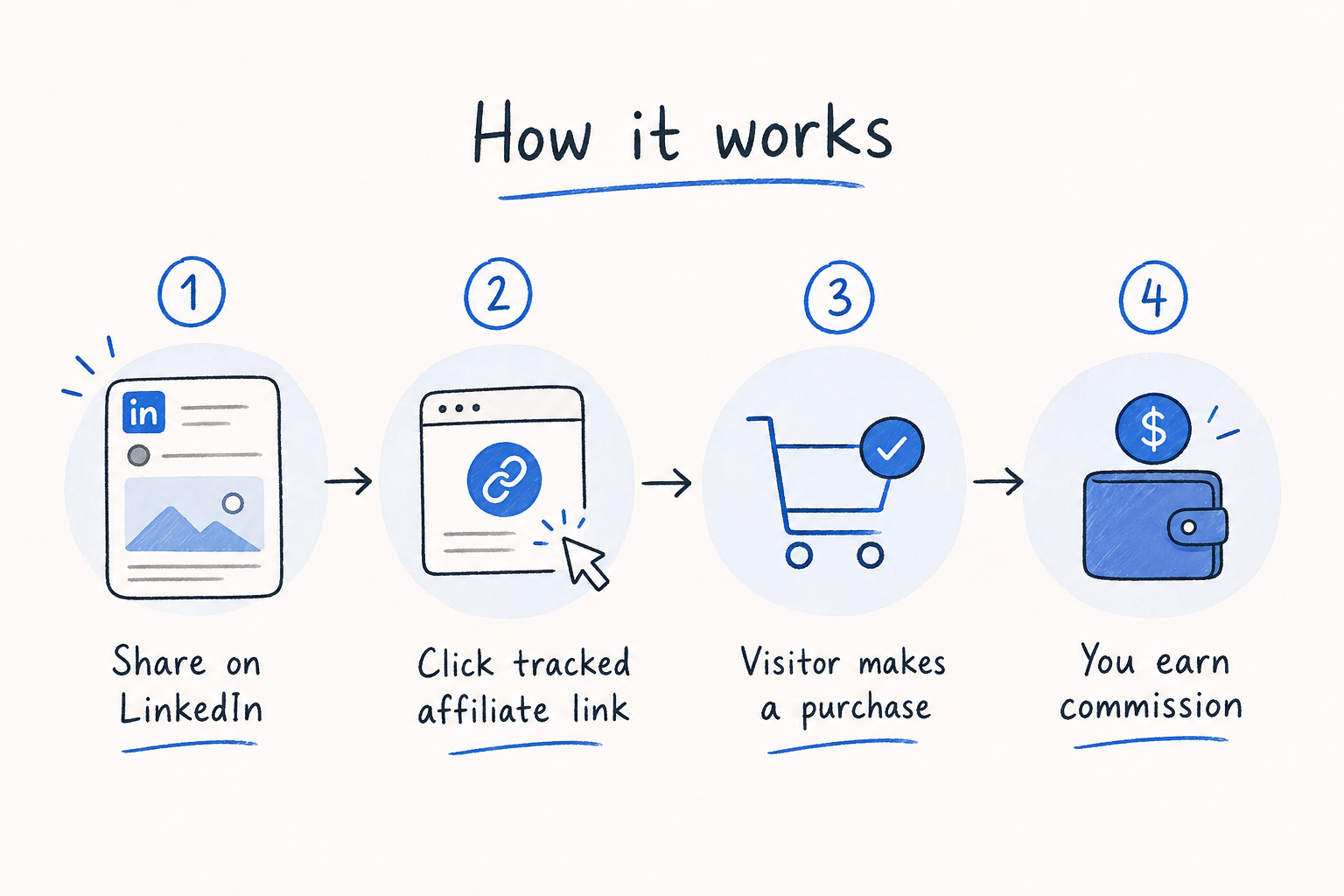
LinkedIn allows affiliate marketing through multiple content formats: posts, articles, newsletters, comments, and direct messages.
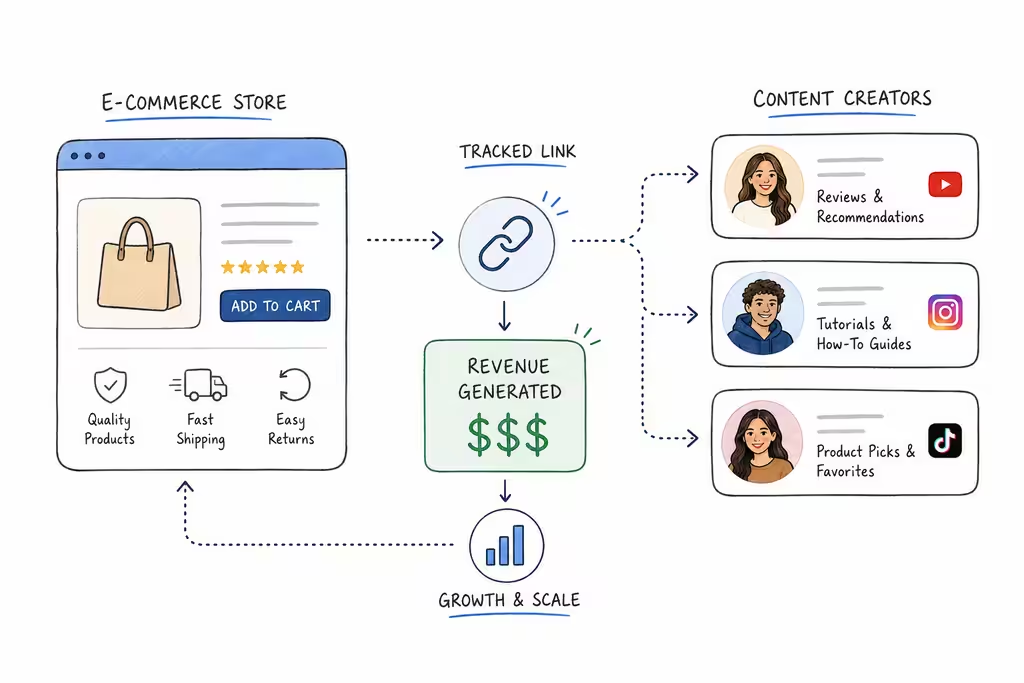
The fundamental mechanics are the same as any other platform. An affiliate marketer creates content that recommends a product or service, includes a tracked affiliate link or affiliate code, and earns a commission when a member of their audience converts through that link.
What is different on LinkedIn is the context in which that recommendation lands.
When a software engineer with 8,000 LinkedIn followers posts about a project management tool they use daily, their audience, largely made up of other engineers, developers, and technical team leads, reads it as professional peer advice. The same recommendation from a lifestyle creator on Instagram reads as sponsored content.
The professional context of LinkedIn elevates the perceived credibility of every recommendation, which is why affiliate conversion rates on LinkedIn, particularly in B2B and SaaS categories, consistently outperform other social platforms for the same products.
LinkedIn does not suppress affiliate links in posts the way some platforms do, but it does reduce the organic reach of posts that contain external links. This is the operational reality that shapes the most effective LinkedIn affiliate marketing strategies today.
The Most Effective Approaches for Affiliate Marketing on LinkedIn
LinkedIn Articles: Your Highest-Value Long-Term Affiliate Asset
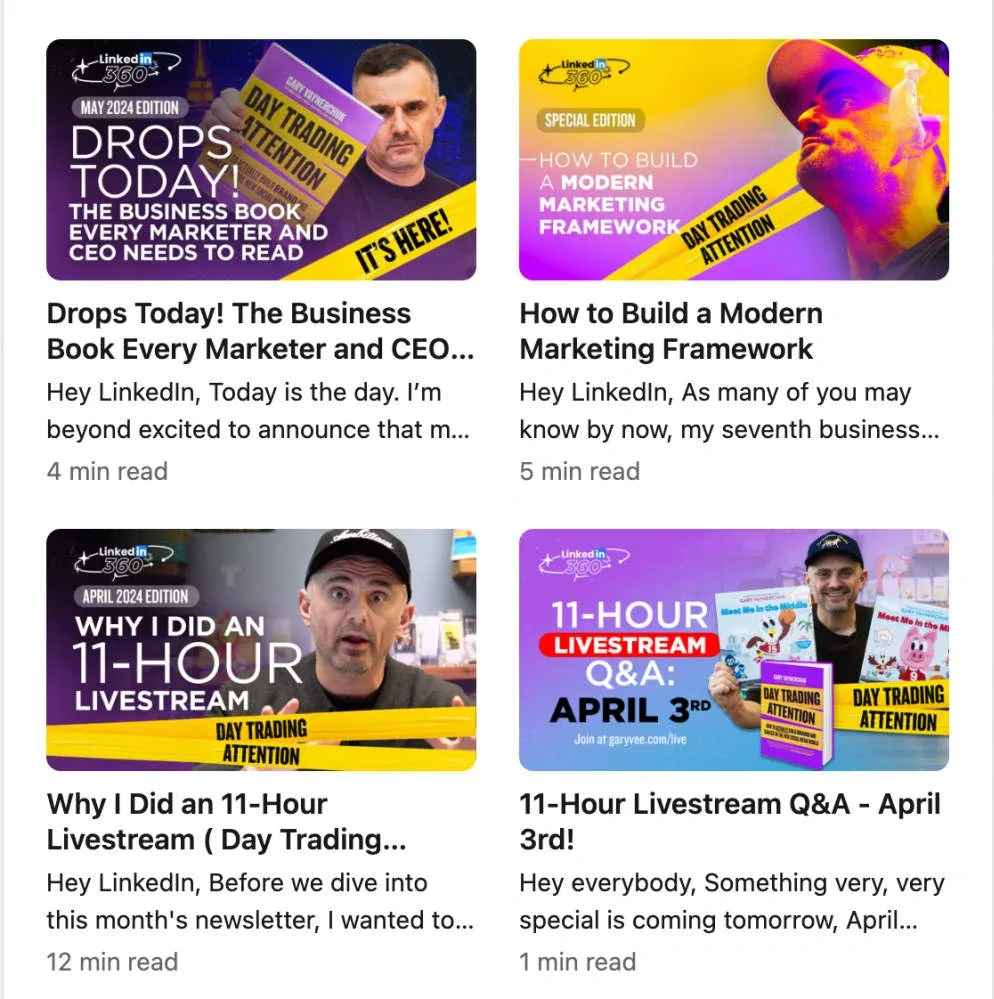
LinkedIn articles are the platform’s built-in long-form publishing feature. They function like blog posts with permanent URLs, indexed by Google, and displayed prominently on your profile. Articles do not suppress external links the way feed posts do, making them ideal for embedding multiple affiliate links directly in the content.
This is the most underused high-value affiliate marketing format on LinkedIn.
An affiliate marketer who publishes a comprehensive “Top 10 Project Management Tools for Remote Engineering Teams” article on LinkedIn has created an asset that:
- Ranks in Google search results for relevant queries, driving traffic indefinitely
- Appears on their LinkedIn profile as permanent evidence of expertise
- Contains multiple affiliate links that generate commissions on every visit
- Builds credibility with existing LinkedIn connections who see it published
Write articles that serve as comprehensive guides, e.g. “The Complete Guide to Marketing Automation Tools in 2026” with a detailed review of each tool and affiliate links throughout. These articles continue generating traffic and clicks for months or years after publication because they rank in Google and remain accessible on your profile.
LinkedIn Feed Posts: Building the Audience that Makes Everything Else Work
Feed posts are where you build the audience trust that makes your affiliate recommendations worth anything.
The mistake most LinkedIn affiliate marketers make is leading with the product. The members of your LinkedIn network do not open the app to receive product recommendations. They open it for professional insight, industry perspective, and content that makes them better at what they do. Your affiliate marketing content needs to earn its place in that context.
The most effective LinkedIn feed post approach for affiliate marketers is not “here is a product I recommend.” It is: “here is a professional insight I want to share, and the tool that made it possible.” The affiliate recommendation arrives as a natural extension of genuine value, not as the point of the post.
Post consistently, but not excessively. The recommended posting cadence for LinkedIn affiliate marketers is five posts per week, one per working day, with Tuesday and Wednesday being the highest-engagement days.
Content formats that perform well for LinkedIn affiliate marketing today:
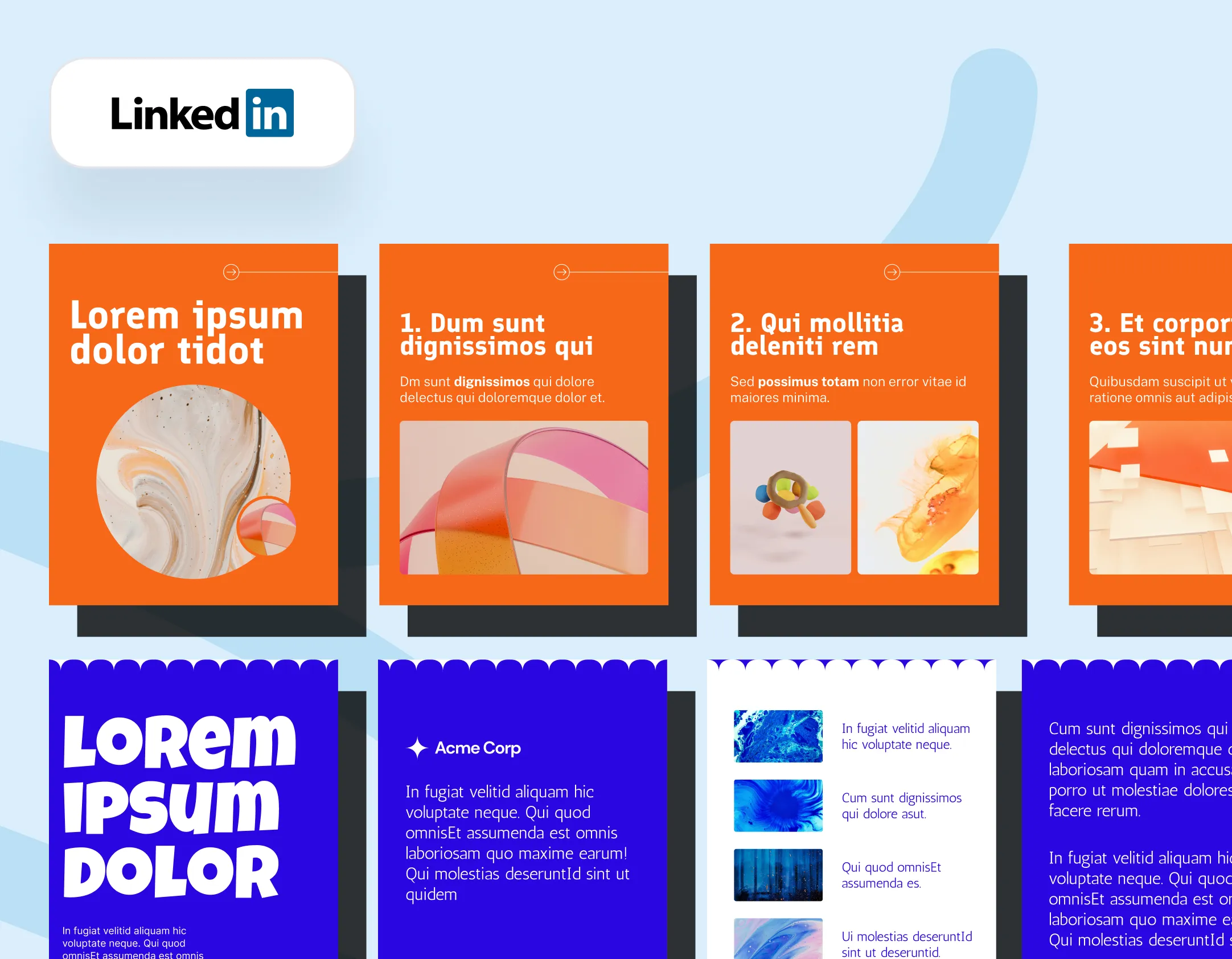
Carousels. A viewer who swipes through eight slides of your content is deeply engaged and far more likely to click an affiliate link than someone who skimmed a two-line post. Carousels consistently outperform static posts on LinkedIn for affiliate marketing content because they demand active attention from the audience.
Personal experience posts. “I switched from Tool X to Tool Y three months ago. Here is what actually changed.” This format is highly credible on LinkedIn because it is specific, professional, and personal. It converts well because it answers the exact question a professional audience has before making a tool decision: does this actually make a difference in practice?
Tutorial and how-to posts. “How I reduced my team’s reporting time by 40% using this workflow.” The affiliate link appears naturally at the end as the tool that enabled the result. This format works because it leads with the professional outcome rather than the product.
LinkedIn Newsletters: Recurring Affiliate Exposure at Scale
LinkedIn newsletters are one of the most underused affiliate marketing formats on the platform.
A LinkedIn newsletter gives you a subscriber list within LinkedIn itself. Every time you publish an issue, your subscribers receive a notification. Unlike feed posts, newsletter content does not compete with the algorithm for distribution. Your subscribers opted in specifically to receive your content.
For affiliate marketing on LinkedIn, a newsletter creates recurring exposure to the same professional audience across multiple issues. An affiliate marketer with a 5,000-subscriber LinkedIn Newsletter in the marketing technology space can embed affiliate links to relevant tools in every issue, with the credibility that comes from a subscriber relationship rather than a cold feed post encounter.
The most effective LinkedIn newsletters for affiliate marketing are genuinely useful publications that happen to contain affiliate recommendations, not affiliate publications dressed up as content. A weekly “Marketing Technology Roundup” newsletter that consistently surfaces useful tools, tips, and industry news earns the trust that makes the affiliate recommendations inside it worth acting on.
Build the newsletter first. The affiliate revenue follows from the trust the newsletter establishes.
LinkedIn DMs: High-Intent Referrals at the Individual Level
LinkedIn direct messages are the highest-converting affiliate marketing format on the platform when used correctly, and the most damaging to your professional reputation when used incorrectly.
Think of LinkedIn affiliate marketing through DMs as professional referrals, not sales. In the professional world, recommending a tool or service to a colleague who has a specific problem is entirely normal. Adding an affiliate link to that recommendation is simply capturing value from a referral you would have made anyway.
The approach that works: a connection posts about a problem your affiliate product solves. You reply in the comments with a brief, useful answer. You follow up in DMs with a more detailed recommendation that includes your affiliate link, framing it as professional advice rather than a sales pitch.
The approach that does not work and will permanently damage your LinkedIn reputation: mass DM campaigns to cold connections with generic affiliate product recommendations. LinkedIn’s audience has extremely low tolerance for unsolicited promotional outreach, and a single wave of mass DMs will cost you connection requests, profile visits, and professional credibility that takes months to rebuild.
Never follow up aggressively. One message is enough. Provide value beyond the link: offer to answer questions, share your setup, or walk them through the tool. The professional framing is everything.
LinkedIn as a Traffic Bridge to Your Affiliate Content
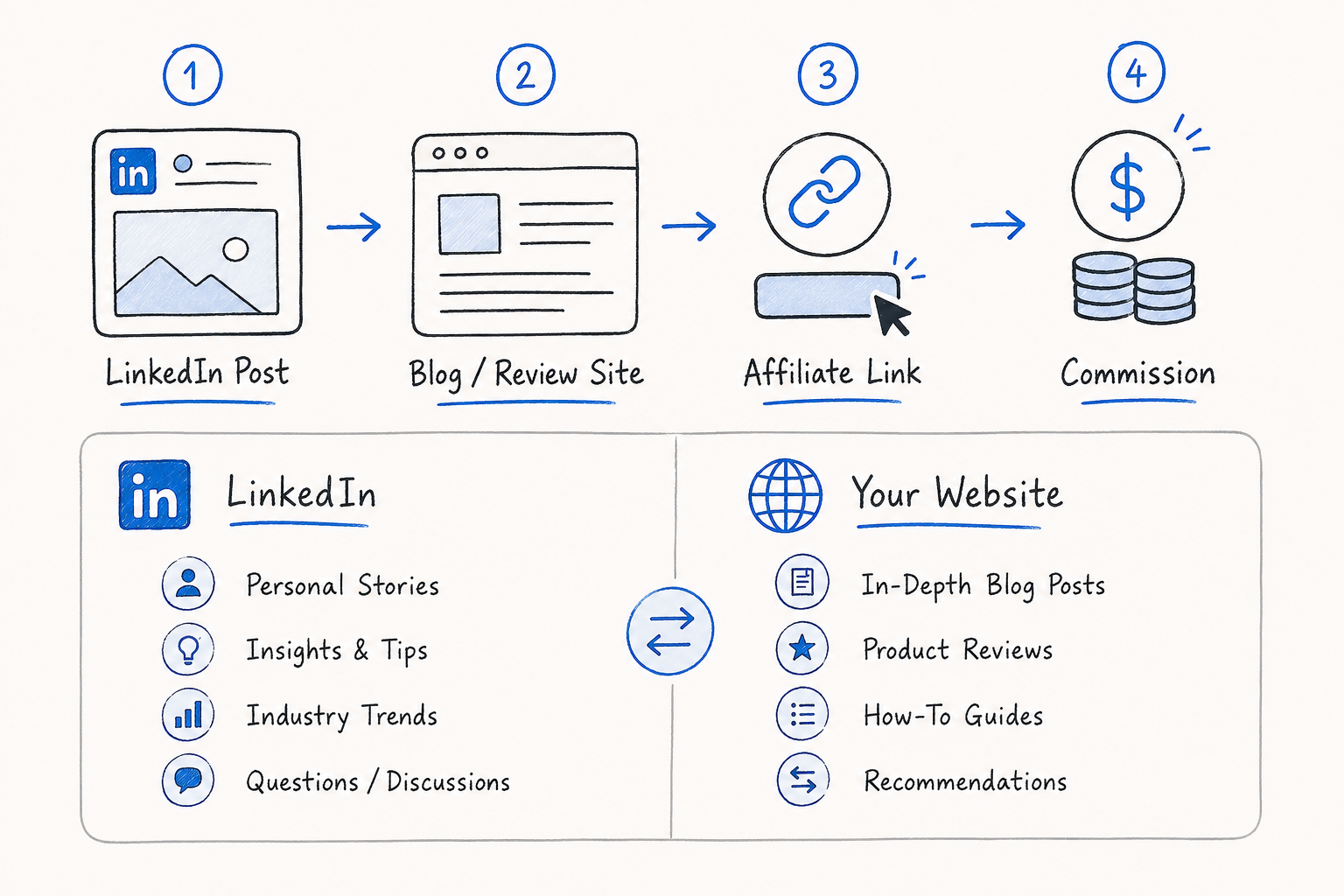
The highest-earning LinkedIn affiliate marketers consistently use LinkedIn not as their primary affiliate channel but as a traffic bridge to content they own: a blog, a review website, or a newsletter on a platform where they have full control over affiliate link placement.
The strategy is straightforward. You build a genuine professional presence on LinkedIn through consistent, valuable feed posts and articles. You include links to your external content where relevant. Your LinkedIn audience, which trusts your professional judgment, clicks through to your external content. Your external content contains the affiliate links, comparison tables, and detailed reviews that convert.
This approach bypasses LinkedIn’s link suppression in feed posts because the conversion happens off-platform. It also means your affiliate content compounds over time through SEO, building traffic independent of your LinkedIn presence.
The LinkedIn content serves as perpetual professional credibility-building and distribution. The external content serves as the affiliate conversion engine. Together, they are significantly more effective than either would be alone.
Affiliate Programs That Perform Best on LinkedIn
Not every affiliate program is a fit for LinkedIn. The products that consistently generate affiliate revenue through LinkedIn share two characteristics: they solve a professional problem, and they have a natural fit with a specific professional community.
The categories with the strongest LinkedIn affiliate marketing performance:
SaaS and Software Tools
Project management, CRM, analytics, design, automation, and productivity tools all have natural homes in professional LinkedIn content.
Affiliate programs for tools like HubSpot, Notion, Canva, Semrush, and similar SaaS products perform well because the audience using LinkedIn to follow marketing, sales, and operations content is the same audience evaluating these tools.
Professional Development and Education
Online courses, certification programs, and professional development platforms have highly relevant audiences on LinkedIn. A marketing professional recommending a digital marketing certification to their network is a natural and credible endorsement.
Financial and Business Services
Business banking, accounting software, legal services for businesses, and financial products relevant to entrepreneurs and small business owners all convert well on LinkedIn because the purchase decision is directly related to professional activity.
Recruiting and HR Tools
LinkedIn’s own ecosystem makes it a natural home for affiliate recommendations around recruiting software, job board subscriptions, and HR management tools.
B2B Affiliate Programs
The shift toward B2B affiliate marketing is one of the defining trends in the affiliate marketing industry, and LinkedIn is the primary platform driving it. If you are a B2B affiliate marketer who has not built a LinkedIn presence yet, you are behind. See our breakdown of affiliate marketing trends for the full picture of how this channel is evolving.
LinkedIn’s Rules for Affiliate Marketing
LinkedIn allows affiliate marketing, but there are rules worth understanding before building a program around the platform.
Disclose Your Affiliate Relationships
This is a legal requirement under FTC guidelines, not just a LinkedIn recommendation. Any LinkedIn post, article, or DM that contains an affiliate link must clearly disclose the commercial relationship. On LinkedIn, this disclosure fits naturally into the professional context. Something like “affiliate link” or “I earn a commission if you purchase through this link” is sufficient. See our affiliate marketing compliance checklist for the full disclosure requirements across platforms.
Do Not Spam
LinkedIn’s terms of service explicitly prohibit mass unsolicited messaging and spam behavior. This covers bulk DM campaigns, repetitive affiliate link posting that provides no value to the audience, and any approach that prioritizes link distribution over professional credibility.
Keep Affiliate Links Genuine and Valuable
LinkedIn’s community standards require that shared links are genuine and add real value to the audience. Affiliate links to low-quality products, clickbait landing pages, or irrelevant offers violate these standards and risk account restrictions.
Limit Affiliate Links Per Post
Concentrating multiple affiliate links in a single feed post looks promotional, reduces engagement, and risks suppression by LinkedIn’s algorithm. One affiliate link per post is the standard practice. Articles can contain more because the format supports comprehensive content with multiple references.
Here is the rewritten section to replace “Building Your LinkedIn Presence for Affiliate Marketing”:
How Brands Can Work With Affiliates and Influencers on LinkedIn
LinkedIn is not just a channel for individual affiliate marketers to build their own presence. For brands, it is an increasingly powerful channel for recruiting high-quality B2B affiliate partners, activating influencer-affiliates with professional audiences, and building the kind of thought leadership content that makes your affiliate program worth promoting.
Here is how to approach LinkedIn affiliate marketing from the brand side.
Recruit Affiliates Directly Through LinkedIn
LinkedIn’s search and filtering functionality makes it one of the most precise affiliate recruitment tools available for B2B and professional-audience brands.
You can search by job title, industry, company size, and location to identify professionals who are already creating content in your category and have built engaged followings among your target audience.
For example, a SaaS brand looking for affiliate partners in the marketing technology space can search for “marketing consultant,” “growth marketer,” or “marketing director”, and filter for profiles with significant follower counts and active content publishing histories.
The outreach approach matters. A LinkedIn connection request followed by a message that leads with the affiliate program’s value to the creator, rather than the commission rate, consistently outperforms generic partnership outreach. Reference something specific about their content, explain why their audience is a natural fit for your product, and make the ask clear and easy to act on.
For a full outreach methodology and email templates that apply directly to LinkedIn affiliate recruitment, see our guide on how to reach out to affiliates and manage responses.
Activate LinkedIn Thought Leaders as Affiliate Partners
LinkedIn thought leaders, professionals with established followings in a specific industry or function, are among the highest-converting affiliate partner types for B2B products.
Their audiences are highly targeted, professionally relevant, and actively seeking tools and solutions to professional problems. When a well-known marketing consultant with 25,000 LinkedIn followers recommends a project management tool they genuinely use, their audience trusts that recommendation at a level that paid advertising cannot replicate.
The key to activating LinkedIn thought leaders as affiliate partners is giving them genuine experience with the product before asking them to promote it. Offer a free account, a trial, or early access to a new feature. Let the product experience inform the content they create. The most effective affiliate content from LinkedIn thought leaders comes from genuine product use, not briefed talking points.
Structure the affiliate relationship as a hybrid where possible: a base fee for a committed number of posts per month, plus a commission on conversions tracked through their unique affiliate link or promo code. This structure gives the thought leader a predictable income from the partnership and gives your brand a predictable content output, rather than sporadic posts tied to conversion windows.
Use LinkedIn to Build Content that Makes Your Affiliate Program Worth Promoting
Your brand’s own LinkedIn presence directly affects how attractive your affiliate program is to potential partners.
A brand with an active, well-positioned LinkedIn company page, regular thought leadership content from founders and team members, strong social proof in the form of customer case studies, and a visible presence in the professional conversations happening in your category is significantly easier for an affiliate to recommend than a brand with no LinkedIn presence at all.
Affiliates vet the brands they promote. A LinkedIn thought leader considering whether to add your affiliate program to their content strategy will look at your LinkedIn page, your founder’s profile, and the credibility signals your presence there provides. A strong LinkedIn presence is part of the brand positioning that makes your affiliate program competitive for the best partners in your category.
Use your company page to publish content that affiliates can share and reference: product tutorials, customer success stories, industry data, and behind-the-scenes content that gives affiliates the narrative material they need to create authentic recommendations for their audience.
Run LinkedIn-Specific Affiliate Campaigns
LinkedIn’s event and newsletter features give brands additional formats for activating affiliate partners beyond standard post promotion.
LinkedIn Events. Co-hosting a LinkedIn Live event or webinar with a thought leader affiliate is one of the highest-engagement formats available on the platform. The affiliate promotes the event to their audience, both parties appear together, and the format gives the affiliate the opportunity to recommend your product in a live, interactive context that converts at significantly higher rates than a static post.
LinkedIn Newsletters. Partnering with a LinkedIn Newsletter publisher in your category to run a sponsored edition, or to have your product featured as a genuine recommendation in their regular content, gives your affiliate program access to a subscriber audience that has opted in specifically to receive professional content from that creator.
Sponsored Affiliate Content. LinkedIn’s paid promotion tools allow brands to amplify an affiliate’s organic post about your product to a broader targeted audience. This is one of the most cost-effective ways to extend the reach of creator-affiliate content beyond the creator’s existing follower base, while keeping the content’s authentic, peer-recommendation framing intact.
Track LinkedIn Affiliate Performance Separately
LinkedIn affiliate partnerships require their own tracking setup to measure correctly.
Issue every LinkedIn affiliate partner their own unique affiliate link and promo code, distinct from the links they use on other platforms. This allows you to see LinkedIn’s exact contribution to affiliate-driven revenue independently of other channels, which is essential for making informed decisions about which LinkedIn partnerships to continue, scale, or retire.
Given that B2B purchase decisions on LinkedIn typically take two to four weeks from first click to conversion, ensure your attribution window is long enough to capture the full customer journey. A 30-day cookie window is the minimum for most B2B affiliate programs. A 60- to 90-day window is more appropriate for higher-consideration products with longer sales cycles.
See our guide on what affiliate marketing reports to ask your agency for for a full breakdown of how to set up attribution that captures the LinkedIn customer journey accurately.
Measuring LinkedIn Affiliate Marketing Performance
LinkedIn’s native analytics show post impressions, profile views, and follower growth, but they do not show affiliate link clicks directly. Measuring LinkedIn affiliate marketing performance requires a setup at the link level.
Use UTM Parameters on Every LinkedIn Affiliate Link
UTM parameters allow you to track exactly how many visits and conversions are coming from LinkedIn versus other channels. Without UTM parameters, you cannot separate LinkedIn-driven affiliate revenue from other sources in your affiliate program’s reporting.
Create LinkedIn-Specific Affiliate Links or Affiliate Codes
Many affiliate programs allow you to create multiple tracking links for different channels. A LinkedIn-specific affiliate link lets you see LinkedIn’s exact contribution to your affiliate sales independently of other channels.
Track the Customer Journey, Not Just the First Click
B2B purchases on LinkedIn rarely convert on the first click. A professional who clicks your LinkedIn affiliate link may take two to four weeks to evaluate the product, compare alternatives, and make a purchase decision. Multi-touch attribution gives a much more accurate picture of LinkedIn’s contribution to your affiliate revenue. See our guide on affiliate marketing reports for a full breakdown of how to set up attribution that captures this.
Frequently Asked Questions
Is affiliate marketing allowed on LinkedIn?
Yes. LinkedIn allows affiliate marketing through posts, articles, newsletters, and direct messages. Users can share affiliate links provided the links are genuine, add value to the audience, and are disclosed as affiliate links in compliance with FTC guidelines.
LinkedIn does not prohibit affiliate marketing but does penalize spammy behavior, mass unsolicited DM campaigns, and posts that contain excessive affiliate links with no genuine professional value.
What types of products work best for LinkedIn affiliate marketing?
Products with a clear professional use case perform best. SaaS tools, professional development courses, business services, financial products relevant to entrepreneurs, and recruiting or HR platforms all generate strong affiliate conversion rates on LinkedIn because the audience evaluating them is the same audience that uses LinkedIn professionally.
Consumer products, lifestyle brands, and products with no clear professional relevance consistently underperform on LinkedIn regardless of how well they convert on other social platforms.
How many affiliate links should be included in a LinkedIn post?
One per feed post is the standard practice. LinkedIn’s algorithm reduces the organic reach of posts that contain external links, and including multiple affiliate links in a single post looks promotional and reduces engagement further.
LinkedIn Articles can contain more affiliate links because the long-form format supports comprehensive reviews and comparisons. A single affiliate link per feed post, integrated naturally into genuinely valuable content, is the approach that performs best across most LinkedIn affiliate marketing strategies.
For further reading on building affiliate programs and affiliate marketing strategies across channels, see our guides on how to find affiliates for your brand, affiliate marketing trends, how to set up an influencer affiliate program, affiliate contract compliance, and affiliate marketing reports.