

You might have already set up a referral marketing strategy to bring more people to your brand’s website. Still, it is not always clear how to increase referral traffic most effectively or which referral channels are bringing qualified visitors.
Referral traffic can come from affiliate partners, creators, guest posts, review sites, business directories, social media communities, and links placed on other websites. A robust referral strategy helps turn those mentions into consistent traffic to your site rather than isolated clicks.
If you are wondering how to increase referral traffic and strengthen your wider digital marketing strategy, these are the methods our team has tried and tested. They connect referral growth with your broader digital marketing goals.
Table of Contents
Overview
Referral traffic refers to visitors who reach your website by clicking a link on another website rather than finding you through search engines or typing your address directly. It can introduce your business to a relevant target audience, increase brand awareness, produce more qualified traffic, and support stronger conversion rates.
The most effective ways to increase referral traffic are to build creator and affiliate networks, participate genuinely in social media communities, earn editorial referral links, contribute guest posts, appear on relevant review sites and directories, improve your offers, and track the results in Google Analytics.
| Referral source | Best use | What to measure |
|---|---|---|
| Influencers and affiliates | Product discovery and trusted recommendations | Clicks, sales, conversions, and revenue |
| Guest blogging and industry blogs | Thought leadership, backlinks, and targeted traffic | Referral visitors, engaged sessions, leads, and assisted conversions |
| Review sites and directory listings | High-intent discovery | Referral traffic rate, lead quality, and purchases |
| Social media and niche communities | Community visibility and conversations | Link clicks, engagement, sign-ups, and referral data |
| Strategic partnerships | Ongoing cross-promotion | Qualified traffic, content performance, and partner revenue |
Referral traffic is not automatically valuable simply because the number is high. High-quality referral traffic comes from relevant sources whose audiences match your product, message, and destination page.
What Is Referral Traffic?
Referral traffic is the portion of website traffic that arrives through a link on an external website. For example, a visitor who clicks a recommendation on an industry blog and lands on your own site is considered referral traffic.
This is different from organic traffic, which generally comes from unpaid results on search engines, and search traffic generated through paid search ads. It is also different from direct traffic. A visit may be considered direct traffic when analytics cannot identify another source, such as when someone types the URL, uses a bookmark, or arrives through an untagged link that loses its referral information.
Referral traffic works by connecting an audience that already trusts another publisher, creator, customer, or business with your brand. The referring source provides the context, while the link gives interested users a direct route to your website.
Common referral sources include:
- Affiliate websites and referral programs
- Guest posts on trusted publications
- Product roundups and review sites
- Online directories and local business listings
- Partner resource pages
- Influencer content and social media channels
- Niche Facebook groups and professional communities
- Press coverage and links from other websites
Why Referral Traffic Matters
Referral traffic matters because it helps your online business reach people beyond its existing audience. Instead of waiting for users to discover you through search engines, you gain access to communities that relevant publishers and partners have already built.
The context behind the click can also make referral traffic important for conversion. Someone arriving from a trusted product review, tutorial, or recommendation is often further along in the buying process than someone encountering the brand without context. This can produce valuable traffic and stronger conversion rates when the referring page and landing page are closely aligned.
Referral links may also provide SEO benefits. Links from relevant, authoritative sites can help search engines discover pages and understand how content across the web is connected. This is also one way users discover useful businesses and resources. These links can contribute to the signals that third-party SEO tools use to calculate domain authority.
However, referral traffic itself is not a confirmed positive ranking factor. Google does not say that receiving referral visits directly improves search rankings. The SEO value comes from earning useful editorial links, publishing high quality content, strengthening brand visibility, and making important pages easier to discover. Search engines perceive natural, contextually relevant links very differently from paid, manipulative, or mass-produced links.
That distinction matters. A strong referral plan should prioritize audience relevance and genuine recommendations rather than chasing links solely to raise authority scores or keyword rankings. The same principles apply to Google and other search engines.
How to Measure Referral Traffic
Use Google Analytics traffic-source dimensions to understand where visitors come from and what they do after arriving. In Google Analytics 4, source and medium information helps you compare referral traffic with organic search, paid advertising, email, and other traffic sources.
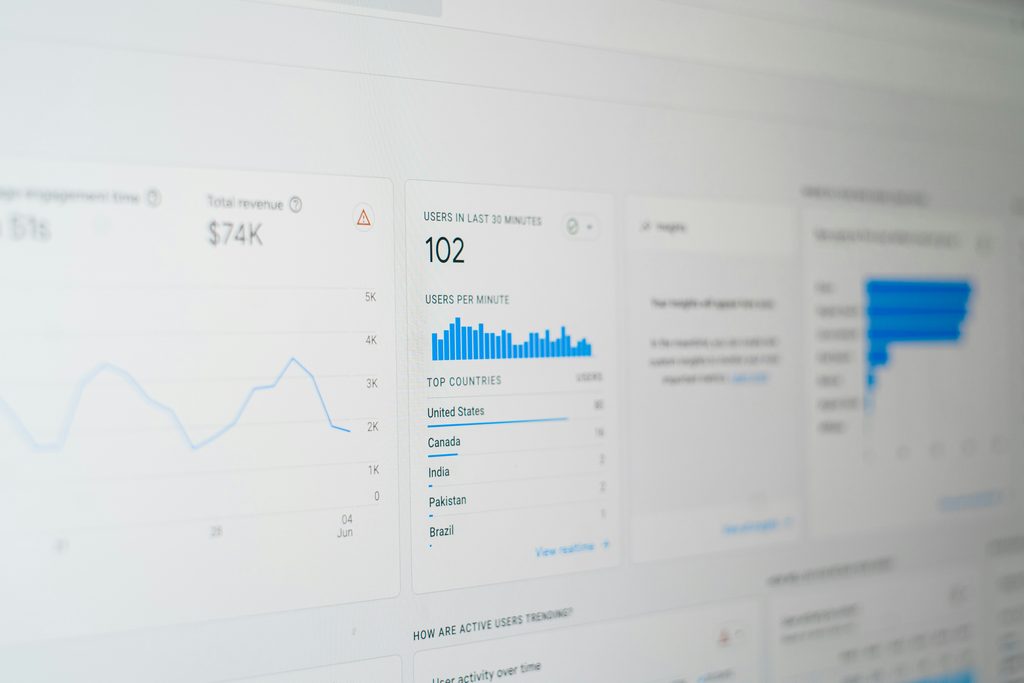
Start by reviewing your Traffic acquisition report. Filter or compare sessions using the referral medium, then examine the websites listed as referral sources. Referral data should be evaluated alongside engagement, key events, sales, and lead quality, not viewed as a standalone traffic number.
Useful metrics include:
- Referral users and sessions: The number of referral visitors reaching your website.
- Referral traffic rate: The percentage of total sessions attributed to referral traffic during a selected period.
- Engagement: Whether visitors remain on the page, explore the website, or leave quickly.
- Conversion rates: The percentage of referral visitors who complete a meaningful action.
- Revenue and lead quality: Whether the channel produces customers rather than clicks alone.
- Page performance: Which destination pages receive and convert the most high-intent visits.
- Source performance: Which publishers, creators, external sites, and referral channels generate the strongest results.
If a link appears in an email, private message, PDF, mobile app, or untagged social post, analytics may classify the visit incorrectly as an unattributed visit. Add consistent UTM parameters to campaign links so paid ads, creator collaborations, newsletters, and social media marketing activity are easier to identify.
Track the referral traffic rate over time, but do not optimize for percentage alone. A smaller source that produces significant referral traffic and strong sales may be more valuable than a large source with weak engagement.
8 Results-Backed Methods to Increase Referral Traffic
Referrals do not arrive simply because you have an excellent product or service. Generating referral traffic requires a clear strategy based on your industry, audience, and available resources.
Over the years, Vivian Agency has helped ecommerce and online businesses build referral programs and partnership strategies from the ground up, generating measurable revenue through affiliates and creators.
These are the exact methods we use to increase referral traffic and improve the quality of the visitors partners send.
1. Use Social Media Influencer Networks
Influencer networks are one of the best ways to bring referral traffic to affiliate and referral programs. We have used this approach for several brands, including DOD Outdoors.
Start by identifying and categorizing creators in your specific niche. Assess their content quality, audience relevance, engagement, location, and previous brand partnerships before offering a unique referral code, tracking link, or discount.
When we designed DOD Outdoors’ affiliate program, we curated a list of more than 1,000 influencers in camping, hiking, travel, and adjacent niches. This gave the brand a strong base for outreach and resulted in its first affiliate and sponsorship collaborations.
The goal is not to use as many influencers as possible. It is to build a broad but relevant network that places the brand in front of the right target audience across suitable social media platforms.
Creators can include referral links in reviews, tutorials, profile links, video descriptions, and resource pages. They can also share a referral code through social media content when a platform does not make external links easy to access.
This approach can drive significant referral traffic because the recommendation comes from a familiar person rather than a paid display placement. Influencer marketing works especially well when creators can demonstrate the product naturally and explain why it is useful.
2. Streamline Your Campaign Management
When your brand works across multiple channels, it can be difficult to create a consistent campaign strategy that covers every partner and platform. Streamlining the process can save hours of work each week while improving tracking data and partner support.
Use an affiliate or referral platform to organize applications, referral links, coupon codes, commissions, payouts, branded assets, and communication. A simple referral engine also reduces errors when more partners begin generating referral traffic simultaneously.
Your setup should make it easy to answer four questions:
- Which referral sources are sending traffic?
- Which partners are producing qualified traffic and conversions?
- Which offers and landing page variations perform best?
- Which partners need support, updated assets, or a stronger incentive?
Campaign links should use consistent naming and tracking parameters. This allows Google Analytics and your referral platform to show a clearer picture of performance across traffic sources.
Automation should support relationships rather than replace them. Automate routine onboarding, link creation, reporting, and reminders, then use the saved time to nurture partners and improve their marketing efforts.
3. Take Advantage of Social Media Communities
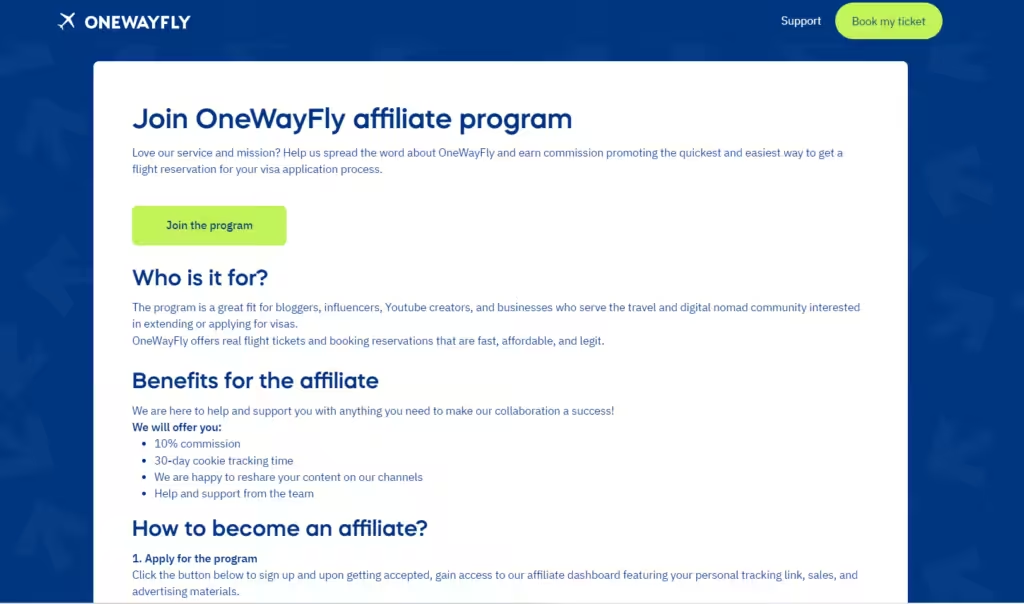
Social media traffic can generate referrals through more than influencer partnerships. Brands can also participate directly in relevant social media communities, which was part of our approach when launching OneWayFly’s referral program.
OneWayFly focused on Facebook groups and digital nomad communities where travellers were already discussing onward tickets and entry requirements. The program later reported 120 active affiliates and close to $40k in revenue.
Look for niche Facebook groups, Slack communities, Reddit discussions, professional forums, and other spaces where your target audience asks questions related to your product. Local businesses can also participate in neighbourhood groups, city communities, and relevant local directories.
The posting strategy needs to remain consistent and responsive. Instead of dropping referral links without context, become a useful part of the community by answering questions, sharing practical resources, and following group rules.
Referral codes and relevant offers can then be incorporated naturally when they genuinely solve the problem being discussed. This approach creates more referral traffic without making every interaction feel promotional.
Social media marketing can also support community partnerships through collaborative posts, live sessions, shared resources, and giveaways. Use UTM-tagged URLs to separate traffic from different social media channels and platforms.
4. Use Automation
Automation reduces the time required to set up and run a referral campaign. Instead of spending hours on routine administration, you can focus on improving your referral strategy, recruiting partners, and building relationships.
Automation can accelerate technical procedures such as contacting approved applicants, onboarding new affiliates, producing referral links, sending reminders, and issuing rewards. Faster onboarding allows more partners to begin generating referral traffic without adding the same amount of manual work.
You can automate your referral campaign using referral marketing software with built-in workflows or connect your existing tools through automation platforms.
While working with Prep Expert, we automated its existing referral and affiliate program so the team could shift its focus toward growing the network. Within the first year, the network program brought in $136k in sales, while the in-house platform generated more than $337k.
Set up automation for:
- Application confirmation and partner approval
- Welcome emails and training resources
- Unique tracking links and coupon codes
- Performance milestones and bonus notifications
- Inactive-partner reminders
- Payment and commission updates
- Regular reporting by partner and traffic source
The result is a more scalable referral engine with fewer delays for both your team and your partners.
5. Expand Your Audience Carefully
Spreading your focus too thin is a mistake, but expanding into adjacent niches can introduce the brand to qualified visitors who might otherwise miss it.
This approach has two parts: identifying related interest groups and covering relevant demographic or geographic segments. We used it while working with Tactical Foodpack, targeting outdoor audiences across Europe and adjacent niches such as sailing.
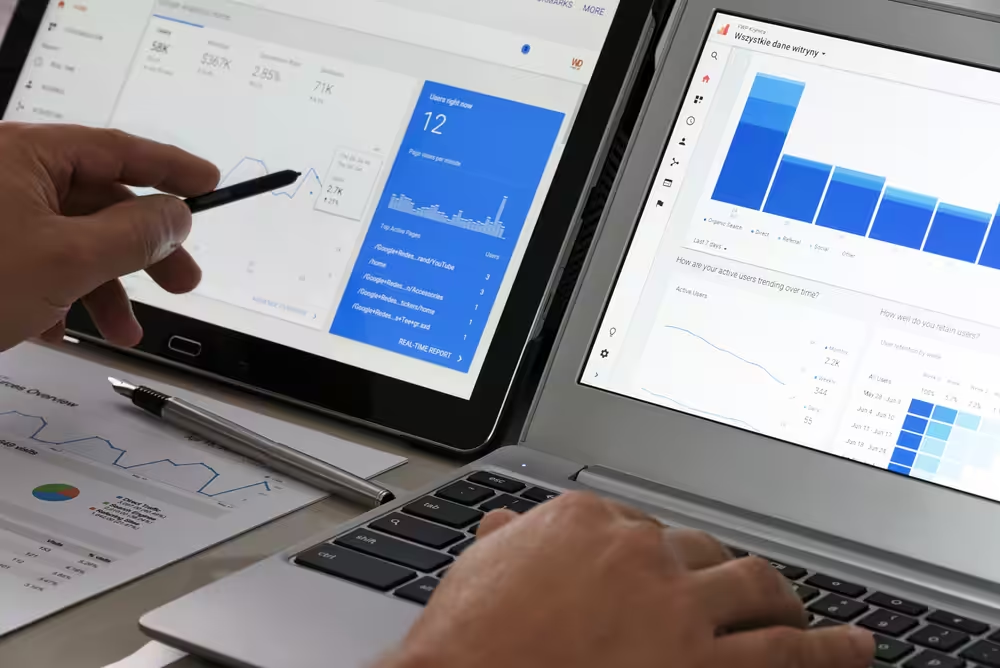
Use Google Analytics to examine the audiences, locations, devices, pages, and traffic sources already associated with engagement and conversions. You can then identify creator categories, industry blogs, review sites, or communities that share similar audience characteristics.
For example, a camping-food brand might expand from hikers into sailing, emergency preparedness, road trips, festivals, and expedition travel. Each group remains connected to the product’s use case, so the expansion can produce better-qualified visitors rather than irrelevant reach.
Create a separate landing page when an adjacent audience needs different messaging. A page designed specifically for sailors should not rely on the same examples and imagery as one designed for alpine hikers.
6. Build a Long-Term Content and SEO Strategy
An effective outreach strategy focused on quality can attract leading publishers and creators in a specific niche. This happened with Native Pet, where a long-term content strategy helped recruit influential pet creators and generate an additional $10k in monthly partnership revenue.
Build high quality content that other websites have a genuine reason to cite. Original research, useful tools, expert commentary, templates, data-led reports, and detailed guides can earn external links more naturally than generic promotional pages.
Your search engine optimization and referral strategy should work together. Research relevant questions and keywords, study competing content, and create a resource that brings a clearer angle, stronger evidence, or more practical value.
Referral links from high authority websites can send targeted traffic while helping people and search engines discover your content. They may also strengthen authority scores in third-party tools, although domain authority is not a metric used by Google.
Follow Google’s guidance on crawlable links and avoid buying manipulative placements. The goal is to earn links because the content is useful, not manufacture links solely to influence search rankings.
Online directories can also help website owners build visibility, especially for local businesses and specialist services. Prioritize accurate profiles on trusted platforms rather than submitting your business to hundreds of low-quality directories.
After building useful resources on your own site, reach out to relevant publishers for partnerships, expert contributions, and guest blogging opportunities.
7. Use Guest Blogging, Reviews, and Strategic Partnerships
Guest blogging is a practical way to gain access to an established audience while demonstrating expertise. Identify industry blogs that serve your target audience and pitch a specific article that fills a genuine content gap.
Strong guest posts should educate the publisher’s readers first. Add a contextual link to a relevant guide, case study, research page, or tool on your website when it improves the article. Do not force multiple external links into unrelated sentences.
To make guest blogging generate more referral traffic:
- Pitch quality publications with engaged, relevant readers.
- Propose original topics rather than articles already covered extensively.
- Link to a suitable landing page instead of always linking to the homepage.
- Add UTM parameters where the publisher allows them.
- Monitor referral visitors and conversion performance after publication.
- Refresh successful guest posts when the information becomes outdated.
Review sites can also bring referral visits from people who are actively comparing options. Claim and complete relevant profiles, provide accurate product details, respond professionally to feedback, and make it easy for satisfied customers to leave honest reviews.
Partnerships with complementary brands can produce more referral traffic through webinars, newsletters, resource pages, bundles, and co-created research. The best partners are not direct competitors, but they serve a similar audience and offer a logical next step.
8. Create Attractive Offers and Professional Assets
Affiliates and referral partners value generosity, but they also need clarity and flexibility. Stay aware of each partner’s audience and preferred content format rather than relying on one offer for everyone.
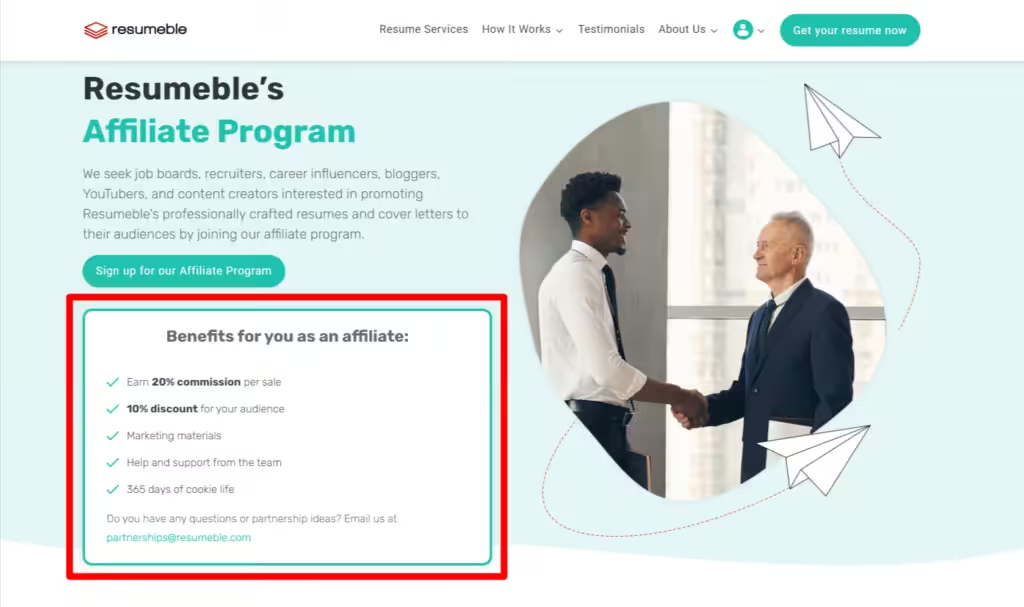
Resumeble wanted to use affiliate marketing to increase brand awareness and build a long-term revenue source. We approached this through multi-target activation, hybrid collaborations, and individually tailored offers.
We also focused on affiliate nurturing. Resumeble expanded its terms and conditions and added a comprehensive FAQ to address common questions. Consistent support and resources helped partners understand the offer and promote it effectively.
The result was doubled monthly sales and a growing network of 500 partners across four channels within seven months.
To help partners represent your brand consistently, provide:
- Clear offer terms and commission details
- Approved product descriptions and key messages
- Professional images, logos, and videos
- Examples for different creator platforms
- Referral links and unique discount codes
- Disclosure guidance for affiliate and influencer marketing
- Dedicated landing page options
- Contact details for support
Professional assets make it easier for publishers and creators to produce accurate content quickly. They also reduce inconsistent claims that can weaken trust or lead visitors to the wrong page.
Get More From Your Referral Efforts
Learning how to increase referral traffic is not about using one tactic in isolation. Strong results usually come from combining content, affiliates, influencers, partnerships, social media, review sites, and community participation.
Begin by auditing your existing referral sources in Google Analytics. Identify which partners already drive referral traffic, which pages convert visitors, and where tracking is missing. Then concentrate your resources on the channels that bring valuable traffic rather than simply the most clicks. The right partnerships will continue sending traffic to your site after the initial campaign.
If your business needs support building or scaling referral programs, Vivian Agency can help with strategy, setup, recruitment, content, tracking, and optimization. Explore our referral marketing services or review our guide to referral program best practices.
You can also schedule a call or contact our team to discuss a referral strategy tailored to your business.
Frequently Asked Questions
What is referral traffic?
Referral traffic refers to visitors who arrive through a link on another website. Visits from affiliate sites, guest posts, review sites, online directories, partner pages, and some social media links can be considered referral traffic when the referring source is passed to your analytics platform.
How can I increase referral traffic?
You can increase referral traffic by building affiliate and influencer partnerships, contributing guest posts, earning mentions on reputable sites, participating in social media communities, appearing in relevant directories, and creating useful content that website owners want to reference.
Why is referral traffic important?
Referral traffic is important because it introduces your website to audiences that other publishers, creators, and customers have already built trust with. This can generate qualified visits, improve brand visibility, and produce stronger conversion rates than untargeted visits.
What is the difference between referral traffic and direct traffic?
Referral traffic comes with information identifying another website as the source. Direct traffic has no identifiable referring source. A visit may be considered direct traffic when someone types the URL, uses a bookmark, or clicks an untagged link that does not pass source information.
Does referral traffic improve SEO?
Referral visits are not a confirmed positive ranking factor on their own. However, earning relevant links from reputable sites can provide SEO benefits by helping search engines find pages and understand connections across the web. Strong links may also improve domain authority scores and support keyword rankings indirectly.
How do I find referral traffic in Google Analytics?
In Google Analytics 4, open the Traffic acquisition report and review session source and medium. Filter for the referral medium to examine referral sources, sessions, engagement, key events, and revenue. Compare this data with other traffic sources such as organic search, paid ads, email, and unattributed visits.
What is a good referral traffic rate?
There is no universal referral traffic rate that suits every website. The appropriate level depends on the business model, partner network, search engine traffic, advertising, and other marketing channels. Focus on whether the referral traffic converts and supports commercial goals.
Can social media generate referral traffic?
Yes. Social media can drive referral traffic through profile links, posts, creator recommendations, group discussions, and paid ads. Use tagged campaign URLs because some visits from apps or private sharing may otherwise appear as unattributed traffic.