
The global influencer marketing industry reached $32.55 billion in 2025 — and brands report average returns of $5.20 to $5.78 for every dollar spent on influencer programs. As influencer marketing grows more central to digital marketing strategies, so does the complexity of running it well.
Finding relevant influencers, managing campaigns across multiple social media platforms, tracking performance analytics, and proving ROI has become a full operational discipline.
The right influencer marketing tools make all the difference. Without them, you’re relying on manual outreach, scattered spreadsheets, and guesswork. With them, you can find creators, vet audience authenticity, run automated follow-ups, manage affiliate campaigns, and make data driven decisions — all from a centralized hub.
This guide covers the top 13 influencer marketing tools for 2026: what each one does best, its key features, and who it’s actually built for. Whether you’re just starting to build your influencer marketing strategy or scaling a program across dozens of creators and various platforms, there’s a right influencer marketing tool for your needs here.
Table of Contents
What Are Influencer Marketing Tools?
Influencer marketing tools are software platforms that help brands and marketers manage the entire process of working with influencers — from identifying the right influencers and handling outreach, to executing influencer campaigns and measuring results.
The best influencer marketing tools typically cover one or more stages of the influencer marketing funnel:
- Discovery: Finding relevant influencers whose audience demographics, engagement rates, and content formats match your brand values and campaign goals
- Outreach: Managing personalized outreach, automated follow-ups, and influencer relationship management at scale
- Campaign management: Briefing selected influencers, approving content, tracking deliverables, and managing influencer fees and payments
- Analytics: Measuring performance metrics, tracking affiliate campaigns, and generating detailed reports to prove ROI
Some influencer marketing software covers all of these stages in one platform — a true all-in-one solution. Others go deep on a single function, like influencer discovery tools, social listening, or blogger outreach and email discovery.
Choosing the right influencer marketing tool comes down to where your biggest operational gap is. If you’re still evaluating whether affiliate and influencer marketing is right for your business, that’s worth establishing before committing to any platform.
Why Should You Use Influencer Marketing Tools?
Managing influencer marketing efforts manually is possible when you’re working with one or two influencers. Once you’re managing campaigns with 10, 20, or 50 influencers across multiple social media platforms, the operational complexity makes it unsustainable without the right software. Here’s what the best influencer marketing tools actually solve:
- Process automation: Automating manual outreach, automated follow-ups, contract generation, and payment processing saves significant time and reduces the risk of things falling through the cracks.
- AI-powered discovery: The best influencer marketing platforms use AI to identify relevant influencers based on audience demographics, brand affinity, content formats, and past performance, not just follower count.
- Fake follower detection: Good influencer marketing software flags inauthentic followers and bot activity before you commit budget to brand partnerships that won’t perform. Fake followers are one of the biggest sources of wasted spend in influencer marketing campaigns — see our full guide on how to tell if someone bought followers on Instagram for a detailed breakdown.
- Performance analytics: Detailed analytics and detailed reports on engagement, conversions, and affiliate campaigns let you make data driven decisions rather than guessing what worked.
- Centralized hub for managing influencers: Instead of juggling email threads, spreadsheets, and direct messages across social media platforms, influencer marketing tools bring everything into one place — briefing, communication, content approvals, and campaign tracking.
- Scalability: As you find new influencers and grow your program, influencer marketing software lets brands scale without proportionally increasing headcount.
The Top 13 Influencer Marketing Tools at a Glance
| Tool | Best For |
| UpPromote | Shopify affiliate and influencer programs |
| Influencer Hero | All-in-one influencer marketing platform |
| Modash | Largest influencer database and discovery |
| ClickUp | All-in-one workflow and campaign management |
| Heepsy | Influencer identification with authenticity filters |
| Pitchbox | Blogger outreach and automated follow-ups |
| Insense | UGC and end-to-end influencer campaign management |
| Influencity | AI-powered campaign management |
| SARAL | Automated influencer outreach and management |
| Brandwatch | Social listening and brand mention monitoring |
| Traackr | Campaign tracking and performance analytics |
| Collabstr | Influencer marketplace with transparent pricing |
| Hunter | Email discovery for influencer outreach |
What Are The Best Influencer Marketing Tools?
Here is a list of the 11 essential influencer marketing tools that you should look out for in 2026.
1. UpPromote — Best for Shopify Affiliate and Influencer Programs
Key Features
- Built specifically for Shopify web stores
- Comprehensive affiliate campaigns and influencer program management
- Highly customizable commission structures and tracking
- Lets influencers apply directly through a branded portal
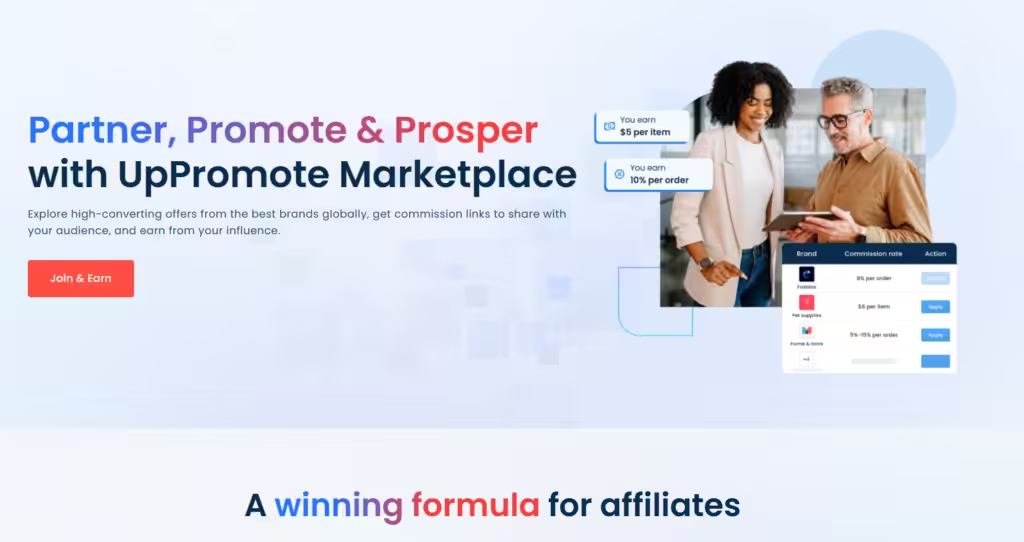
UpPromote is an all-in-one affiliate and influencer marketing platform built for Shopify merchants. If your brand runs on Shopify, UpPromote covers the entire process: setting up your program, letting new influencers apply, enrolling selected influencers, managing influencer relationships, running affiliate campaigns, and tracking performance — all within a single dashboard.
Its biggest strength is customization. You can tailor commission structures, landing pages, referral links, and promotional materials to match your exact brand values and campaign goals. We used UpPromote when building Click & Grow’s affiliate program, reaching over 1,000 partners and $20K+ in sales within the first six months.
For Shopify brands managing both affiliate campaigns and influencer partnerships in one place, it’s among the best influencer marketing tools available.
The limitation is scope: UpPromote is a Shopify plugin. Brands on other platforms will need to look elsewhere. For a deeper look at the platform’s capabilities, see our best affiliate app for Shopify guide.
2. Influencer Hero — Best All-in-One Influencer Marketing Platform
Key Features
- Database of 450M+ influencers across all major social media platforms
- AI-powered discovery and automated outreach
- Fake follower detection and audience authenticity scoring
- Campaign automation and customizable workflows
- 45+ integrations across ecommerce, marketing, and operations
- Built-in messaging for direct communication with influencers directly
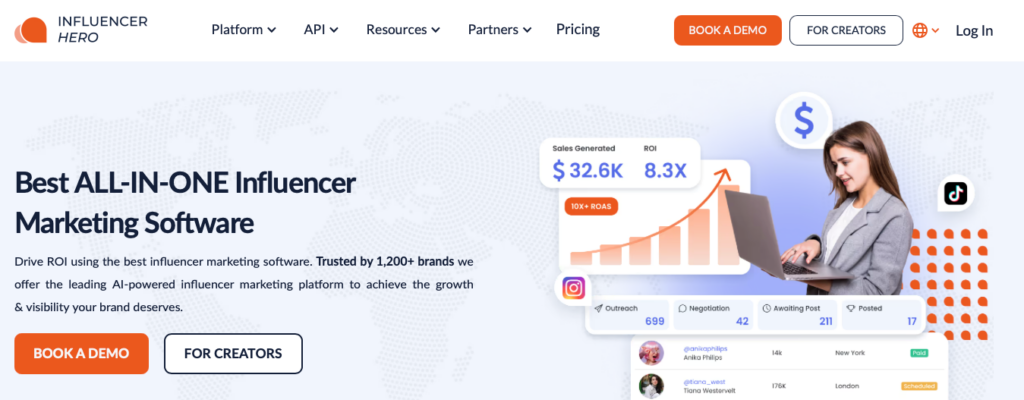
Influencer Hero is designed for brands that want to manage the entire influencer marketing lifecycle — from finding relevant influencers to proving ROI — without switching between tools.
Its database of over 450 million influencers spans all major social media platforms, and AI-powered discovery helps identify the right influencers based on audience demographics, engagement rates, content formats, and brand affinity.
What sets it apart as an influencer marketing platform is its fraud detection layer: audience authenticity scoring helps brands avoid partnering with influential people whose follower counts are inflated by fake followers. This is increasingly important as influencer fraud eats into marketing campaign budgets across the industry.
The 45+ integrations mean Influencer Hero fits into existing digital marketing stacks rather than requiring a wholesale workflow overhaul. For brands running sophisticated, multi-channel influencer marketing campaigns, it’s one of the most capable all-in-one solutions available.
3. Modash — Best for Influencer Discovery at Scale
Key Features
- Database of 250M+ influencers across all major social media platforms
- Automatic campaign performance tracking
- Audience demographics and authenticity filters
- Invoice management
- Custom workflow builder for managing influencers
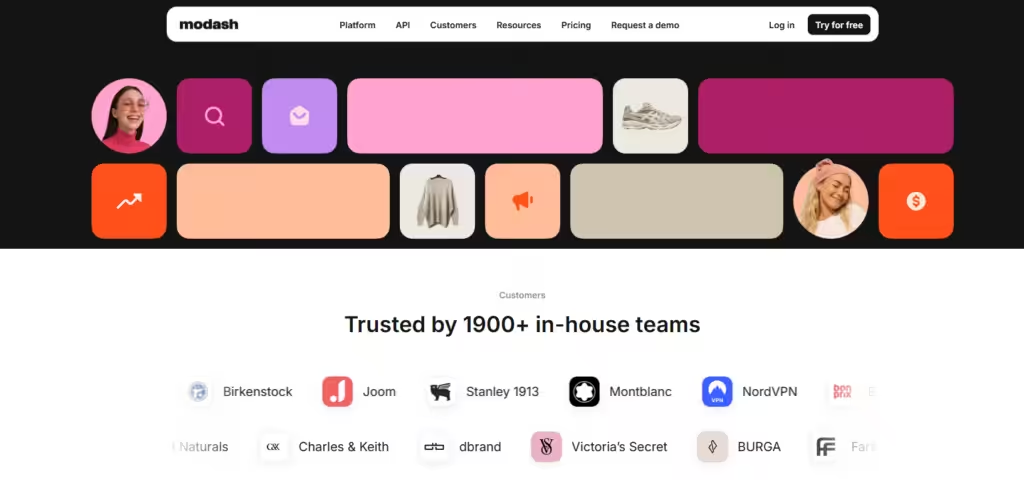
As a dedicated influencer marketing platform, Modash is built around one core strength: helping brands find relevant influencers at scale. Its database of over 250 million creators covers Instagram, TikTok, and YouTube, with filters for audience demographics, engagement rates, location, niche, and content formats.
Beyond discovery, Modash functions as a full campaign management tool. Brands can find creators, run outreach, build custom workflows, track performance metrics across all social media platforms, and manage payments — including invoices — from a single centralized hub.
Its campaign analytics dashboard collects all influencer performance data in one place, making it much easier to prove ROI on influencer marketing efforts.
Modash also ranks Vivian Agency among its top Instagram influencer marketing agencies — a recognition we’re proud of, and a signal of the platform’s value to agencies managing campaigns at scale.
4. ClickUp — Best for All-in-One Campaign and Workflow Management
Key Features
- All-in-one business and campaign management platform
- Advanced collaborative features and custom workflows
- High automation capacity for managing influencers across various platforms
- AI-powered content brief and strategy generation
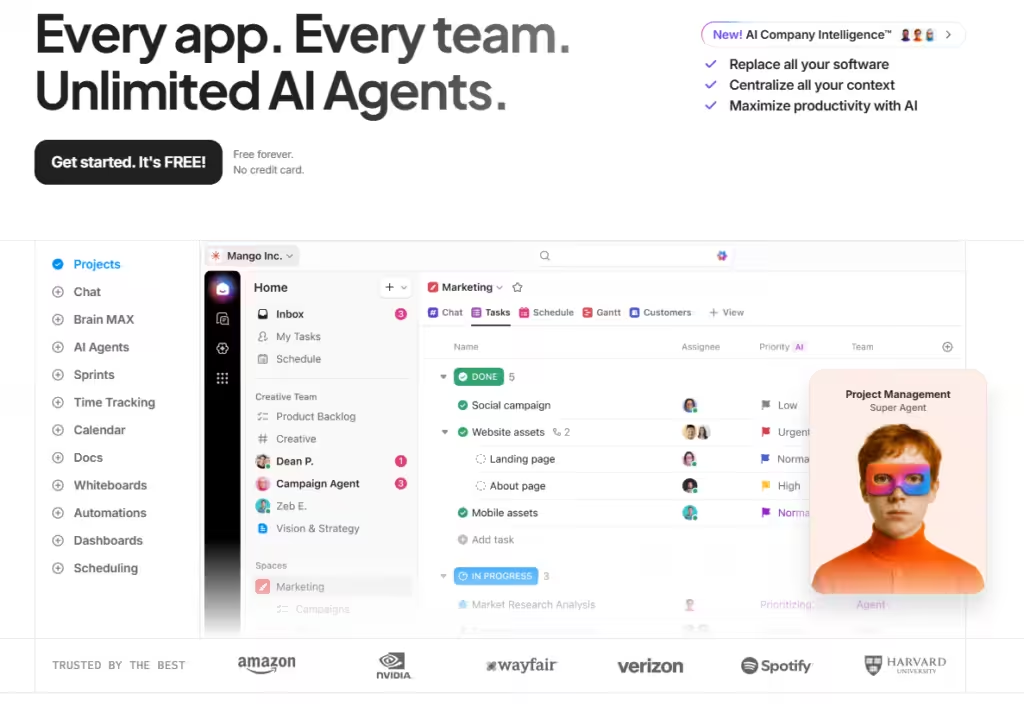
ClickUp isn’t an influencer marketing platform in the traditional sense — it doesn’t have a built-in influencer database or outreach tool. What it offers instead is best-in-class workflow infrastructure for managing campaigns once you’ve already identified the right influencers.
For teams managing influencer marketing efforts across various platforms and multiple campaigns simultaneously, ClickUp acts as a centralized hub: tracking each influencer’s deliverables, managing campaign goals and timelines, enabling collaborative approval workflows, and automating repetitive task sequences.
The Dashboards feature lets you set custom performance metrics for selected influencers and visualize progress at a glance.
ClickUp AI can also generate influencer marketing strategy outlines, content briefs, and campaign frameworks — useful for teams that need to brief influential people quickly and consistently without reinventing the wheel each time.
5. Heepsy — Best for Influencer Identification with Authenticity Controls
Key Features
- Platform-specific filters for finding relevant influencers
- Robust audience authenticity and fake follower detection
- Detailed analytics and influencer quality scoring
- Exportable influencer lists in CSV or XLS format
What makes Heepsy stand out among influencer discovery tools is its combination of granular search filters and built-in authenticity controls. You can narrow your influencer search by social media platform, location, niche, engagement rate, and audience demographics — and the fraud detection layer ensures fake influencers don’t pass through.
Every influencer profile in Heepsy comes with detailed analytics: follower growth, engagement rates, audience authenticity scoring, and an overall quality score. This gives brands the data to make informed decisions before reaching out, rather than discovering problems after committing influencer fees to a campaign.
Influencer lists built in Heepsy are easily exportable, making it straightforward to move selected influencers into your outreach or campaign management workflow.
6. Pitchbox — Best for Blogger Outreach and Automated Follow-Ups
Key Features
- Find influencer contact details across the web
- Automate email sequences with smart templates
- Automated follow-ups with customizable timing
- AI-powered Outreach Engagement Probability (OEP) scoring
- Performance analytics on outreach campaigns
Originally built for link building, Pitchbox has evolved into one of the strongest outreach-focused influencer marketing tools available. For brands that want to scale manual outreach into a structured, automated system, it handles the entire process: finding contact details, sending personalized outreach emails, scheduling automated follow-ups, and tracking response rates.
Pitchbox’s OEP (Outreach Engagement Probability) scoring uses AI to rank potential influencers by their likelihood of responding — helping teams focus energy on the contacts most likely to convert.
Smart templates are adjustable based on your exact campaign goals and brand values, making personalized outreach viable at volume.
For blogger outreach specifically — reaching out to content creators with established websites and social followings — Pitchbox is the most purpose-built tool on this list. For guidance on what makes outreach actually work, our post on how to reach out to affiliates includes email templates and proven response strategies.
7. Insense — Best for UGC and End-to-End Influencer Campaign Management
Key Features
- Vetted marketplace of 75K+ UGC creators and micro-influencers from 35+ countries
- Integrated outreach tool connecting to 7M+ influencers
- Diverse campaign types: UGC, seeding, TikTok Shop, Meta Partnership Ads, TikTok Spark Ads
- Automated payments, contracts, and detailed reporting
- Fully managed services available for teams without in-house capacity
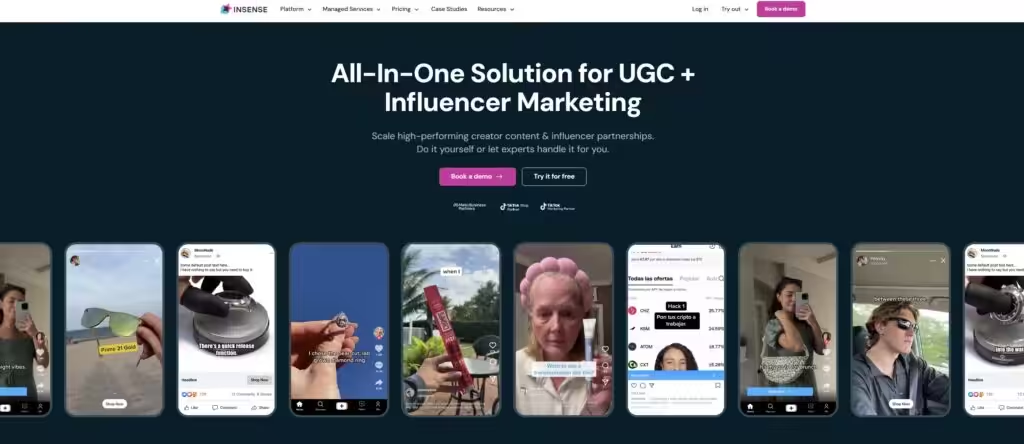
Insense sits at the intersection of user generated content production and influencer marketing. Its core marketplace of 75,000+ vetted UGC creators and micro-influencers spans 35+ countries across the US, Canada, EMEA, APAC, and Latin America — covering the content formats most brands need for paid social: short-form video, static UGC, product reviews, and testimonials.
Beyond the marketplace, Insense connects to a database of over 7 million influencers for larger-scale influencer outreach. The platform handles the entire process: creator chat, interactive brief templates, content approvals, automated payments, contract management, and detailed analytics — all in one place.
For brands running campaigns on TikTok Shop or Meta Partnership Ads, Insense’s native integrations with both platforms make it one of the few influencer marketing tools purpose-built for social commerce.
Fully managed services are also available for teams that want expert execution without building an in-house team. If you’re specifically building a TikTok influencer marketing program, Insense’s TikTok-native features are worth examining closely.
8. Influencity — Best for AI-Powered Campaign Management
Key Features
- Fully AI-powered influencer marketing platform
- Predictive analytics to identify the best influencers for specific campaign goals
- 60+ customizable features for building influencer programs
- Organize influencers into shareable lists with trackable KPIs
- Shopify integration for e-commerce brands
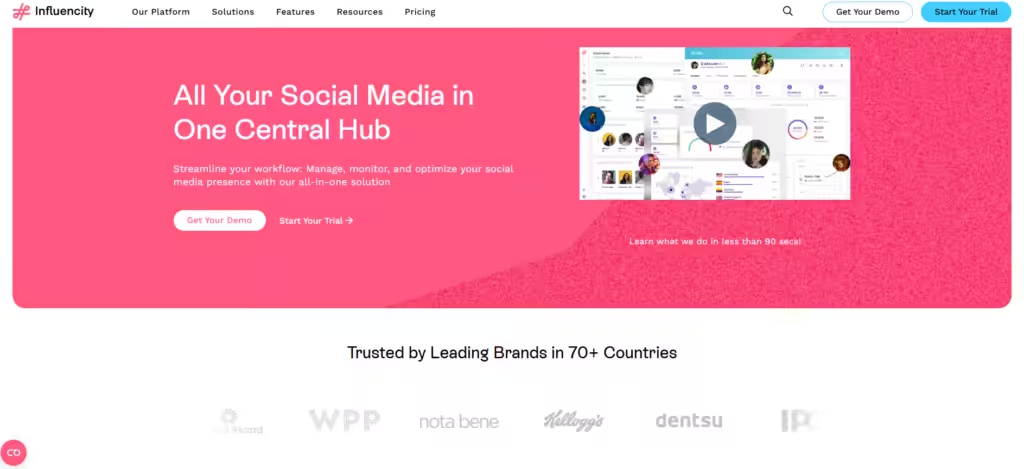
Influencity is a campaign management-first influencer marketing platform with a strong AI engine driving both discovery and prediction. The platform doesn’t just help you find relevant influencers — it uses predictive analytics to forecast which influencers are most likely to perform well for your specific campaign goals, based on past trends and audience behavior.
This predictive layer makes Influencity particularly useful for brands that want to make data driven decisions on influencer selection rather than relying on gut feel or surface metrics.
With over 60 features and highly customizable workflows, it accommodates complex influencer marketing strategies and scales well for mid-size and enterprise brands managing multiple influencer campaigns simultaneously.
The Shopify integration also makes it a strong all-in-one solution for e-commerce brands running influencer marketing alongside affiliate campaigns.
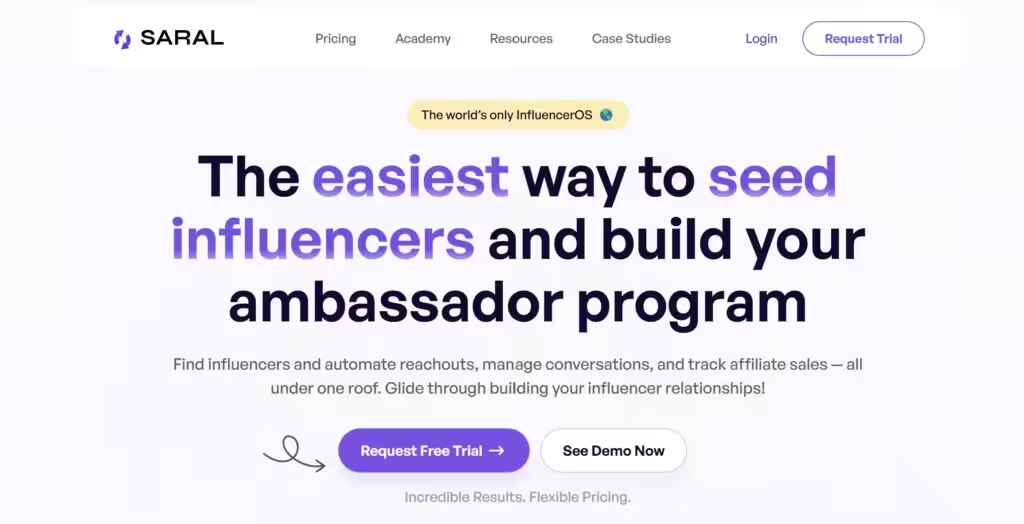
9. SARAL — Best for Automated Influencer Outreach and Management
Key Features
- AI-powered influencer discovery across social media platforms
- Automated outreach with personalized email sequences and automated follow-ups
- Full influencer relationship management from a centralized hub
- Affiliate campaign tracking and commission management
- UGC tracking and content performance monitoring
SARAL is built for brands that want to run influencer marketing at scale without proportionally scaling their team. Its automation capabilities cover the full cycle of managing influencers: discovery, personalized outreach, automated follow-ups, affiliate campaign tracking, commission management, and performance analytics — all in one platform.
What makes SARAL particularly effective is how it balances automation with personalization. Outreach sequences are automated but customizable for each segment of relevant influencers, which maintains the genuine connection that makes influencer outreach work while removing the manual labor. This makes it especially well-suited for brands building long-term influencer relationships rather than running one-off marketing campaigns.
For brands managing affiliate campaigns alongside influencer programs, SARAL’s combined affiliate and influencer tracking means you don’t need separate tools — a meaningful efficiency gain when managing various platforms and content formats simultaneously. If you’re still weighing the difference between affiliate marketing and referral marketing as you build your strategy, that’s worth clarifying before choosing a platform.
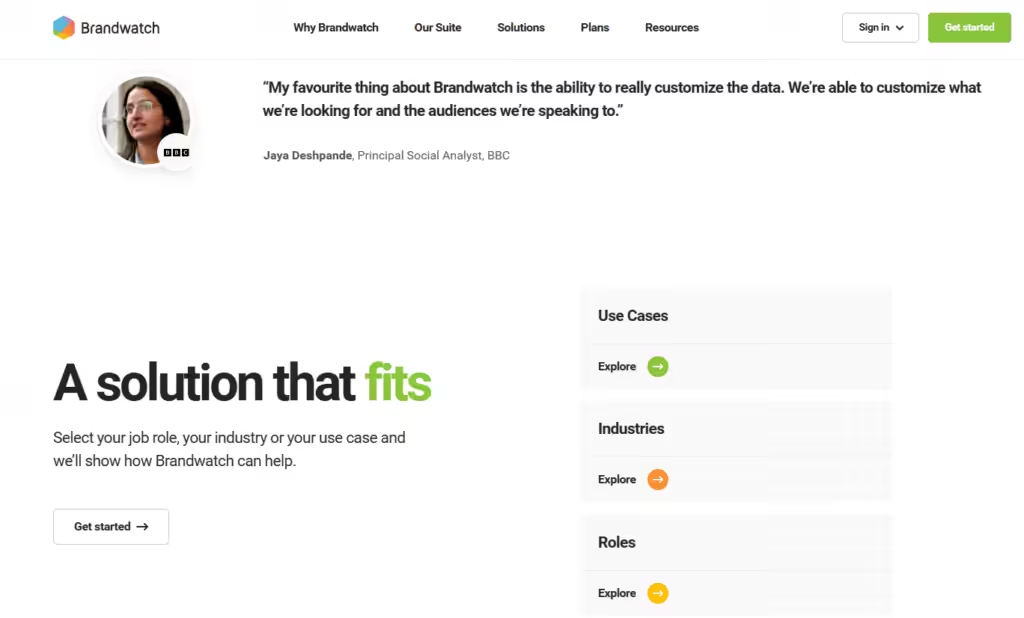
10. Brandwatch — Best for Social Listening and Brand Mention Monitoring
Key Features
- Data from over 100 million sources across social platforms and the web
- Advanced audience analytics and sentiment tracking
- Brand mention monitoring and competitor analysis
- Intuitive dashboard for social media management
Brandwatch is primarily a social listening and digital marketing intelligence platform — which makes it a different kind of influencer marketing tool than the others on this list. Rather than helping you find influencers or manage campaigns, it helps you understand your audience, monitor brand mentions, track sentiment, and identify influential people who are already talking about your brand organically.
This matters for influencer marketing strategy in a practical way: Brandwatch can surface influential customers — people who already love your brand and are advocating for it publicly — who may be ideal for influencer partnerships without requiring any cold outreach.
Finding brand partners who already have genuine brand affinity is consistently more effective than recruiting influencers who have no prior connection to your product.
With data from over 100 million sources, Brandwatch gives a genuinely holistic picture of how your brand is discussed across social media platforms and the broader web — useful for both influencer identification and real-time campaign monitoring.
11. Traackr — Best for Campaign Tracking and Performance Analytics
Key Features
- Deep audience insights and performance analytics
- Campaign tracking, management, and detailed reports
- Competitor analysis and benchmarking
- Creator lookalike tool for finding new influencers similar to top performers
- Notifications when new influencers match your criteria
Traackr is the most analytics-focused tool on this list. Its primary strength is in measuring what your influencer marketing campaigns actually accomplish — detailed reports on reach, engagement, conversions, and ROI — and providing the performance analytics to continuously improve future campaigns.
The algorithm detects which topics are currently most relevant to your brand and identifies relevant influencers already creating content in those areas, making influencer onboarding smoother and campaigns more likely to resonate with your target audience. The competitor analysis feature benchmarks your influencer marketing efforts against what similar brands are doing — useful for identifying gaps and opportunities.
For brands that need to prove ROI on influencer marketing to senior stakeholders, Traackr’s detailed reports and attribution modeling make it one of the strongest tools available. It’s best suited for mid-to-large brands with a $20,000+ annual budget for the platform..
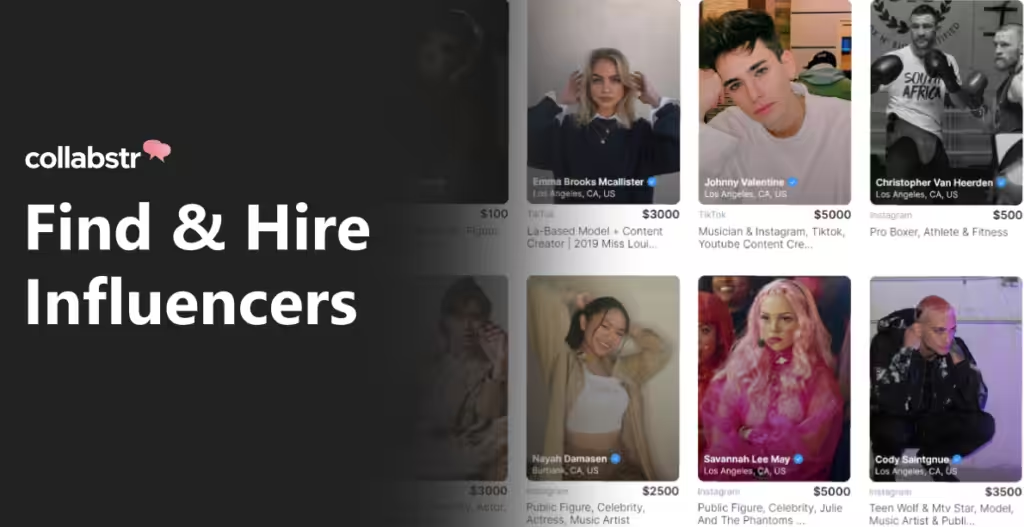
12. Collabstr — Best Influencer Marketplace with Transparent Pricing
Key Features
- Directly contact vetted influencers looking for brand partnerships
- Pre-packaged deals with transparent pricing
- Built-in messaging for direct communication
- Secure payment processing through the platform
- Covers Instagram, TikTok, YouTube, and Twitter influencers
Collabstr is an influencer marketplace — a platform where influencers market themselves to brands and influencers apply directly for partnership opportunities. This flips the typical influencer outreach dynamic: instead of brands hunting for the right influencers and managing cold outreach, influencers come to you.
The key advantage is transparent pricing. Every influencer package on Collabstr comes with clear, upfront pricing and defined deliverables — no hidden influencer fees, no lengthy negotiations, no ambiguity about what you’re paying for. For brands that want to find creators quickly and run marketing campaigns without agency overhead, this makes it one of the most accessible tools on this list.
The built-in messaging feature handles all communication with selected influencers directly on the platform, and payments are processed securely through Collabstr — streamlining the entire process from discovery to payment. The platform covers Twitter influencers alongside Instagram, TikTok, and YouTube creators.
13. Hunter — Best for Email Discovery and Influencer Outreach
Key Features
- Find influencer email addresses by name or company domain
- Database of over 100 million verified email addresses
- Email Verifier to filter out fake accounts and invalid addresses
- Contact details enrichment for outreach campaigns
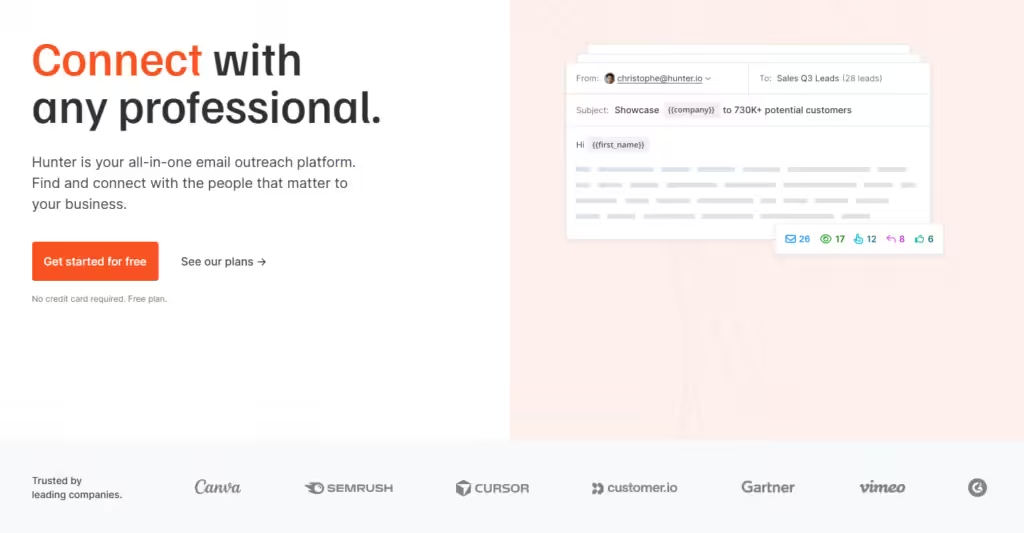
Hunter is a more specialized influencer outreach tool focused on one specific problem: finding verified contact details for the people you want to reach. If you’ve identified the best influencers for your brand through another discovery platform but can’t find how to reach them, Hunter fills that gap.
You can search for contact details by personal name or company domain, and the Email Verifier filters out invalid addresses, fake accounts, and bots — so your outreach goes to real, active inboxes. With a database of over 100 million addresses, Hunter covers a wide range of influential people across industries.
Hunter works best as a complement to a broader influencer marketing tool stack rather than a standalone solution — pair it with a discovery platform like Modash or Heepsy and an outreach tool like Pitchbox for a complete workflow covering everything from finding relevant influencers to sending personalized outreach and automated follow-ups.
How to Choose the Right Influencer Marketing Tool for Your Brand
With so many influencer marketing platforms available, choosing the right one comes down to matching the tool to your actual operational gaps. Here’s a practical framework:
If your primary challenge is finding the right influencers → Start with a discovery-focused platform like Modash, Heepsy, or Influencer Hero. These influencer marketing tools have the largest databases, the strongest audience demographics filters, and the best tools for vetting audience authenticity before you commit budget. Our guide on how to find affiliates for your brand covers the broader discovery and vetting process in detail.
If your challenge is managing campaigns once you have influencers → Look at Influencity, SARAL, or ClickUp. These excel at organizing selected influencers, tracking deliverables, managing influencer fees, and running affiliate campaigns alongside influencer programs.
If outreach and relationship building is the bottleneck → Pitchbox for blogger outreach and automated follow-ups, SARAL for full-cycle automated influencer outreach, or Collabstr for marketplace-style access to influencers who are actively looking for brand partnerships. For outreach best practices, our affiliate outreach templates guide applies equally well to influencer outreach.
If proving ROI and performance analytics is the priority → Traackr provides the most robust detailed reports and attribution modeling. Brandwatch adds the social listening layer for brand mention monitoring and audience sentiment.
If you’re on Shopify → UpPromote is the most purpose-built tool for combining affiliate campaigns and influencer programs within the Shopify ecosystem. See our best affiliate app for Shopify comparison for a side-by-side breakdown.
If user generated content is central to your strategy → Insense is built specifically for UGC production and management across various platforms, including TikTok Shop and Meta ads. If TikTok is a priority channel, our TikTok influencer marketing guide covers what to look for in that specific context.
The best influencer marketing tools for most brands aren’t necessarily the most feature-rich, they’re the ones that solve your most pressing problem without adding operational complexity. Start with one tool that addresses your biggest gap, prove ROI, then expand your stack.
Take our quick quiz and get personalized recommendations based on your brand size, campaign goals, and budget.
Influencer Marketing Tools vs. a Full-Service Agency
Influencer marketing tools give brands control, speed, and cost efficiency. They let you find creators, manage campaigns, and track performance analytics in-house — without waiting on agency timelines or paying agency markups.
But software doesn’t replace strategic judgment. Choosing the right influencers, crafting marketing messages that resonate with a specific audience, structuring affiliate campaigns for maximum ROI, and managing influencer relationships over time all require human expertise that tools alone can’t provide.
Vivian Agency offers a boutique affiliate and influencer marketing agency that combines the tools above with the strategic and operational expertise to use them effectively. We manage the entire process — from identifying relevant influencers and vetting audience authenticity, to running influencer campaigns and producing detailed reports on performance. Our case studies show what that looks like in practice across a range of brands and campaign goals.
If you’re building or scaling an influencer marketing program and want expert guidance on which tools, tactics, and influencer partnerships will move the needle, get in touch or book a free call.
FAQs
What is the best influencer marketing tool in 2026?
There’s no single best influencer marketing tool — it depends on your biggest operational challenge. For discovery at scale, Modash and Influencer Hero are the strongest options. For automated influencer outreach and affiliate campaigns, SARAL leads. For performance analytics and proving ROI, Traackr is the most comprehensive. For transparent pricing and direct access to influencers, Collabstr is the most accessible. If you’re on Shopify, UpPromote covers affiliate campaigns and influencer programs in one place. For a broader view of how these fit into a full program, see our guide on how to set up an influencer affiliate program.
What’s the difference between an influencer marketing platform and influencer outreach tools?
An influencer marketing platform is typically a broader all-in-one solution that covers discovery, relationship management, campaign management, and analytics. Influencer outreach tools — like Pitchbox and Hunter — focus specifically on the contact discovery and communication stage. Most serious influencer marketing programs use a combination: a platform for managing the full campaign lifecycle and a specialized tool for scaling outreach.
Do I need influencer marketing software if I work with an agency?
Not necessarily. A good influencer marketing agency like Vivian Agency already has access to the tools needed to find relevant influencers, manage influencer campaigns, track performance, and produce detailed reports. The value of working with an agency is that you get the tools plus the strategic expertise without having to evaluate, purchase, and learn the software yourself.
How do influencer marketing tools detect fake followers?
Most influencer marketing platforms include audience authenticity scoring that analyzes follower growth patterns, engagement rate consistency, and follower profile quality to identify suspicious accounts. Platforms like Modash, Heepsy, and Influencer Hero flag influencers with inflated follower counts before you commit to brand partnerships. For a detailed walkthrough of how to identify fake followers manually and with tools, see our guide on how to tell if someone bought followers on Instagram.
What should I look for when choosing an influencer marketing tool?
Start by identifying your biggest operational gap: discovery, outreach, campaign management, or analytics. Then evaluate tools on: database size and filter quality for your target social media platforms, audience demographics depth, fake follower detection, ease of managing campaigns, quality of detailed reports, transparent pricing, and integration with your existing digital marketing stack. Most platforms offer a trial — use it to test whether the tool actually solves your problem before committing.
Can influencer marketing tools manage affiliate campaigns too?
Yes — several platforms on this list handle both. UpPromote, SARAL, and Influencer Hero all support affiliate campaign tracking and commission management alongside influencer programs. Managing affiliate campaigns and influencer partnerships in a single platform reduces the operational overhead of running parallel programs and makes it easier to track combined performance across both channels. For more on structuring the two together, see our post on why you need affiliate influencer marketing.
For further reading on building and scaling influencer programs, see our guides on TikTok influencer marketing, how to find affiliates for your brand, how to set up an influencer affiliate program, affiliate marketing vs referral marketing, and the difference between affiliates, influencers, referrals, and partnerships.