
After analyzing 130 million Instagram profiles, IMAI found that 1 in 4 influencers had purchased at least 15% of their total followers.
A 2026 study by SociaVault Labs spanned 100,000 accounts and 120 million data points in the largest independent audit of influencer fraud ever conducted. It found that 37.2% of influencer followers show signs of being fake, purchased, or inauthentic.
Across the $32.55 billion global influencer marketing industry, fraud-related losses consume an estimated 12.4% of total spend roughly $4.8 billion in misallocated budget every year.
Fake followers on Instagram have also evolved. The obvious bot accounts with gibberish usernames and zero posts are still out there, but they’re now joined by AI-generated synthetic profiles sophisticated enough to fool vetting teams, coordinated engagement pods that mimic organic activity, and cross-platform fraud rings operating at scale.
In 2026, 1 in 3 brands admitted they had unknowingly paid a fully AI-fabricated influencer persona at least once in the past year.
This guide covers every method you need to spot fake Instagram followers, from free tools and manual checks you can run in minutes, to the automated fake follower checkers brands use at scale, and what to do once you find what you’re looking for.
Table of Contents
🔑 Key Takeaways
- Fake followers on Instagram are more common than most brands assume. Over 42% of Instagram influencers carry at least one-third fraudulent followers, according to the 2025 Influencer Integrity Report.
- The macro tier is the highest-risk tier. Accounts with 100K–500K followers have the highest fraud rate at 48.3%, because crossing 100K dramatically increases brand deal rates, making buying fake followers financially worthwhile for bad actors.
- AI-generated fraud is harder to detect manually. Synthetic bot accounts in 2026 post occasional content, leave contextually relevant comments, and follow back to appear like genuine accounts. Human auditors still catch 23% more fraud than algorithm-only tools.
- No single detection method is sufficient. The most reliable approach combines engagement rate analysis, manual follower profile auditing, follower growth tracking, and at least one automated fake follower checker.
- Engagement pods are distinct from fake followers and equally damaging to campaign success. They’re real people artificially coordinating likes and comments, which inflates engagement rates without translating to any real purchase intent.
- Legal protections are improving. Most 2026 influencer contracts now include authenticity guarantees and clawback provisions that protect brand partners if fraud is discovered post-campaign.
Why Brands Fall for Fake Instagram Followers — and Why It Costs Them
Understanding the motivation behind follower fraud clarifies what you’re actually looking for when you vet influencer audiences.
Building an authentic audience on Instagram takes years of consistent content, community engagement, and algorithmic luck. Creators who haven’t done that work but want access to brand partnerships face an incentive to shortcut: buying fake followers can cost as little as $200 but increase per-post sponsorship rates by $5,000 or more. The return on fraud is absurdly high. This is why fake Instagram followers persist despite platform crackdowns.
The damage to brand partners is just as real. When you pay an influencer whose followers are primarily bot accounts and inactive profiles, your sponsored content reaches no one who can actually convert. Influencer marketing efforts built on inflated metrics produce skewed analytics, broken attribution, and wasted spend.
According to Statista (2025), brands lose an average of $5,000 per fraudulent influencer partnership — and for mid-scale campaigns, the World Federation of Advertisers found a median budget waste of $128,000 per affected campaign.
💡 Instagram uses advanced machine learning to detect and penalize fake engagement. Instagram accounts flagged by the platform may be shadowbanned: their content stops appearing in feeds and Explore without any formal notification. Partnering with a shadowbanned creator means your sponsored content disappears.
The 2026 Fraud Landscape: Types of Fake Followers
Fake followers on Instagram in 2026 come in several distinct forms. Understanding the taxonomy matters because each type requires slightly different detection methods.
Traditional bot accounts are automated profiles with no real person behind them. Still the most common form of fake Instagram followers — and the easiest to spot with an Instagram fake follower checker or manual review.
Ghost followers are real accounts that were once active but have since been abandoned. The owner no longer logs in, shares posts, or engages. They don’t show up as obviously fake to automated tools, but they contribute nothing to real engagement or campaign success.
Engagement pods are networks where real Instagram influencers and sometimes automated accounts coordinate to like and comment on each other’s content immediately after posting. The followers are real; the engagement is manufactured. Pod-driven activity inflates engagement rates without any genuine connection to the content or genuine interest in the brand.
AI-generated synthetic profiles are the newest threat to follower authenticity. These accounts post occasional, contextually plausible content, follow other users to appear reciprocal, and leave comments that match the influencer’s niche. They’re the hardest type of fake Instagram followers to identify without deep analysis.
Click farms use real people paid small amounts to follow, like, and share posts. Their activity looks human because it is — but these followers have no genuine connection to the influencer’s content and zero purchase intent for your products.
How to Tell if Someone Bought Followers on Instagram: 4 Methods
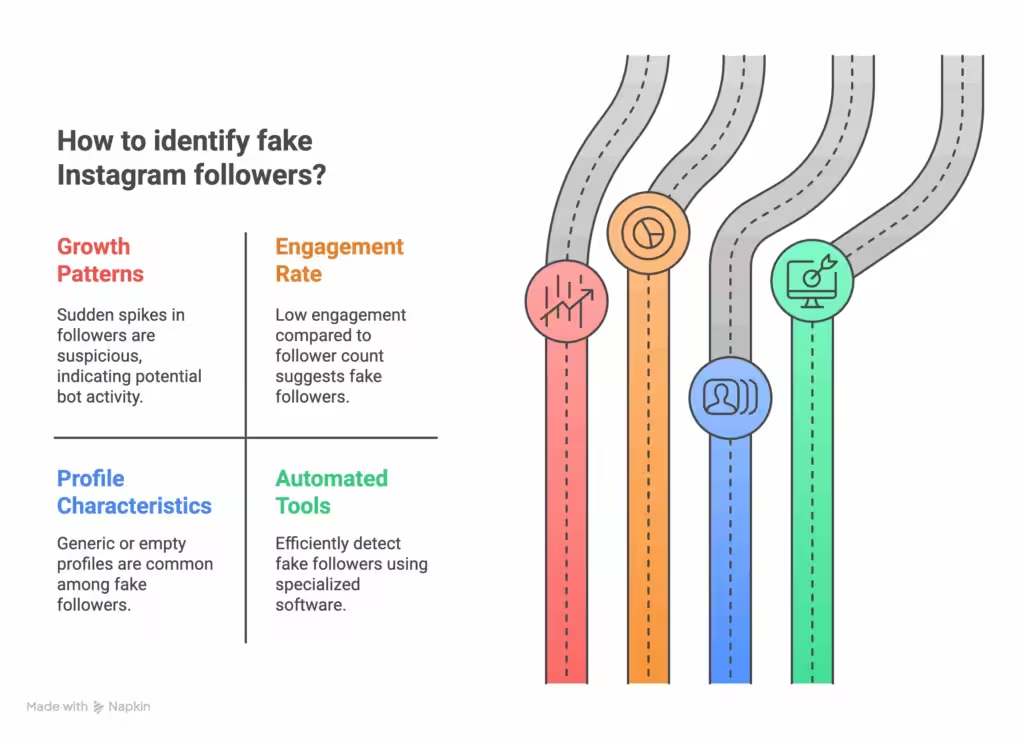
How do you know if the 10,000 followers on someone’s Instagram page are people, not bots?
Here are four ways:
1. Check the Growth Patterns of Followers on Instagram
One of the clearest ways to detect fake followers on Instagram is to look at how a creator’s follower count has grown over time.
Organic Instagram followers accumulate gradually — most authentic accounts grow at roughly 0.5–2% of their total followers per week, with occasional larger spikes tied to viral content or press mentions. A jump from 10,000 to 80,000 followers in a week, with no corresponding viral post, is a near-certain signal that Instagram fake followers were purchased.
How to check:
- Social Blade provides free historical follower growth charts for public Instagram accounts. Look for sudden spikes rather than organic slopes.
- HypeAuditor functions as a free Instagram fake follower checker on its basic tier, showing a follower growth history and flagging unusual increases.
- Manually compare follower count to post performance. A creator with 200K followers whose posts consistently get 500 likes and whose older posts from when they had 5K followers show similar numbers almost certainly padded their Instagram followers through purchasing.
Also watch for geographic demographic mismatches. An influencer creating content for a Cairo-based audience whose top follower countries are Brazil and Indonesia suggests their Instagram followers were purchased from a foreign bot farm rather than built authentically.
💡 Tap the “followers” section in the Instagram app to quickly scan handles and profile pictures without opening individual accounts. A high proportion of profile pictures showing celebrities, generic landscapes, or abstract images — rather than real people — is a fast visual signal of inauthentic followers.
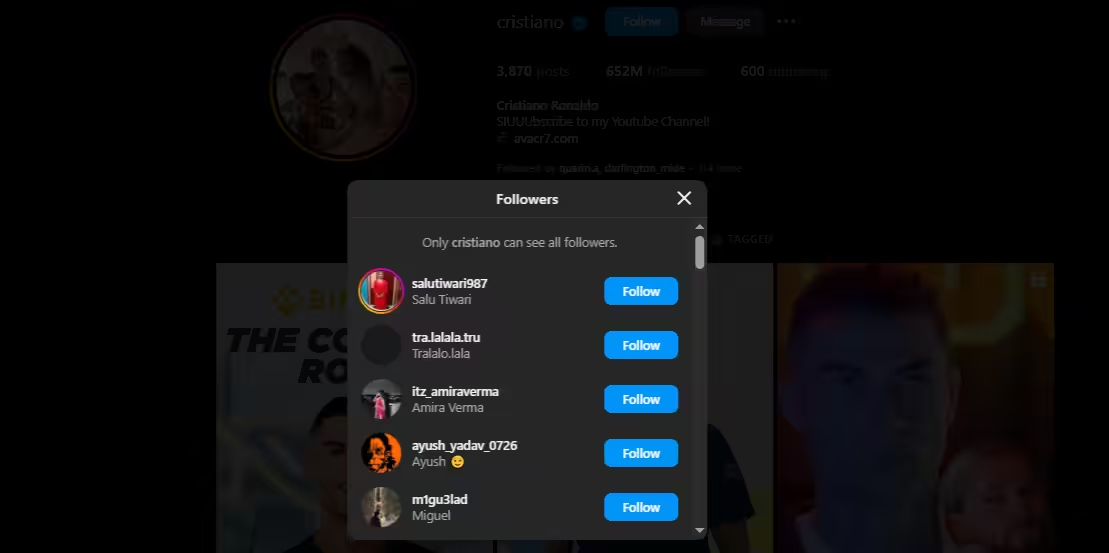
Note that you cannot do this for verified accounts with the blue tick because Instagram does not allow you to see their follower list.
2. Calculate Engagement Rate
Engagement rates are the most revealing single metric for spotting fake followers. The formula is simple:
(Total likes + comments) ÷ follower count × 100 = engagement rate %
Here are the healthy engagement rates for Instagram in 2026:
| Account Tier | Followers | Healthy Engagement Rates |
|---|---|---|
| Nano | 1K–10K | 5–10% |
| Micro | 10K–100K | 3–5% |
| Mid-Tier | 100K–500K | 1–3% |
| Macro | 500K–1M | 0.5–2% |
| Mega | 1M+ | 0.5–1% |
An Instagram account with 200,000 followers receiving 200 likes per post has a 0.1% engagement rate. That’s not a low-engagement niche: that’s an Instagram profile where the vast majority of followers aren’t genuine. Low engagement rates relative to follower count are among the most reliable indicators of fake followers on Instagram.
Important caveats:
- Don’t judge engagement rates on a single post. Average the last 10–15 to account for natural variation.
- Engagement consistency matters too. An Instagram account with suspiciously identical engagement on every single post (almost no variation across content types) may be using a pod rather than relying on genuine followers.
- Micro influencers with 3–5% engagement in competitive niches like beauty or fitness are strong signals of a real, invested authentic audience.
💡 According to Statista (2025), micro influencers deliver 60% higher engagement rates than accounts with over 1 million followers. High follower count is not a proxy for genuine engagement or campaign success.
3. Audit Follower Profiles Manually
Instagram accounts that bought followers are often filled with fakes or bots. Here’s how to spot them.
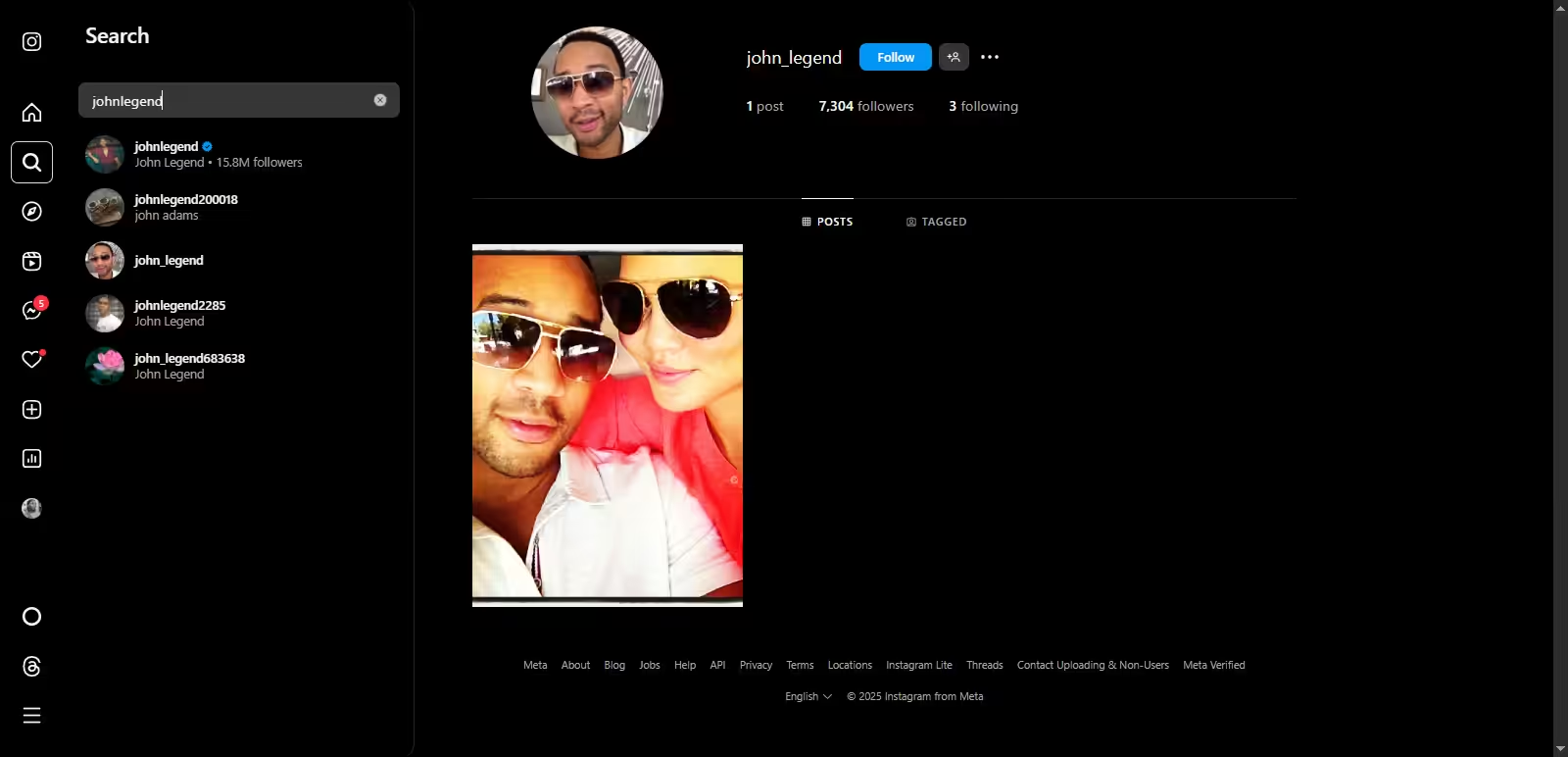
Bots are usually created without profile pictures.
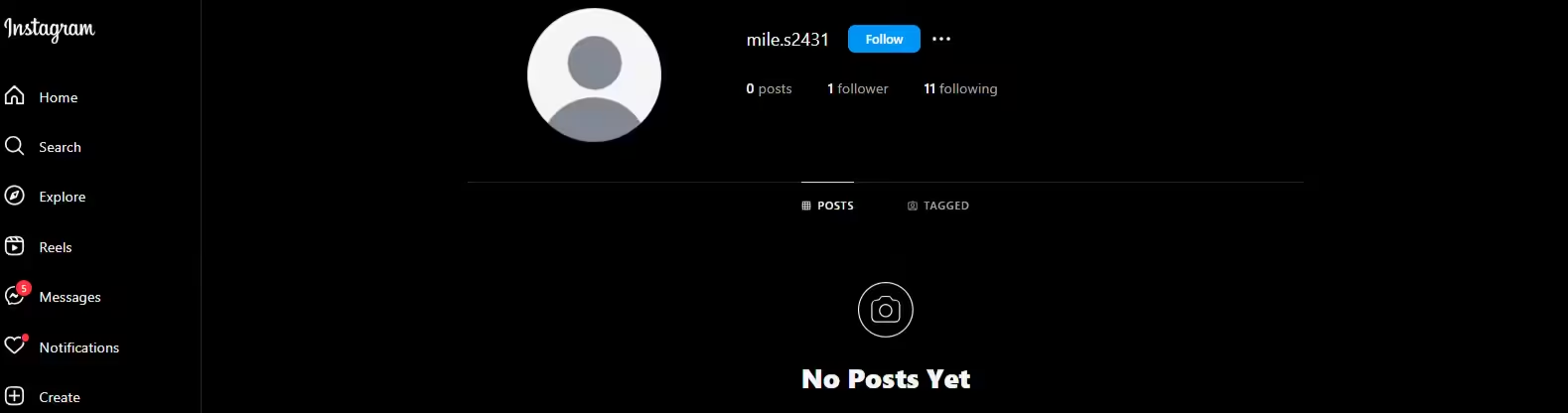
Automated fake follower checkers are useful, but manually checking a sample of follower profiles is still one of the most reliable ways to identify fake followers.
What fake accounts typically look like:
- No profile picture, or a generic image — a stock photo, celebrity photo, or AI-generated headshot used across multiple other accounts.
- Username patterns with random numbers and special characters: “fashion.lover.999”, “user847362_abc” — patterns no real user would choose.
- Zero posts or minimal posting history, sometimes with a few irrelevant reposts from other accounts they don’t follow
- Following thousands of other accounts while being followed by very few — the classic bot follower ratio.
- No bio, no Stories content, no tagged photos — none of the signals that indicate a real person uses the Instagram profile
- Account creation date is recent. If a large proportion of an influencer’s followers joined Instagram within the same 2–3 month window, they were almost certainly purchased in a batch.
For AI-generated synthetic accounts: run a reverse image search on every profile picture using Google Images or TinEye. If the same image appears across multiple unrelated accounts, the profile is synthetic. Look for Instagram influencers who appear in fan photos, tagged content, and user-generated posts. Genuine influencers with real followers accumulate this kind of cross-account presence naturally.
💡 Check the follower ratio on suspicious accounts. Real users who simply consume content without posting typically follow a few hundred accounts at most. Bot accounts and click-farm profiles often follow 3,000–10,000 other accounts while having very few followers themselves — a telltale follower ratio that flags inauthentic followers immediately.
4. Read Comments for Generic Responses and Fake Engagement from Followers
Comment quality is often more revealing than comment quantity when trying to spot fake followers. Fake engagement follows detectable patterns — and once you know what to look for, it’s hard to unsee.
Red flags in comments:
- Generic comments and generic responses with no specific reference to the content: “Great post! 😍”, “Love this 🔥”, “So inspiring!” appearing across multiple posts verbatim
- Irrelevant comments that don’t connect to what was actually posted — comments about unrelated products, generic compliments, or phrases that make no contextual sense
- Emoji-only comments appearing in clusters from accounts with the characteristics of fake accounts listed above
- “Great post” and similar filler phrases used repeatedly by the same accounts across the influencer’s posts — a classic signature of coordinated fake engagement
- Coordinated comment timing — dozens of comments arriving within 5–10 minutes of posting from accounts with suspicious activity patterns suggests an engagement pod rather than genuine followers
- No replies from the influencer or back-and-forth between real users — authentic engagement involves conversation, not just one-way affirmation
Real comment sections from an Instagram account with genuine followers look different. You’ll see specific questions about the content, personal stories from other users who relate to the post, and the influencer responding to and engaging with their community.
That genuine connection between an influencer and their followers is the clearest signal of an authentic audience — and the hardest thing to fake convincingly at scale.
Instagram Fake Follower Checker Tools: Free and Paid
Manual audits are essential, but they don’t scale. If you’re vetting multiple brand partners or running regular influencer marketing efforts, an Instagram fake follower checker becomes a practical necessity. No tool achieves perfect accuracy — premium tools beat free tools by roughly 20–25% — but combining two or three substantially improves your ability to make informed decisions.
Free tools and free tiers:
- HypeAuditor — One of the most widely used Instagram fake follower checkers. The free tier generates a basic audience authenticity score and shows follower growth history. Approximately 65% accurate for bot account detection on its own. The paid version produces detailed reports including engagement pod detection and demographic breakdowns, and provides detailed analysis of audience quality across categories.
- Social Blade — Free historical follower tracking with visual growth charts. Excellent for identifying sudden spikes. Doesn’t analyze audience authenticity directly, but the growth timeline is invaluable context.
- Modash — Offers influencer discovery plus fake follower checker capabilities. Strong for brands running multiple influencer campaigns. Has a free version for individual checks and generates detailed reports on audience quality.
- Instagram Insights (native) — Free on any business account. Shows audience demographics, location, age, and gender. Useful for detecting demographic mismatches. Not a dedicated fake follower checker, but it surfaces inauthentic followers indirectly through audience data.
Paid platforms:
- HypeAuditor Pro — Full audience authenticity scoring, engagement pod detection, detailed reports, and brand safety history. The most comprehensive dedicated Instagram fake follower checker available.
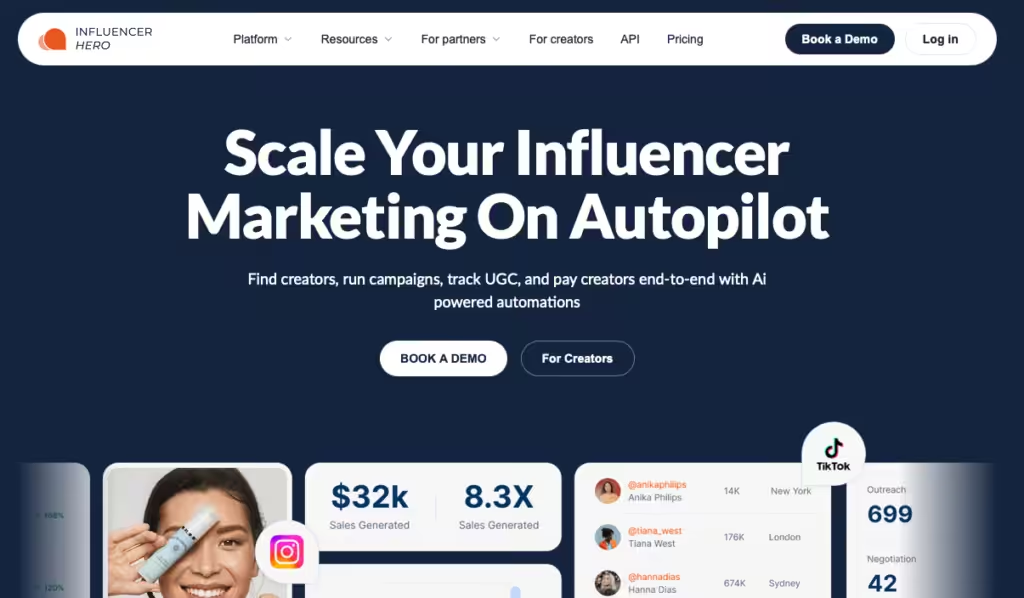
- Influencer Hero — Discovery, collaboration management, and a fake follower scanner in one platform. Produces detailed analysis of follower authenticity across Instagram and other social platforms.
- Upfluence — Analyzes Instagram profile activity and cross-references follower behavior against bot patterns to generate authenticity scores for informed decisions.
- ViralMango — AI-powered audience quality scoring with engagement pod detection and comment authenticity analysis. Covers multiple social platforms including Instagram, TikTok, and YouTube.
💡Best practice for using free tools: Run two or three together and cross-reference. Most Instagram fake follower checkers have a 15–20% false positive rate meaning roughly 1 in 6 flagged accounts may actually have genuine followers.
Always follow automated results with manual review before making final decisions about brand partners. Instagram detection accuracy generally exceeds 90%; TikTok detection is weaker at 70–75%.
The New Threat: AI-Generated Fake Influencers
This is the part of the 2026 Instagram fake follower landscape that most brands aren’t prepared for.
A 2026 Kantar and IZEA joint study found a 91% year-over-year surge in AI-generated synthetic influencer profiles that successfully deceived brand vetting teams.
One in three brands admitted they had unknowingly paid a fully AI-fabricated fake influencer at least once in the past year. Those are constructed Instagram profiles designed to pass as real Instagram influencers, complete with AI-generated photography, consistent posting history, and follower counts built through coordinated fake accounts.
How to identify fake influencers of the synthetic variety:
- Reverse image search every profile picture. Google Images and TinEye surface other uses of the same generated image across the web.
- Look for user-generated content. Genuine influencers appear in photos taken by other users at events, tagged by followers, in collaboration posts. Fake influencers almost never appear in content they didn’t publish themselves.
- Search the name. Genuine influencers leave a digital trail — press mentions, community interactions, tagged posts from real users. A fake influencer’s name returns nothing but their own content.
Take our quick quiz and get personalized recommendations for your influencer marketing program — tailored to your niche and budget.
How to Find the Right Influencer for Your Brand
If your brand falls for inflated followers, it can have several devastating effects, including wasting your marketing budget.
So, now that you have a better idea of how to tell if someone bought followers, how can you find the right influencer for your brand?
Before you choose an influencer for your brand, ensure you have clear marketing goals. Without this, your strategy will flop from the start. Marketing goals help guide your choice of influencers who fit your message and your audience.
Next, ensure the influencer’s niche, values, style, and audiences align with your brand. Businesses that randomly choose influencers with contrasting values end up with a bruised brand identity and association. You want to protect your brand identity.
Influencers with scroll-stopping authentic content are most likely a perfect fit to work with your brand. Authentic content from smaller accounts always trumps content from popular accounts with many followers but no authenticity.
You can tell if a brand is authentic by its writing tone, quality, and the consistency of its content direction. You should also check the kind of brands it has worked with to see how they delivered.
PS: Past performance doesn’t guarantee future results.
Let Vivian Agency Take Care of Your Influencer Marketing
Influencers are important for connecting your brand with users. However, you must ensure you’re working with influencers who have real followers.
We’ve offered several pointers for how to tell if someone bought followers. You can check the growth patterns of the influencer, observe their engagement rate, and analyze the profiles of their followers. Automated tools like Modash can also be a great help.
Alternatively, you can skip all of this stress and hire an influencer marketing agency like Vivian Agency.
With our experience working with brands of all sizes, we can build your influencer marketing campaigns, saving you the trouble of the process.
Schedule a meeting with us to find out more.
Frequently Asked Questions
How do I tell if an influencer has fake followers for free?
Start with Social Blade — it’s free, shows historical follower growth charts, and makes sudden spikes visually obvious. Then use HypeAuditor’s free tier as a basic Instagram fake follower checker to get an audience quality score.
Finally, manually scroll through 50–100 accounts from the follower list: look for bot accounts with no profile picture, random number usernames, zero posts, and a suspicious follower ratio. Calculate engagement rates across 10–15 posts and compare against the benchmarks in this guide. The combination of these free tools covers most cases.
What’s a normal engagement rate for Instagram influencers in 2026?
It depends on follower count. Nano-influencers (1K–10K followers) should show 5–10% engagement rates; micro influencers (10K–100K) should show 3–5%; mid-tier accounts (100K–500K) should show 1–3%.
Anything substantially below these ranges is a red flag for inauthentic followers. That said, accounts in inherently lower-engagement niches (finance, B2B) will naturally run lower — compare within the niche, not just against universal benchmarks.
Can Instagram detect when an Instagram account bought followers?
Yes. Instagram uses machine learning to detect suspicious activity and can apply a shadowban — suppressing the account’s reach without notifying the holder. Instagram accounts that repeatedly violate terms through buying fake followers also risk temporary restrictions or permanent suspension.
This means that even if you don’t detect fake Instagram followers during vetting, the platform may already be limiting the account’s reach in ways that directly affect your campaign’s real engagement and performance.
What do fake followers look like when I check them manually?
Fake accounts typically have: no profile picture or a generic image used across other accounts; a username with random numbers and special characters; zero posts or a handful of irrelevant reposts; a follower ratio showing they follow thousands of other accounts but are followed by very few; and no bio or personal information.
Fake engagement shows up in the comments as generic responses like “Great post 😍” or irrelevant comments that don’t reference the actual content.
Clicking through a random sample of 50 followers and applying these checks takes about 10 minutes and is one of the most reliable methods available.