One mistake many brands interested in influencer marketing on TikTok often make is looking at it as only an awareness channel instead of a revenue channel as well.
This often affects their strategy and overall results in ways that are hard to diagnose, precisely because vanity metrics can look impressive while revenue stays flat.
While an awareness-only point of view focuses on checking follower count, likes, and views, optimizing for revenue means tracking more convertible metrics like watch time, click-through rates, and cost per acquisition, amongst others.
The brands seeing the strongest returns from TikTok influencer marketing are the ones who treat it like a performance channel from day one.
We’ll explain more in this guide.
Table of Contents
How to Get The Right Results from Influencer Marketing on TikTok
The first thing to do is to change your perspective on TikTok marketing. Understand that you can achieve real business results if your TikTok marketing strategy is done properly. Only then can you follow the steps below.
Set Clear Performance Objectives
If your goal isn’t tied to sales, conversions, or measurable actions, you’re in the awareness territory again.
You want to focus on goals that bring you direct business benefits, like driving product sales, boosting app installs, or increasing user-generated content that feeds into paid funnels. When your objective is revenue, you’ll choose TikTok influencers and content that speaks directly to purchase intent.
Setting clear key performance indicators before any influencer campaign begins is what separates brands that scale TikTok as a channel from those that treat it as an experiment.
Define your KPIs early, communicate them to your creators, and build your tracking infrastructure before the campaign process starts.
Curious how your affiliate program could perform? Take our quick quiz and get tailored insights you can actually use right in your inbox.
Match Influencers to Your Audience
Finding the right influencers for your brand on TikTok is not simply about reach. It’s about relevance. Choose creators whose followers match your target market. These creators may not necessarily have a large following because it’s not about the big numbers but about relevant engagement and content style that feels native to TikTok.
This is where micro influencers consistently outperform larger accounts. Micro influencers, typically those with between 10,000 and 100,000 followers, tend to have tighter audience demographics and higher engagement rates than celebrity-level creators.
For brands targeting niche audiences, micro influencers often deliver better cost per acquisition and stronger conversion rates than accounts with millions of followers.
On TikTok, it’s easy to confuse high views with high engagement. So, you want to check that the influencer’s audience isn’t just viewing their content but also commenting, liking, and sharing.
One More Thing to Look For
When evaluating TikTok influencers, look beyond the surface. Review their recent content for consistency, check the quality of comments for genuine interaction, and assess whether their brand values align with yours. Brand safety matters here, too.
An influencer whose content history conflicts with your brand message can cause real reputational damage, so vet thoroughly before committing.
Tools like the TikTok Creator Marketplace make it easier to find TikTok influencers and assess them with real data. You can also use our free influencer ROI calculator to vet your influencer campaign options. The dedicated TikTok tab will help you identify the right creators to partner with and set sponsorship rates at the right level for profitable collaborations.
The creator marketplace gives brands access to audience demographics, engagement analytics, and performance history, all in one place. Using the TikTok Creator Marketplace also streamlines the campaign process significantly, from discovery through to reporting.
Create Content That Feels TikTok, Not Like an Ad

Whenever this point comes up, the #GuacDance challenge by Chipotle comes to mind. The brand didn’t just pay TikTok influencers to post. They launched a branded challenge that invited TikTok users across the TikTok app to participate in a fun dance for free guac.
The result? Over 250k user-generated videos and massive engagements tied to a real offer.
The lesson here is that successful influencer marketing campaigns don’t feel like commercials on TikTok. Your TikTok creator partners should be able to build stories, demos, challenges, or viral trends around your product in a way that feels native to the platform.
Unlike traditional advertising, TikTok influencer marketing works best when creators are given creative freedom to interpret your brief in their own voice.
Overly scripted content is easy for TikTok users to spot, and it performs poorly. Brief your influencer on the outcome you want, share your brand values, and then trust them to execute in a way that resonates with their audience.
Trending hashtags are another lever worth using strategically. When a TikTok creator naturally incorporates trending hashtags into sponsored content, it extends organic reach beyond their existing follower base and can significantly increase brand awareness among diverse audiences who would never have discovered them otherwise.
Turn TikTok Influencer Marketing Content into Scalable Paid Ads
The real magic happens when you amplify high-performing influencer posts through paid ad channels. Don’t stop at organic reach. Recycle and promote the best content to reach a wider target audience.
This strategy, often called Spark Ads on TikTok, allows brands to boost a TikTok creator’s organic post directly, preserving the authentic look and feel while extending distribution through paid promotion.
It’s one of the most effective ways to scale a TikTok influencer campaign because the content already has proven organic performance before any budget is put behind it.
Combining influencer marketing with paid amplification also bridges the gap between influencer marketing and other marketing channels.
Rather than treating TikTok as a standalone effort, it becomes part of a broader performance ecosystem where the best content fuels multiple marketing channels simultaneously.
Track the Right Metrics
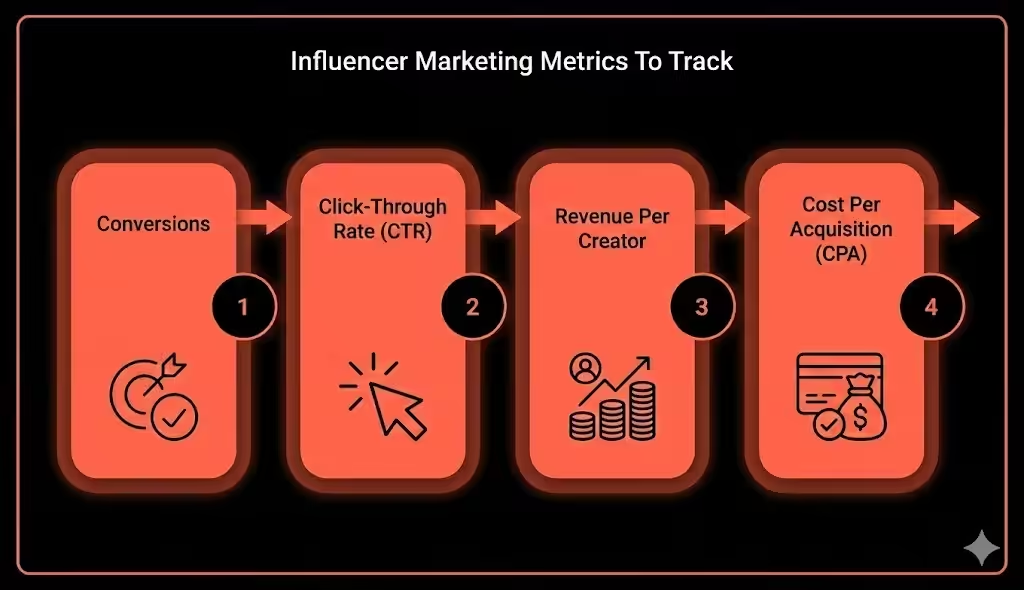
Focus on these few vital metrics:
- Conversions: Measure how many people completed the action you wanted. This is usually a purchase, sign-up, or app install.
- Click-Through Rate (CTR): This shows the percentage of people who clicked your link after watching the content.
- Revenue Per Creator: When you track this, you easily see who performs and who doesn’t. This prevents you from renewing contracts based on performance instead of profitability.
- Cost Per Acquisition (CPA): If you paid $5,000 for a campaign and got 100 purchases, your CPA is $50. It is the amount you paid to get one customer. This number must make sense relative to your profit margin.
Learn from Brands that Nailed It
Here are some examples of brands that used influencer marketing on TikTok to achieve real business results.
| Brand | Influencer/Strategy | Campaign Approach | Results |
| Aerie | Charli D’Amelio | Positivity-focused challenge aligned with brand values | Skyrocketed engagement, boosted followers, and strengthened brand affinity. |
| Too Faced Cosmetics | Influencer-driven reveal format | #TFDamnGirl campaign built around a viral product launch | Generated massive engagement and visibility that translated into strong product interest. |
| Walmart | Multiple TikTok creators | Holiday hashtag challenge with gift card incentives | Produced millions of views and high user participation. |
| Medicube | Celebrity endorsement, including Kylie Jenner + coordinated creator strategy | Influencer-led promotion integrated with TikTok Shop | Drove significant revenue growth and strong TikTok Shop performance. |
Frequently Asked Questions
1. How Do We Align Influencer Campaigns With Our Sales Goals?
Ensure your revenue objective is clear and that your creative, landing page, and tracking setup reflect it. For example, if your goal is to attract email sign-ups, your influencer should be briefed with clear CTAs around your offer that reflect the benefits of signing up, like a discount.
2. Do Follower Count and Engagement Rate Matter More, or Is Content Quality More Important?
While follower count can amplify reach, and engagement can indicate audience activity, neither guarantees sales. What actually moves revenue is how well the creator communicates value. So, content quality and conversion intent matter more.
3. What Type of Content Performs Best on TikTok?
Content that feels organic, not scripted, like problem-solution videos, honest product demos, and relatable storytelling. People are more prone to buying if it’s a recommendation than if it’s a commercial.
4. How Do We Track ROI From Influencer Campaigns?
You can use unique discount codes, UTM links, TikTok Pixel tracking, or TikTok Shop analytics. Then measure conversions, cost per acquisition, and return on ad spend. You can read this article to learn more about tracking ROI from influencer campaigns.
5. How Do We Measure Revenue per Creator?
Calculate the total revenue attributed to each influencer’s link, code, or tracked campaign. Then compare it to what you paid them.

Let Vivian Agency Handle Your Influencer Marketing Strategy
TikTok influencer marketing can be effective for brands that apply the right strategy. However, it can get tricky because you have to ensure that your goals are being met, which can be challenging if you can’t build a system to track progress.
This is why working with Vivian Agency is necessary. We’ve built and managed influencer marketing strategies for several brands, and have the knowledge and experience to create a successful TikTok influencer marketing campaign for you.
Our experts are ready to help you kickstart or elevate your affiliate influencer program; get your free consultation today!