
Influencer marketing has never been harder to run manually, and never more important to get right.
Brands are managing hundreds of creator relationships across Instagram, TikTok, and YouTube, trying to evaluate engagement quality, negotiate deals, track performance, and prove ROI, all at the same time. Doing that with spreadsheets and gut instinct simply doesn’t scale.
That’s where AI-powered influencer marketing software comes in. The best platforms today don’t just give you a database of creators, they use artificial intelligence to surface the right ones, flag fake followers, automate outreach, and predict which partnerships are most likely to convert. The result is faster campaigns, fewer wasted budgets, and decisions backed by data rather than guesswork.
In this article, we break down the best AI-powered influencer marketing software available in 2026, what each one does well, where it falls short, and how to figure out which one fits your brand’s needs.
Table of Contents
What Makes Influencer Marketing Software Truly “AI-Powered”?
Not every platform that uses the word “AI” actually delivers it. A searchable influencer database with filters isn’t AI, it’s just a database. True AI-powered software applies machine learning and predictive modeling to do things that would be impossible, or at least impractical, for a human to do at scale.
Here’s what genuinely AI-driven platforms do differently:
Intelligent Creator Discovery
Rather than requiring you to search manually, AI surfaces influencers that match your brand’s audience profile, content style, and past campaign performance, not just keyword tags or follower counts.
Fake Follower and Fraud Detection
AI models analyze follower behavior patterns, engagement velocity, and audience demographics to identify accounts with artificially inflated numbers. This is a critical filter: working with fraudulent accounts drains budget without delivering real reach.
Predictive Performance Scoring
The best tools don’t just show you historical engagement rates — they estimate the likely performance of a future partnership based on audience overlap, content category, and brand fit signals.
Automated Outreach and CRM
AI-assisted messaging tools can personalize outreach at scale, follow up intelligently, and track where each creator is in the pipeline — saving campaign managers hours of manual work per week.
For agencies managing this workflow across multiple client accounts, a CRM for marketing agencies can centralize conversations, pipelines, automation, and performance reporting.
Content and Sentiment Analysis
Some platforms use natural language processing to scan a creator’s past content for brand safety, audience sentiment, and topic authority, going far beyond follower count to assess true fit.
ROI Attribution Modeling
AI connects upstream influencer activity to downstream conversions, helping teams understand which creators are actually driving sales versus just impressions.
If a platform is missing most of these capabilities, it’s not really AI-powered, it’s just marketing. The tools featured in this roundup clear that bar.
The Best AI-Powered Influencer Marketing Platforms in 2026
The market for influencer marketing software has matured fast. What used to be a space dominated by clunky databases and manual workflows now includes platforms that automate entire campaign lifecycles. These are the tools leading that shift in 2026.
1. Influencer Hero
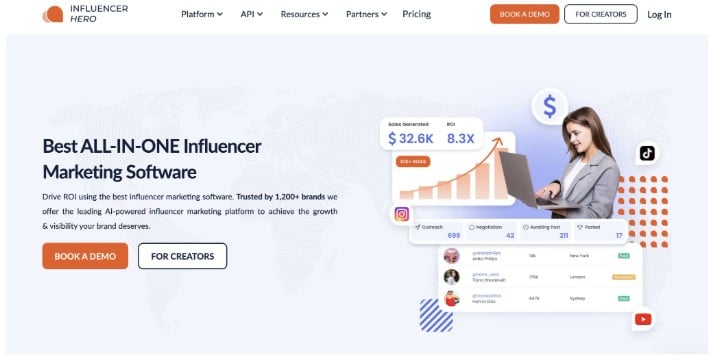
Influencer Hero is one of the most comprehensive AI-powered influencer marketing software available today, built for brands and agencies that want to run high-volume campaigns without adding headcount.
Its AI-driven discovery engine searches across Instagram, TikTok, YouTube, Pinterest, and Snapchat, analyzing over 20 data points per creator, including audience demographics, engagement authenticity, and content performance — to surface genuinely relevant matches rather than just keyword hits.
Where Influencer Hero stands out is in how much of the campaign workflow it automates. From AI-personalized outreach sequences and contract management to product gifting, content approvals, and affiliate link generation, the platform covers the full funnel in one place. For teams managing dozens of campaigns simultaneously, that consolidation alone saves significant time and reduces the risk of things falling through the cracks.
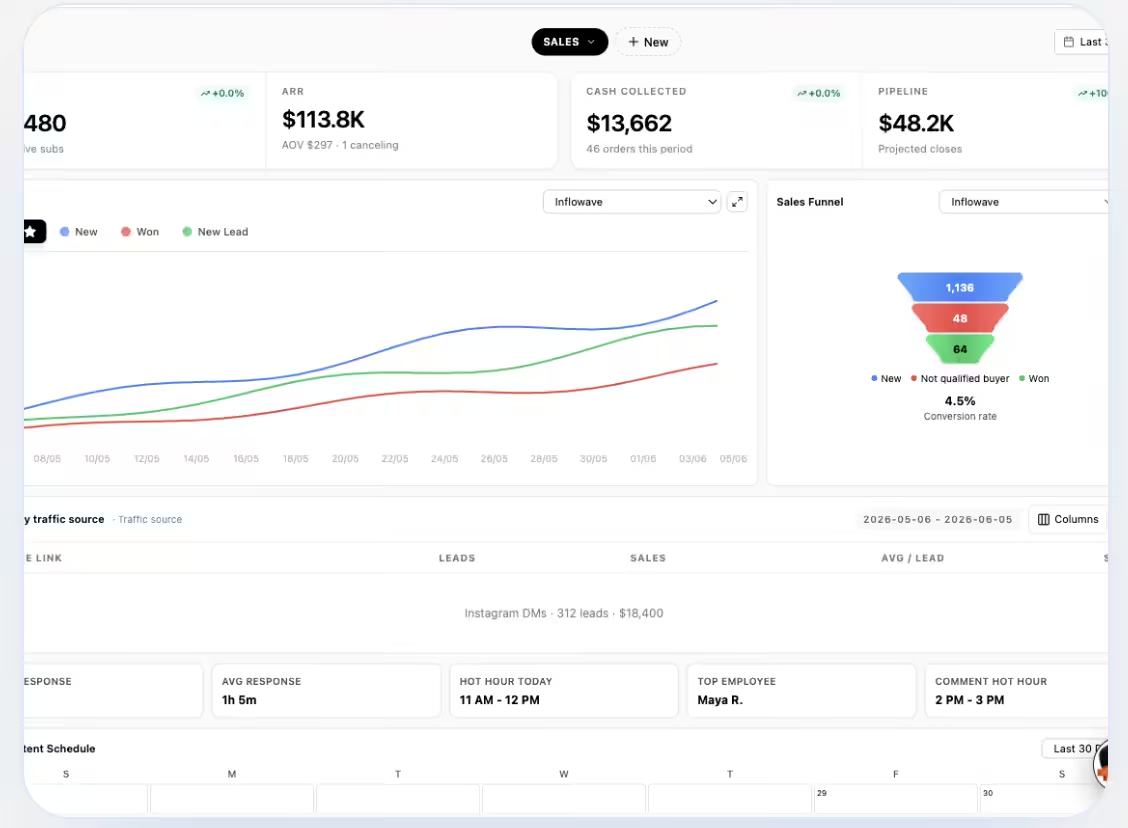
It also includes a built-in fake follower detection tool that flags suspicious engagement patterns before you commit a budget, and a performance dashboard that tracks revenue attribution at the creator level, so you always know which partnerships are actually moving the needle.
Best for: Brands and agencies running influencer programs at scale who need an end-to-end platform with strong automation and reliable analytics.
2. Grin
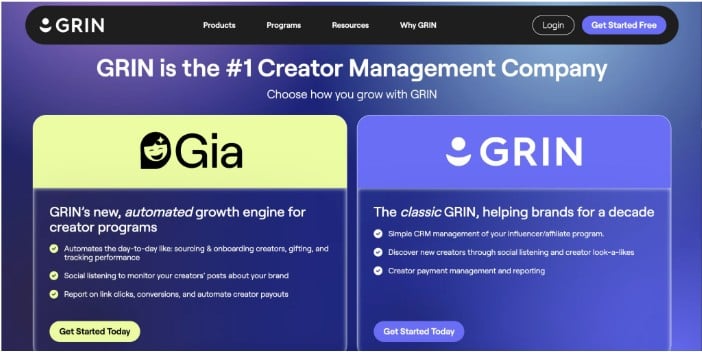
Grin has long been a go-to for DTC e-commerce brands, and its AI features have matured meaningfully over the past couple of years. The platform integrates directly with Shopify, WooCommerce, and other e-commerce stacks, which makes product seeding and sales attribution unusually seamless.
Its AI capabilities are strongest on the analytics side — engagement quality scoring, audience overlap detection to avoid redundant reach, and performance benchmarking against category averages. Outreach automation is solid, though less flexible than some competitors when it comes to personalization at scale.
Best for: DTC e-commerce brands already on Shopify or WooCommerce looking for tight integration between influencer campaigns and sales data.
3. Upfluence
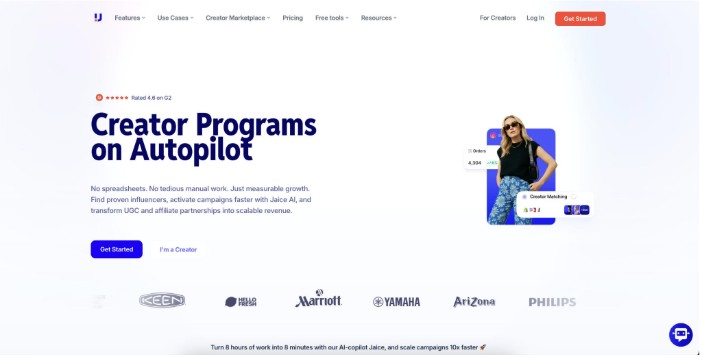
Upfluence positions itself as a data-first platform, and that’s accurate. Its database spans over 7 million creators, and its AI search ranks them not just by niche or follower count but by predicted audience relevance to your specific brand — factoring in the keywords that appear most in a creator’s content over time.
One distinctive feature is its ability to mine your existing customer base to identify people who already follow or engage with you and happen to have meaningful audiences — turning customers into potential brand ambassadors. The platform also connects with email marketing tools and CRMs, making it a natural fit for brands that want influencer marketing integrated into a broader growth stack.
Best for: Brands that want deep creator data and the ability to identify influencers from within their own customer base.
4. Aspire
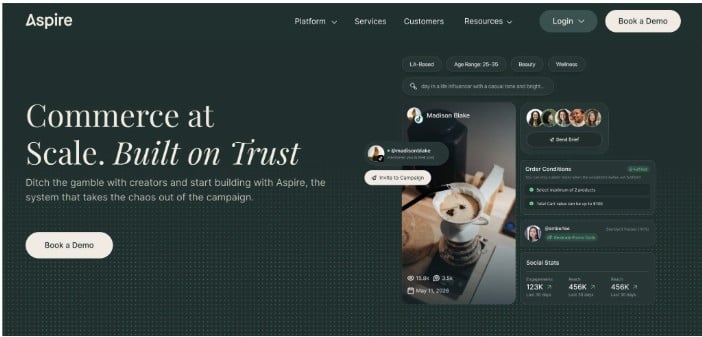
Aspire leans heavily into the relationship side of influencer marketing — its AI is designed less around cold discovery and more around building long-term creator communities. The platform helps brands develop ambassador programs, manage UGC rights, and maintain ongoing creator relationships rather than running one-off transactional campaigns.
Its AI tools surface lookalike creators based on your best-performing partnerships, and automate the more repetitive relationship management tasks like check-ins, content reminders, and payment processing.
Best for: Brands prioritizing ambassador programs and long-term creator relationships over high-volume, short-cycle campaigns.
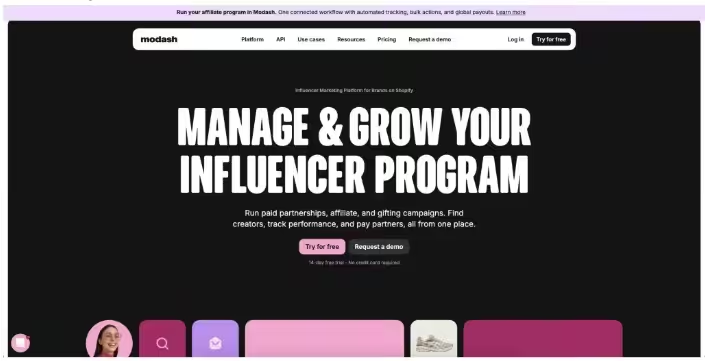
5. Modash
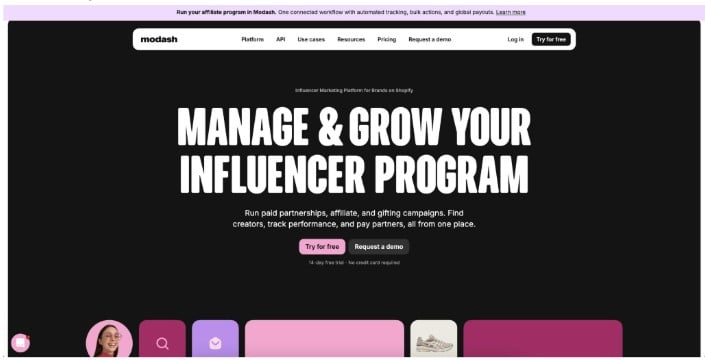
Modash takes a deliberately straightforward approach: an exceptionally large and accurate creator database (covering anyone with over 1,000 followers across Instagram, TikTok, and YouTube) paired with reliable AI-powered audience analysis. There’s no fluff — the platform is built for marketers who want fast, trustworthy discovery and vetting without paying for features they won’t use.
Its fake follower detection and audience credibility scoring are among the most granular in the market, making it a strong choice for brands where audience quality matters more than campaign automation features.
Best for: Teams that prioritize creator vetting and discovery accuracy over full-funnel campaign management.
6. Heepsy
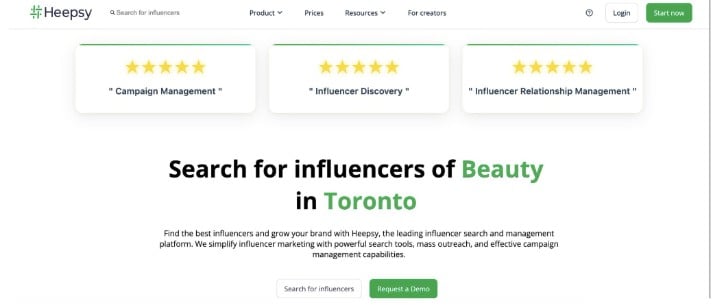
Heepsy is a strong entry-level option for smaller brands and agencies getting started with AI-powered influencer marketing. It covers the discovery and analysis essentials — AI-filtered search, audience demographics, engagement authenticity scoring — at a price point that makes it accessible without a large software budget.
It doesn’t offer the depth of automation or CRM features that enterprise-focused platforms provide, but for teams running a manageable number of campaigns per month, it delivers solid value.
Best for: Small to mid-sized brands or agencies looking for affordable AI discovery and vetting without the enterprise price tag.
7. Later
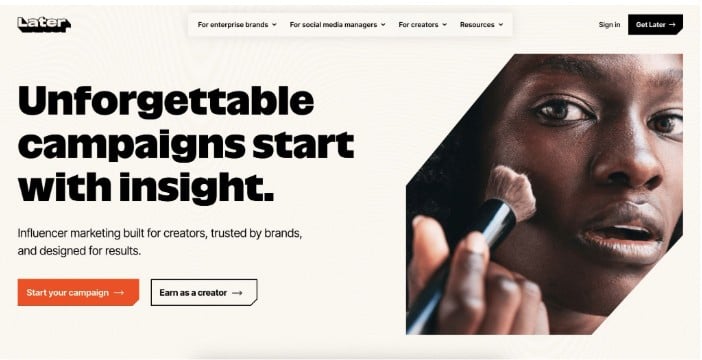
Later Influence emerged from the merger of Later and Mavrck, combining Later’s content scheduling DNA with Ma/vrck’s enterprise influencer infrastructure. The result is a platform that connects influencer activity directly to organic social performance — useful for brands that run creator campaigns and owned social in tandem.
Its AI capabilities cover creator scoring, audience quality analysis, and campaign performance prediction, with particular strength in loyalty-based programs that reward repeat creators. The platform is built for mid-market to enterprise brands with dedicated social and influencer teams.
Best for: Mid-to-enterprise brands that want influencer and owned social management under one roof.
8. Traackr
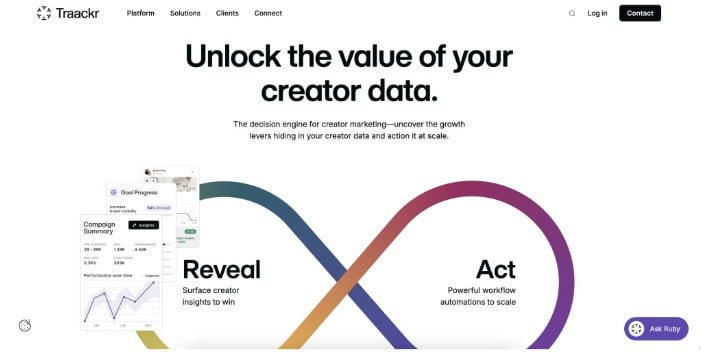
Traackr is one of the more data-heavy platforms in the space, built primarily for enterprise brands and agencies managing global campaigns across multiple markets. Its AI excels at cross-market audience analysis, helping large teams avoid spending overlap and benchmark creator performance against industry standards.
It also offers one of the more robust brand safety scoring systems available — using AI to scan creator content history across platforms for potential reputational risks before any partnership is committed. The trade-off is complexity: Traackr has a steeper learning curve than most tools here and is priced accordingly.
Best for: Enterprise brands and global agencies that need rigorous data, brand safety controls, and multi-market campaign oversight.
9. Klear
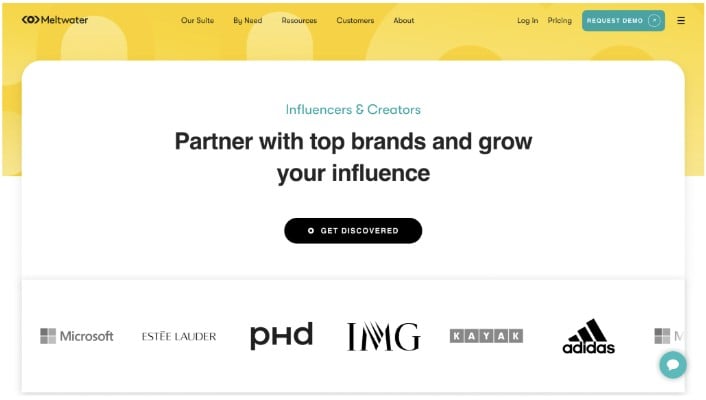
Klear focuses on psychographic audience analysis — going beyond standard demographic breakdowns to model the interests, values, and purchase behaviors of a creator’s audience. Its AI uses this data to predict brand fit with more nuance than follower count or engagement rate alone can provide.
It integrates with Salesforce, making it a natural choice for enterprise marketing teams already running their broader pipeline through that ecosystem. Campaign management features are solid but not as automated as top-tier competitors like Influencer Hero or Grin.
Best for: Enterprise teams using Salesforce who want psychographic-level audience intelligence to inform creator selection.
10. #paid
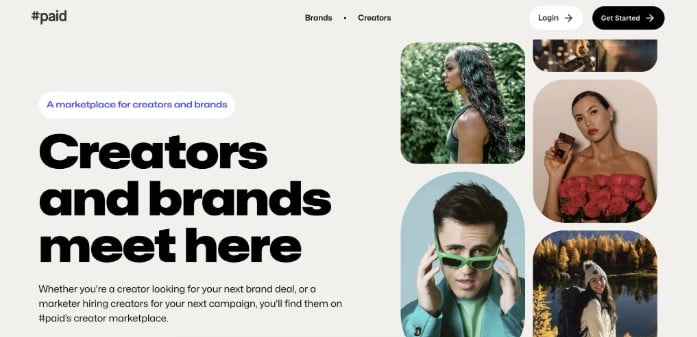
#paid takes a different angle to the rest of this list. Rather than offering open-ended creator discovery, it operates as a curated marketplace where creators apply to work with brands — flipping the usual model. Its AI matches brands with pre-vetted applicants based on content style, audience alignment, and predicted performance, which reduces vetting time significantly.
The trade-off is less control over who you can reach: you’re limited to creators already on the platform. But for brands that find the open-discovery process overwhelming, the structured approach can be a genuine advantage, especially for time-constrained teams running frequent short-cycle campaigns.
Best for: Brands that want a curated, low-friction creator matching experience without managing an open-ended discovery process.
Side-by-Side Comparison: AI Influencer Marketing Tools at a Glance
| Platform | AI Discovery | Fake Follower Detection | Automated Outreach | Performance Analytics | E-commerce Integration | Best For |
| Influencer Hero | ✅ Advanced | ✅ Yes | ✅ Yes | ✅ Revenue attribution | ✅ Yes | Brands & agencies at scale |
| Grin | ✅ Yes | ✅ Yes | ✅ Yes | ✅ Strong | ✅ Native Shopify | DTC e-commerce brands |
| Upfluence | ✅ Advanced | ✅ Yes | ✅ Yes | ✅ Yes | ✅ Yes | Data-driven teams |
| Aspire | ✅ Yes | ⚠️ Basic | ✅ Yes | ✅ Yes | ✅ Yes | Ambassador programs |
| Modash | ✅ Advanced | ✅ Yes | ❌ No | ⚠️ Basic | ❌ No | Creator vetting focus |
| Heepsy | ✅ Yes | ✅ Yes | ❌ No | ⚠️ Basic | ❌ No | Small brands / agencies |
| Later | ✅ Yes | ✅ Yes | ⚠️ Limited | ✅ Yes | ⚠️ Partial | Social + influencer teams |
| Traackr | ✅ Advanced | ✅ Yes | ⚠️ Limited | ✅ Advanced | ⚠️ Partial | Enterprise / global teams |
| Klear | ✅ Yes | ✅ Yes | ⚠️ Limited | ✅ Yes | ✅ Salesforce | Enterprise Salesforce users |
| #paid | ✅ Curated AI | ✅ Yes | ⚠️ Marketplace | ✅ Yes | ⚠️ Partial | Curated marketplace buyers |
Solutions like Influencer Hero, Grin, and Upfluence combine advanced AI discovery, fraud detection, automated outreach, and performance analytics without requiring you to plug in additional tools.
Traackr and Klear serve enterprise needs well but come with complexity and pricing that won’t suit smaller teams. Modash punches above its weight on creator vetting accuracy but isn’t designed to be an end-to-end solution, making it better as a research tool than a campaign management platform.
Later and Aspire are solid mid-market choices depending on whether your priority is social integration or long-term ambassador relationships respectively. At the entry level, Heepsy covers the essentials affordably, while #paid offers a fundamentally different model, curated and low-friction, that works best for brands that find open-ended discovery more overwhelming than empowering.
The right choice ultimately comes down to your team size, campaign volume, and how much of the workflow you want the platform to own.
How to Choose the Right AI Influencer Marketing Software for Your Brand
With ten strong options on the table, the challenge isn’t finding a capable platform, it’s finding the right one for how your team actually operates. Work through these steps before committing.
Step 1: Define How Much of the Workflow You Want Automated
If your team is lean and campaign volume is high, end-to-end platforms like Influencer Hero or Grin are the right fit. If you already have strong systems for CRM and reporting, a focused discovery or vetting tool may be all you need.
Step 2: Match the Tool to Your Team Size and Technical Capacity
Enterprise platforms like Traackr and Klear are powerful but come with steep learning curves. Be honest about where you are today and where you expect to be in 12 months, most brands outgrow entry-level tools faster than they expect.
Step 3: Consider Your Primary Platforms
Not every tool covers every channel equally well. If TikTok is central to your strategy, make sure the platform has genuine depth there, not just surface-level integration. As Vivian Agency’s guide to TikTok influencer marketing highlights, platform-specific nuances matter enormously when identifying creators who actually convert.
Step 4: Prioritize Analytics Depth and ROI Attribution
Impression counts are table stakes. What you need is revenue attribution — connecting a specific creator to a specific sale. Before you invest in new tooling, use Vivian Agency’s influencer marketing ROI calculator to establish clear benchmarks for what a successful campaign looks like for your brand.
Step 5: Check Integration Compatibility
Look for platforms that connect with your e-commerce stack and CRM. Native Shopify integration in particular is a meaningful differentiator for DTC brands, it’s the difference between manual attribution and having it happen automatically in the background.
Step 6: Trial Before You Commit
Use the demo period to run a real discovery search, test the outreach tools, and pull a sample report on an actual campaign. How a platform performs on your use case matters far more than how it looks in a sales presentation.
Final Insights
AI has fundamentally changed what’s possible in influencer marketing, but the software is only as good as the strategy behind it.
The platforms in this list remove the bottlenecks that used to make scaling creator programs so painful: manual discovery, unreliable vetting, fragmented tracking, and hours spent on outreach admin. What they can’t replace is a clear brief, a well-defined target audience, and an honest understanding of what success looks like for your brand.
The good news is that whether you’re a small brand running your first structured influencer program or an agency managing campaigns across dozens of clients, there’s a tool on this list built for your situation. Start with your workflow, your channels, and your budget, then let those constraints point you to the right platform rather than chasing the most feature-rich option available.
FAQs
What is AI-powered influencer marketing software?
AI-powered influencer marketing software uses machine learning and data modeling to automate and improve key parts of the influencer marketing process, including creator discovery, audience analysis, fake follower detection, outreach, and performance attribution.
How does AI detect fake followers?
AI fraud detection tools analyze behavioral patterns across a creator’s follower base, looking for signals like sudden follower spikes, abnormally low engagement relative to reach, bot-like activity, and suspicious audience demographics.
Is AI influencer marketing software worth it for small brands?
Entry-level platforms like Heepsy offer AI-powered discovery and vetting at accessible price points, and the time saved on manual research alone typically justifies the cost. The key is not overpaying for automation features you won’t use at lower campaign volumes.
What’s the difference between AI and traditional influencer marketing platforms?
Traditional platforms are essentially searchable directories, you filter by niche, follower count, or location and browse manually. AI-powered platforms go further by scoring creator fit, predicting campaign performance, flagging fraud, personalizing outreach, and attributing revenue, turning what used to be a research task into a data-driven workflow.
Can AI influencer software integrate with Shopify and other e-commerce platforms?
Platforms like Influencer Hero and Grin offer native e-commerce integrations that automatically connect creator activity to sales data. Always verify integration depth during your trial period.
Need Help Choosing the Right Influencer Marketing Platform?
Choosing the best AI-powered influencer marketing software is only part of the equation — strategy, creator selection, and tracking matter just as much.
At Vivian Agency, we help brands build and scale high-performing influencer and affiliate programs designed for measurable growth.
👉 Book a free consultation with our team to discuss the right setup and strategy for your brand.