
Finding the right creator used to mean scrolling through hashtags at midnight, screenshotting profiles into a spreadsheet, and guessing whether that “50K followers, 8% engagement” account was actually real. A lot of brands still work this way, and it shows up in the results: mismatched partnerships, ghosted DMs, and campaigns that look good on a slide deck but don’t move revenue.
The influencer marketing industry is on track to pass $13 billion in spend by 2027, and most of that money is chasing a shrinking pool of creators who are actually worth working with. That’s exactly the gap the best influencer search tools were built to close. Instead of manual digging, you get filterable databases, audience authenticity checks, and (increasingly) AI that can find creators based on a plain-English description of who you’re looking for.
We put together the platforms brands actually rely on for this in 2026, starting with the one built specifically around search depth, and closing with a comparison table so you can see how they stack up at a glance.
Table of Contents
Why a Good Search Tool Actually Matters
Not all “influencer databases” are created equal, and the differences aren’t cosmetic. A tool with a shallow database will keep surfacing the same 500 creators every agency in your niche already knows about. One without audience authenticity checks will happily hand you a “micro-influencer” whose followers are 40% bots from a click farm. And one without decent filtering will leave you paging through hundreds of irrelevant profiles to find the five that fit your brief.
The tools below solve different pieces of that problem, some better than others. If you’d rather skip the tool-shopping altogether and hand sourcing, vetting, and outreach to a team that does it daily, that’s the case for working with an influencer marketing agency instead of running search in-house. But if you want to keep discovery internal, here’s where to start.
9 Best Influencer Search Tools to Find Creators
1. Influencer Hero
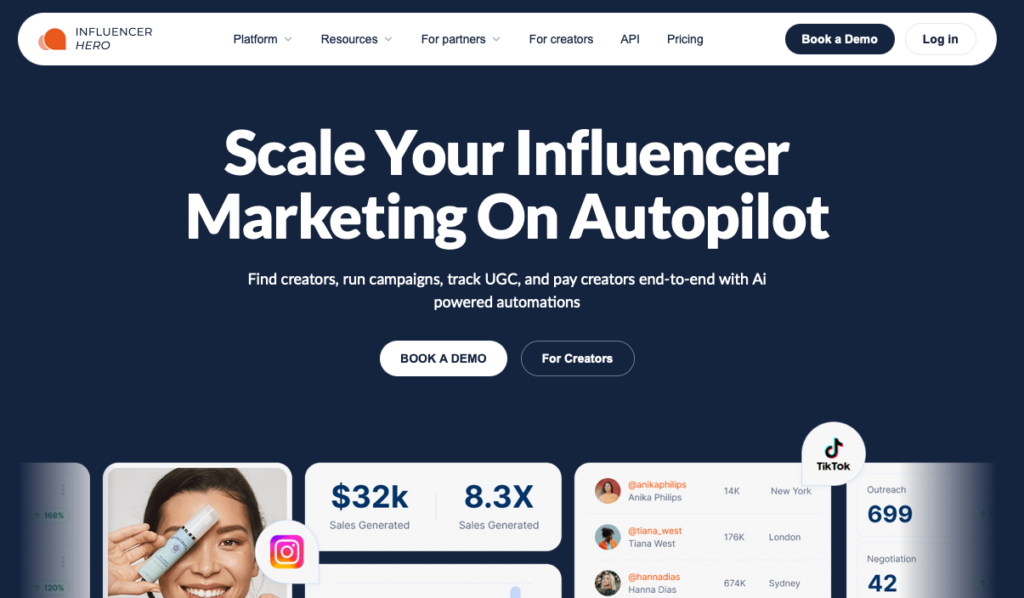
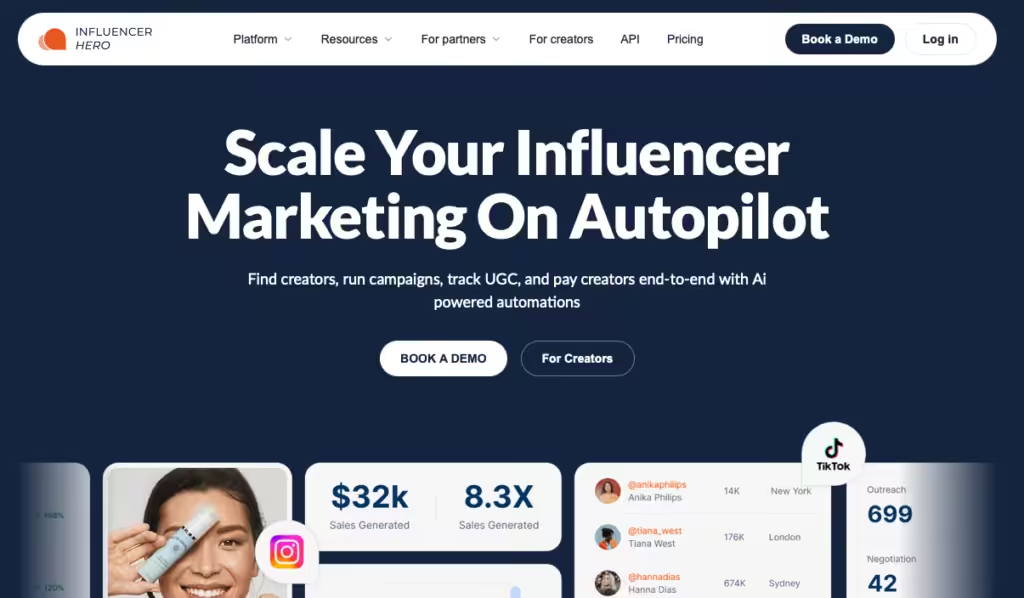
Influencer Hero is one of the best influencer marketing software, taking the top spot because it was genuinely built around search, not bolted onto a CRM as an afterthought. The database covers 450M+ creators across Instagram, TikTok, and YouTube.
What sets it apart is the AI-powered search. You can type a natural-language query, something like “micro-influencers in LA who post minimalist home decor content”, and it returns matches based on actual content and audience signals, not just keyword matching on a bio. Layer that with the standard filters (location, language, follower range, engagement rate, niche, audience demographics) and you can go from “we need creators for this campaign” to a shortlist in minutes instead of days.
It doesn’t stop at discovery, either. Once you’ve found creators, the same platform handles outreach automation, CRM, affiliate tracking, and campaign reporting, so you’re not exporting a spreadsheet into three other tools to actually run the collaboration. For D2C brands and agencies that want search and management in one place, Influencer Hero is one of the strongest all-around options on this list.
2. Modash
Modash leads on sheer scale, with a database covering every public Instagram, TikTok, and YouTube profile above 1K followers, which puts it north of 350M creators. It’s built for teams running high volumes of micro and nano-influencer campaigns and needing clean, exportable data to back up every decision.
The standout feature is Lookalike Search: feed it a creator you already know performs well, and it surfaces others with a similar content style or audience, on the same platform or a different one entirely. Pair that with the AI Search (describe what you’re after in plain language) and the Influential Fans tool, which surfaces people already engaging with your brand’s own social accounts, and you get a few genuinely different ways to build a shortlist beyond standard filters.
3. HypeAuditor
HypeAuditor plays a slightly different role than the others: it’s less a discovery tool and more a fraud-detection layer you run creators through. Its audience authenticity scoring is genuinely best-in-class, flagging bot followers, engagement pods, comment farms, and suspicious follower growth spikes that other platforms tend to miss.
Beyond fraud detection, it also breaks down audience quality in detail, things like audience credibility scores, follower demographics by age and location, and brand safety flags for content that could put your name next to something you’d rather avoid. Agencies running due diligence for enterprise clients lean on this heavily.
4. Heepsy
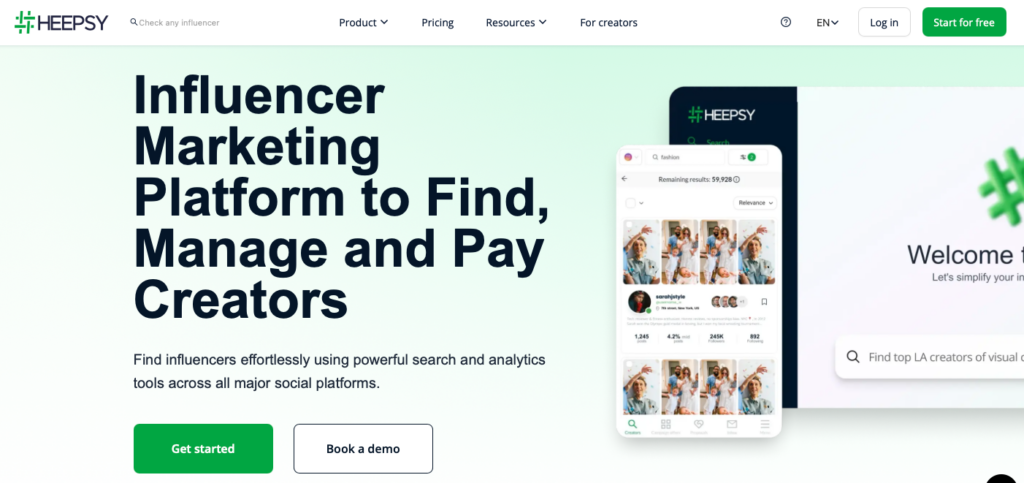
Heepsy wins on speed. The interface is simple, filters load fast (location, niche, engagement rate, and basic fake-follower detection are all there), and you can go from a blank search to a usable shortlist without a learning curve or a sales call.
Starter plans begin around $89/month, with Plus ($249/month) and Advanced ($369/month) tiers unlocking deeper analytics, creator contact details, and export options. That tiered, transparent pricing is honestly one of its biggest selling points, since most of the platforms on this list make you talk to sales before you see a number.
The trade-off for that simplicity is database depth. Heepsy’s creator pool is smaller than Modash’s or Influencer Hero’s, and the audience-quality data isn’t as granular as HypeAuditor’s. It’s a sensible entry point for smaller teams or first influencer campaigns, less so once you’re running programs at real volume.
5. Upfluence
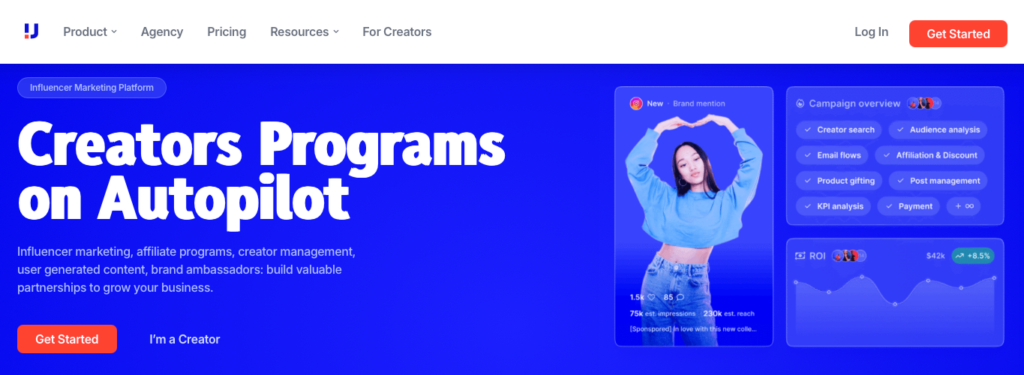
Upfluence is built around connecting influencers directly to revenue rather than just surfacing profiles. Its search covers Instagram, TikTok, YouTube, X, Pinterest, Twitch, Amazon, and even WordPress, and the AI-powered search matches creators based on their actual content and performance data, not just profile keywords.
The real differentiator is how tightly it plugs into ecommerce. Native integrations with Shopify, WooCommerce, and BigCommerce mean you can go from “found a creator” to “creator has a live affiliate link and discount code” without leaving the platform, which is exactly why so many affiliate-style influencer programs run on it.
What it’s not built for is deep audience forensics. If fraud detection and demographic breakdowns are your priority, you’ll want to lean on HypeAuditor alongside it. Pricing is custom, but it’s a strong option if attribution to actual sales matters more to you than a massive standalone creator database.
6. GRIN
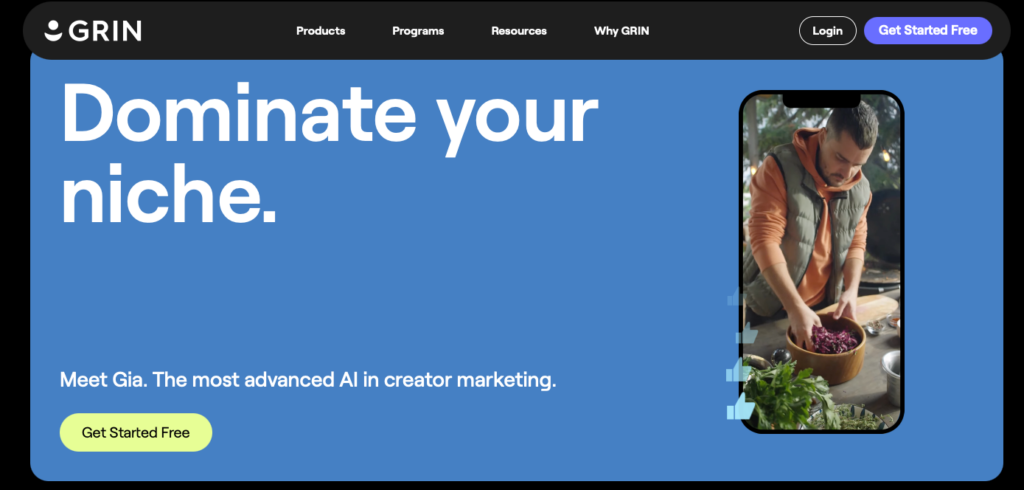
GRIN is aimed squarely at ecommerce brands, with deep Shopify integration that lets you ship product to creators and generate unique discount codes straight from the platform. It treats every creator relationship more like a CRM record than a one-off search result, which shows in how the whole platform is laid out.
Search and vetting exist here, but they’re really the front door to GRIN’s bigger strength: managing product seeding, contracts, communication, and payouts for creator programs running at real volume. If your influencer strategy is built around gifting and organic UGC rather than paid placements, this workflow will feel a lot more natural than a pure search tool.
Pricing starts around $2,200/month and climbs from there depending on team size and features, which puts it out of reach for brands just testing the waters. It’s a better fit once you already know influencer marketing works for you and need the operational muscle to run it at scale.
7. Aspire
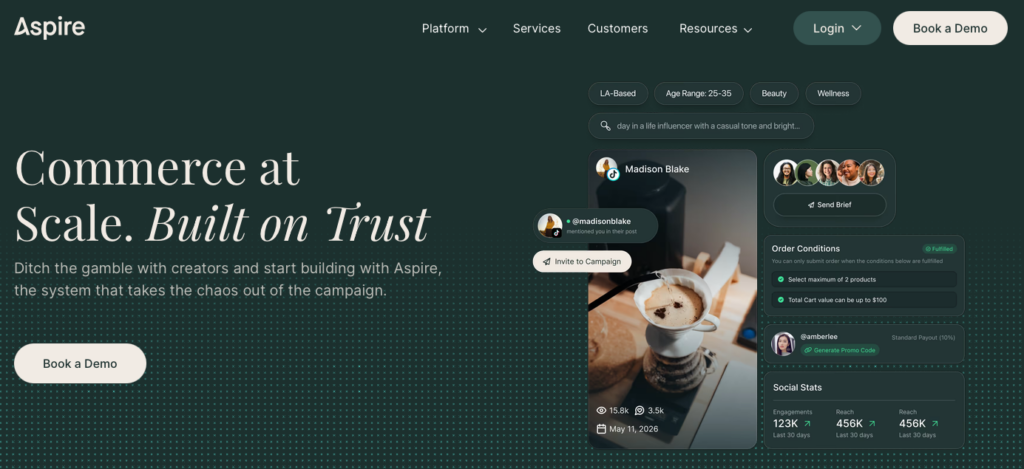
Aspire runs a dual discovery system that’s genuinely different from most of this list: an outbound search engine covering roughly 170M profiles across Instagram, TikTok, YouTube, and Pinterest, plus an inbound Creator Marketplace of around 1M influencers who apply directly to campaigns you post. That combination means you’re not only hunting for creators, some come to you.
It also has an Image Search feature, where you upload a photo or moodboard and it returns creators whose content matches that aesthetic, which is a genuinely useful shortcut for brands with a specific visual identity to protect. Data is pulled through first-party APIs from Meta, TikTok, and Pinterest rather than scraped estimates, so the numbers tend to hold up better over time.
Pricing runs roughly $2,500–$5,000/month, putting it firmly in the mid-to-enterprise range, and it’s popular with mid-size to large brands that want marketplace-style inbound applications alongside traditional search.
8. CreatorIQ
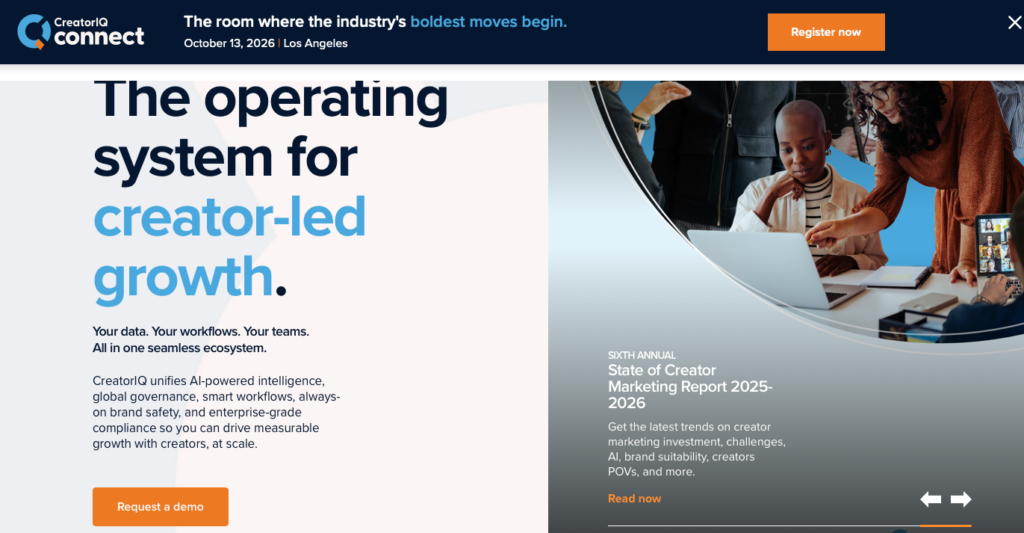
CreatorIQ is built for enterprise creator programs, the kind run by teams managing hundreds of creators across multiple brands or regions at once. Its partnership with LiveRamp expanded data access to roughly 22M profiles pulled through direct API integrations with Meta, TikTok, and YouTube, which is a smaller pool than Modash or Influencer Hero but leans toward higher data accuracy over raw volume.
Beyond discovery, it covers brand safety screening, custom reporting dashboards, branded one-sheets for reviewing creator profiles internally, and integrated payments with built-in tax compliance, which matters a lot once you’re paying out hundreds of creators across different countries.
It’s overkill for a small brand running a handful of campaigns a year, both in complexity and in price. But it’s a serious option, arguably one of the most defensible enterprise picks, if you’re already operating at that scale.
9. Traackr
Traackr’s reputation is built on data-driven vetting and relationship management rather than raw database size. Its strongest feature is attribution modeling that connects influencer content directly to downstream sales, giving marketing teams a way to defend creator budget in front of finance with real numbers instead of reach and impressions.
Brands running influencer programs across five or more markets at once tend to cite Traackr’s global performance tracking as the most defensible choice when reporting up to leadership, since it’s built to compare creator performance consistently across regions and languages rather than treating each market as a separate spreadsheet.
How to Choose the Right Tool for Your Brand
Start with platform coverage. If your creators live on TikTok and YouTube, a tool that’s mostly strong on Instagram won’t help you much no matter how big its overall database sounds. Next, look at how the tool verifies audiences. Follower count is close to meaningless on its own; you want engagement quality and bot detection built in, not an add-on you have to pay extra for later.
Then think about what happens after you find a creator. Some of these tools are pure search-and-export, which is fine if you already have a CRM and outreach process. Others, like Influencer Hero, fold outreach, contracts, and reporting into the same platform, which matters a lot if your team is small and can’t juggle four separate tools for one campaign.
Budget is the last filter, and it’s worth being honest about it upfront. Enterprise platforms like CreatorIQ, Aspire, and Traackr assume you’re running programs at a scale that justifies four or five-figure monthly spend. If you’re not there yet, a tool like Heepsy or Modash gets you real search capability without the enterprise price tag.
Wrap Up
A good search tool solves discovery. It won’t negotiate rates, chase down deliverables, or tell you when a creator relationship is worth turning into something longer-term, and that’s a different job entirely. If you’d rather hand the whole process, sourcing, vetting, negotiation, and reporting, to a team that does it full-time, that’s exactly what Vivian Agency is built for.
Ready to stop managing spreadsheets and start running an influencer program that actually drives growth? Book a free call with Vivian Agency to talk through your goals and creator strategy.
FAQ
What’s the difference between an influencer search tool and an influencer marketing agency?
A search tool gives you the database and filters to find creators yourself; you still handle outreach, negotiation, and campaign management. An agency does all of that for you, using its own vetting process and existing creator relationships. Most brands use a search tool when they want control and have the internal bandwidth, and an agency when they’d rather hand off the day-to-day work entirely.
Are there any free influencer search tools?
A handful of tools offer limited free tiers or trials, usually capped at a small number of searches or profiles per month. They’re fine for testing the waters, but most serious campaigns outgrow the free tier fast, especially once you need audience authenticity data or contact details, which are almost always paywalled.
How do I know if a creator’s followers are real?
Look past the follower count entirely. Check the engagement rate against their follower tier (a 50K-follower account should see meaningfully more interaction than a 500K one), scan for sudden follower spikes, and check whether comments look genuine or generic. Tools with built-in audience authenticity scoring, like HypeAuditor or Influencer Hero, automate most of this so you’re not doing it manually profile by profile.
Do I still need a search tool if I’m working with an agency?
Not usually. Agencies typically bring their own discovery tools and existing creator relationships as part of the service, so paying for a separate search platform on top of an agency retainer is often redundant. It can still be useful if you want visibility into who’s being considered or plan to run some campaigns in-house alongside the agency’s work.
How much should I expect to pay for an influencer search tool?
Entry-level tools start around $89–$200/month for basic search and filtering. Mid-tier platforms with deeper analytics and CRM features run $200–$1,000/month. Enterprise platforms built for large-scale creator programs typically start above $1,500/month and often require annual contracts.