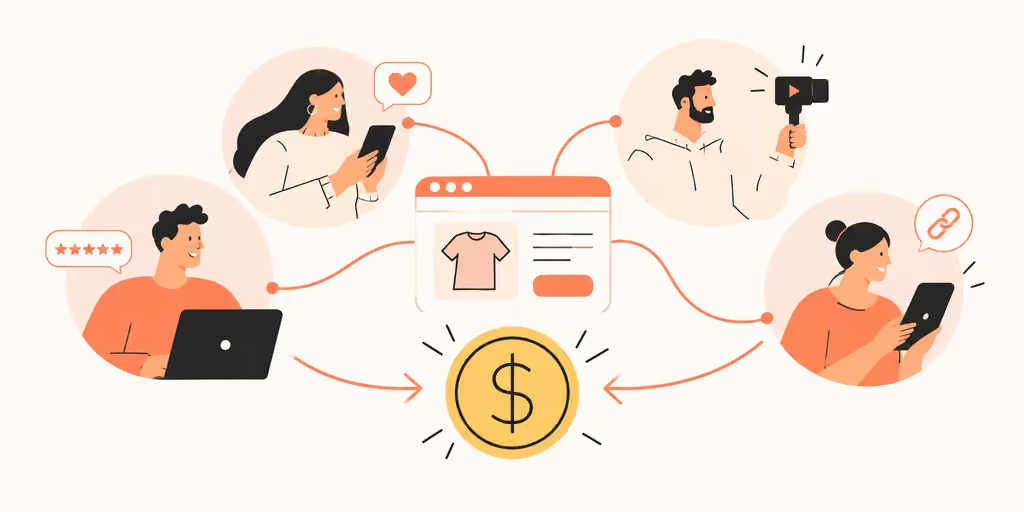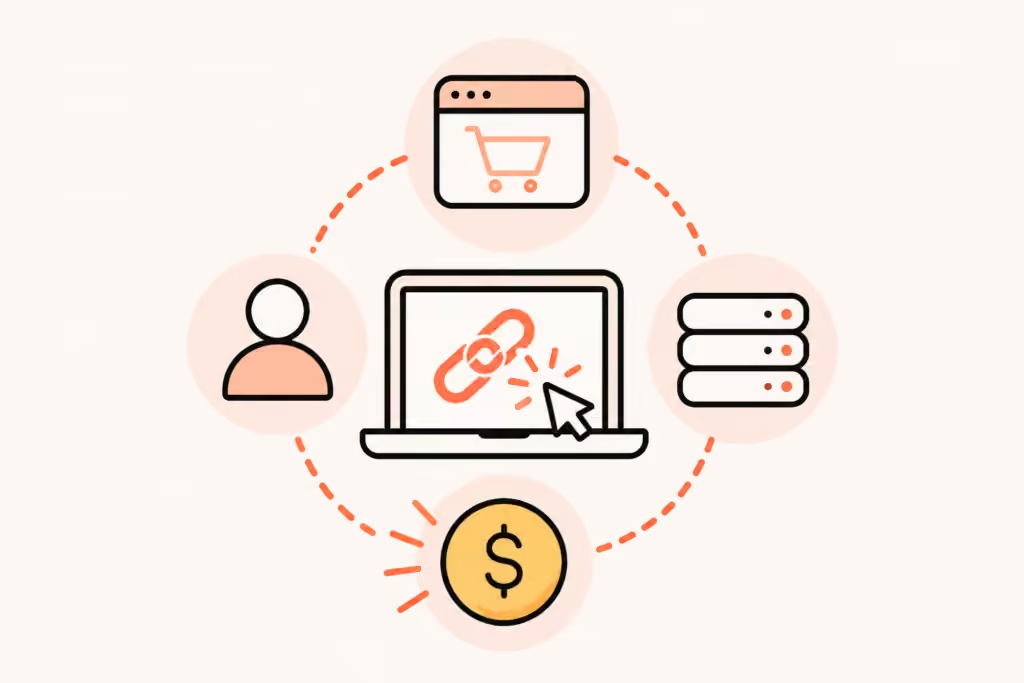

Affiliate programs pay for results, so every payout depends on knowing which partner sent which customer. That has become harder. Safari shortens cookie lifetimes, privacy rules limit what you can store, and some browser extensions have been caught replacing the referring partner at the last second.
This guide explains how affiliate link tracking works, which methods suit which program, and how to set it up so your reports hold up when money is on the line. It is written for companies and marketers running a program in-house and for teams comparing tools.
Table of Contents
Affiliate Link Tracking Methods at a Glance

| Method | How it works | Main strength | Main weakness | Best for |
|---|---|---|---|---|
| Cookie | A click saves an ID in the browser, and the sale reads it later | Simple and widely supported | Shortened or blocked by browsers | Small programs with short buying cycles |
| Tracking tag (pixel) | A script on the order confirmation page reports the sale | Quick to install | Can be blocked by ad blockers and browser limits | Online stores |
| Server-to-server (postback) | A unique ID travels with the visitor, and your server confirms the result | Does not depend on browser storage | Needs developer time | Subscriptions, lead generation, gambling |
| Coupon code | Each partner gets a unique code | Works across devices and offline | Codes leak to coupon sites | Influencers and podcasts |
| UTM parameters | Tags on the link tell reporting tools where visits came from | Free, and shows what visitors do next | Does not calculate payouts | Checking traffic quality |
Why Does Tracking Matter for Affiliate Marketing Profitability?
Tracking decides who gets paid and how much. Even the best affiliate program loses ground when it fails, because you either underpay partners, who then leave, or overpay them, which eats into margins. A small gap can distort the whole program’s performance, since you end up judging partners and budgets on numbers you cannot trust.
Tracking gives you three answers: who sent the visitor, what that visitor bought, and what you owe. Clean affiliate data also shows which traffic sources bring customers who stay, and that is what turns a program into a steady revenue stream instead of a monthly guess.
Because this channel is performance marketing, you only pay for outcomes, so the outcome data has to be right. Vivian’s guide to affiliate marketing reports is a useful next read.
How Does the Tracking Process Work from Click to Conversion?
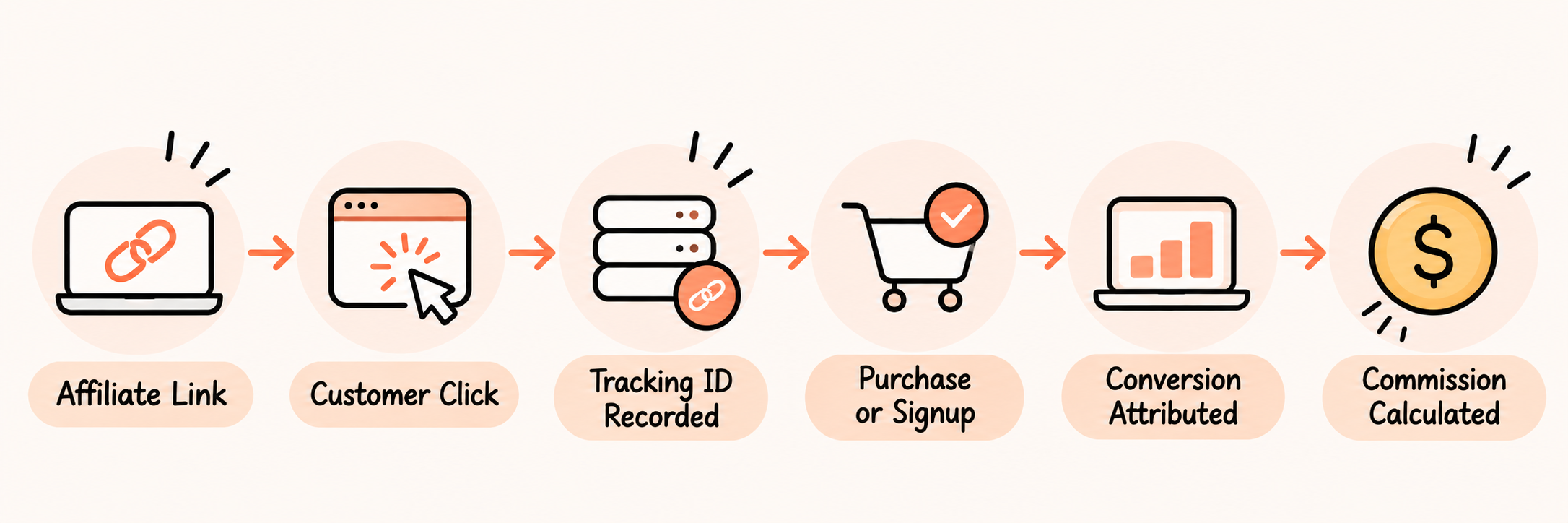
Each partner gets a unique tracking link. Most links contain an affiliate ID, and many add a visit ID that is created every time someone arrives. When a potential customer clicks, the platform records the visit and saves the IDs, usually in a cookie that is stored in the user’s browser.
Later, when the customer goes on to make the purchase, a tag or server call reports the order back with the saved ID. The platform matches the two, applies the commission amount set in your terms, and credits the referring affiliate. That match takes seconds.
Real-time tracking lets you watch orders arrive as they happen. The log should also keep every click, so you can audit disputed sales and spot odd patterns, such as one visitor generating dozens of visits in a minute.
How Do Cookie, Tag, and Server-to-Server Tracking Differ?
Cookies are the oldest method and the most fragile. Safari caps first-party cookies set by JavaScript at 7 days, and it applies the same limit to cookies set from a third-party IP address, according to Stape’s guide to Safari’s tracking prevention. A 30-day cookie window on paper can end after a week in practice.
A tag, often called a pixel, sits on the order confirmation page and reports the sale. It is quick to install, though impact.com notes that Safari’s tracking prevention can limit it unless you use a unique tracking domain.
Server-to-server tracking passes a unique ID to your system, and a postback confirms the outcome directly between servers. Nothing depends on browser storage, so ad blockers and cookie limits do not break it. The same impact.com page describes its API method as cookieless and recommends it for brands, and most large affiliate network platforms offer something similar.
What Should You Look for in Affiliate Tracking Software and Affiliate Platforms?
Start with method coverage. Good affiliate tracking software supports more than one method, so a cookie sale and a server confirmation can both be matched to the same partner. It should also show orders as they happen and let you set payout rules by product.
Check the integration with your store and checkout. A WooCommerce plugin, a Shopify app, or a payment connector can save weeks of developer time. Shopify brands often look at UpPromote, and Vivian’s Shopify affiliate marketing service covers that setup.
Then ask where the tool sits. An affiliate tracking platform built into an affiliate network handles payouts and compliance in one place. Standalone affiliate management software gives you more control over rules and data. Either way, insist on reliable affiliate reporting you can export, and a tracking solution that keeps working as browsers change. If you already use Awin or impact.com, Vivian manages programs on both.
How Do You Track Affiliate Clicks and Conversions in GA4 Step-by-Step?
Google Analytics 4 cannot calculate payouts. It does show how affiliate traffic behaves after the visit and whether the platform’s numbers look right. Set it up in four steps:
- Add UTM parameters to the destination URLs your partners use. Set utm_medium to affiliate and utm_source to the partner’s name, and keep the spelling identical across every link.
- Use the exact medium value. Google puts traffic in the Affiliates channel only when the medium is affiliate, and its channel group rules say the match is not case-sensitive.
- Add Google Tag Manager to the site and fire your purchase or lead event on the thank-you page, with a transaction ID so a page refresh cannot count twice. Mark the event as a key event, the label Google now uses for what it used to call a conversion.
- Compare the Affiliates channel with the platform report each month. Tracking conversions in two places gives you a sanity check, and large gaps usually point to blocked tags or missing consent.
URL tracking in your own reports will never match payout totals exactly, because the platform applies returns, reversals, and its own attribution window. Treat the two as complementary.
How Does Attribution Decide Which Affiliate Gets Paid?
Attribution is the rule that decides who earns the commission when more than one partner touches the same customer. Most programs use last-click attribution, so the final affiliate link clicked before the purchase gets paid. Amazon Associates works this way, and its 24-hour window closes if the customer re-enters Amazon through another Associate’s link.
The weakness is the customer journey. A reviewer may introduce a product, and a coupon site collects the commission for the final click. The first-click model flips that and rewards discovery. Neither is perfect, and Google’s own reports now offer data-driven attribution and two models that credit the last click, after the older models were removed in November 2023.
When multiple affiliates compete for credit, write the rule into your terms so every affiliate and partner knows how it works. Paying the right affiliate keeps disputes rare, and our guide to affiliate contract compliance covers the clauses worth including. Influencer posts need their own rule, because codes help attribute conversions when a link is missing. This guide explains how to tell if an influencer partnership sold.
Is Cookieless Tracking Worth It, and What Do Privacy Rules Require?
For most programs, yes. Server-to-server methods carry the weight when browsers limit storage. Chrome still allows third-party cookies, and Google ended Privacy Sandbox in October 2025, but Safari and Firefox already block them by default, so no program can lean on them. Safari 26 also switched its fingerprinting protection on for all browsing, according to Affilitizer, which makes matching a visit to a later purchase on another device harder.
Privacy rules still apply to any method that stores or reads information on a device. Under GDPR and the ePrivacy rules, non-essential cookies need consent. Server-side methods reduce what sits on devices, but they do not remove the duty to tell people what you collect. Treat data protection as part of the setup, and use our compliance checklist as a starting point.
The European Commission’s Digital Omnibus proposal would reshape the cookie rules, yet consent stays the general rule in it. At the time of writing it is still a proposal.
How Does iGaming Change What You Need to Track?
Gambling programs track a longer chain. A player arrives, registers, makes a first deposit, and then plays for months. Track360 describes the usual commission models: a fixed fee for each qualifying player, a share of net revenue, or a hybrid of both.
Because the money arrives long after the first visit, cookies are a poor fit. The operator’s platform fires a server call each time the player registers, deposits, or reaches a revenue milestone, and when one fails, the commission is wrong before anyone notices. Matching on the player account is more dependable than cookie-based methods, according to the same guide.
Brands outside gambling can borrow the idea. Subscription programs, referral marketing, and lead generation also pay on events that happen days or weeks after the first visit. Define the payable event first, build the tracking around it, and pay per lead only once leads reach a stage you value.
How Do You Optimize Tracking for Scaling and Fraud Detection?
Test before you scale. Place a test order through each affiliate link, check that the sale shows the right partner and amount, and repeat after any checkout, consent banner, or site update. Most breaks happen after a site change, not at launch.
Then watch for fraud. Common signs are traffic with no sales, duplicate orders, partners buying through their own links, and coupon sites that appear at the last second of a purchase. Chrome now bans extensions from adding or replacing affiliate links unless the user takes an action and gets a direct benefit, and enforcement began on June 10, 2025.
Report per link and per affiliate so the tracking data shows which placement works, and compare conversion rate by partner every month. Reports are only useful when they are actionable: pause weak partners, raise commission for the ones sending high-value customers, and check that outbound links on partner pages still work.
If you want help with any of this, Vivian’s team handles setup and ongoing affiliate program management. You can also take the quick quiz, book a call, or join the newsletter for new guides.
Frequently Asked Questions
How long should a cookie window be?
It depends on how long people take to decide. Many programs use 30 days, short-cycle products can use less, and Amazon Associates uses 24 hours from the click. Safari can cut a JavaScript-set cookie to 7 days, so a longer window only holds when your own server sets the cookie or tracking runs server to server.
Can you measure affiliate sales without cookies?
Yes. Pass a click ID through the visit and confirm the order from your server, or give unique coupon codes to partners whose audiences rarely follow links. Many programs combine both, so a sale that loses its cookie can still be matched.
Why do my reports show different numbers from the platform?
Platforms apply reversals, validation periods, and their own rules for who gets credit. Accurate tracking in your own reports depends on tags firing and consent being given, so blocked scripts remove sales. Compare trends over time, and look into any gap that keeps growing.
What should you do before starting your affiliate program?
Decide which event pays, such as a sale, a qualified lead, or a first deposit. Pick one main method and one backup, install and test both, and write the attribution rule into your terms before any partner goes live.
Key Takeaways
- Tracking decides every payout, so test it before you recruit partners.
- Cookies alone are no longer enough, because Safari caps JavaScript-set cookies at 7 days.
- Server-to-server methods and coupon codes cover the sales that cookies miss.
- Set the UTM medium to affiliate so Google’s reports sort the traffic into the right channel.
- Write the attribution rule into your terms and apply it the same way every time.
- Treat consent and privacy as part of the setup.
- Review the data every month, watch for fraud signs, and pause partners that do not perform.