
Getting your new customers from existing customers could be the smartest business decision you can make. A well-structured customer referral program streamlines the customer acquisition process, reduces your cost per new customer, and gives your most loyal customers a reason to keep coming back.
Word of mouth marketing is one of the oldest and most effective growth channels available, and a good referral marketing program turns it into something measurable and scalable. Most referral programs that fail do so not because the idea was wrong, but because the referral rewards were not compelling enough or the referral process was too complicated for customers to bother with.
Here, I break down 8 referral program ideas with real examples — covering everything from cash bonuses and store credit to tiered rewards and charitable donations — along with the customer referral program ideas that consistently generate the best results for brands of all sizes.
Table of Contents
Overview
| Referral Program Idea | Best For | Reward Type |
|---|---|---|
| Cash rewards | All business models | Cash, gift cards, percentage discount |
| Upgrades and early access | SaaS and subscription brands | Premium features, exclusive access |
| Point system / tiered rewards | High-volume referrers, B2B | Progressive rewards, tiered incentives |
| Social gifting | Consumer brands, e-commerce | Rewards for both the referrer and referred customers |
| Contest or sweepstakes | Brands wanting viral reach | Big one-off prizes, referral contest format |
| Mystery gifts | Brands wanting intrigue | Surprise referral rewards |
| Seasonal campaigns | Any brand with seasonal demand | Time-limited referral incentives |
| Charitable donations | Purpose-driven brands | Donation on the customer’s behalf |
1. Good Old Cash Rewards

Cash is a universally compelling referral incentive. It is rare to find a customer referral program based on cash rewards that does not perform well — provided the number is competitive enough to motivate your customer base to refer at least one friend.
Percentage discounts on future purchases are one of the most popular referral rewards because existing customers would rather save money on a product or service they already buy. Cash bonuses via PayPal or bank transfer work well for larger transactions, while prepaid Visa or Amazon gift cards tend to perform better for small businesses and consumer brands. Decide which option fits your business model and customer base before launching.
To design an effective referral program with cash rewards, research what similar businesses are offering and position your referral incentives competitively. That said, make sure the amount you are offering is sustainable. Generating new customers is no use if the referral rewards eat into your profitability.
Example
PayPal offers referring customers $10 for each new customer who joins using a refer a friend link, and the newly referred customers receive $10 for the first $5 sent or received within 30 days. This gives both the referrer and the referred customers a reason to participate, which is one of the most effective structures for any refer a friend program.
2. Give Your Customers an Upgrade
Some of your most loyal customers are already on your lowest tier — not because they are not interested in your premium features, but because they are not ready to pay for them. Offering early access or exclusive access to gated features as referral rewards gives them a taste of what they are missing, without requiring a financial commitment.
Referral incentive ideas in this category include premium subscription upgrades, early access to new product launches, exclusive events or beta features, and VIP access to content or tools not yet available to standard users. These types of referral incentives work especially well for SaaS companies and subscription services where power users are already engaged and motivated.
This customer referral program approach rewards your most loyal customers with a more refined experience while strengthening the customer loyalty and lifetime value that make referral marketing so powerful. It also positions your brand well, because the referral reward signals to referred friends that they are joining something worth having.
One important note: never automatically default customers to the premium tier without their explicit consent after the referral incentives expire. Doing so risks undermining customer loyalty and triggering cancellations.
Example
YouTube has an ongoing promotion where referring customers receive credit equal to a one-month Premium subscription fee. New customers referred this way also get access to the premium experience immediately, making the referral rewards compelling for both the existing customer and the newly referred customers.
3. Create a Point System for Multiple Referrals
There’s always a possibility that one of your existing customers will bring in multiple referred customers. This is especially common in B2B services referral programs, where multiple businesses could be interested in your services after being referred by the same professional contact.
A tiered rewards or progressive rewards structure handles this well. When several new customers use the same referral link, the referring customer accumulates points that unlock increasingly valuable referral rewards. Tiered incentives like these keep top referrers motivated, reward your most engaged customers base, and create a refer a friend program that compounds in value the more people participate.
When designing your point system, make the higher reward tiers more lucrative so the pitch sounds worth the effort. This is also one of the most effective referral program ideas for encouraging customers to actively promote your brand rather than making a single referral and forgetting about it.
Some referral program software platforms support automated rewards and progressive rewards natively, which removes the manual overhead of tracking points across your customer base.
4. Use Social Gifting
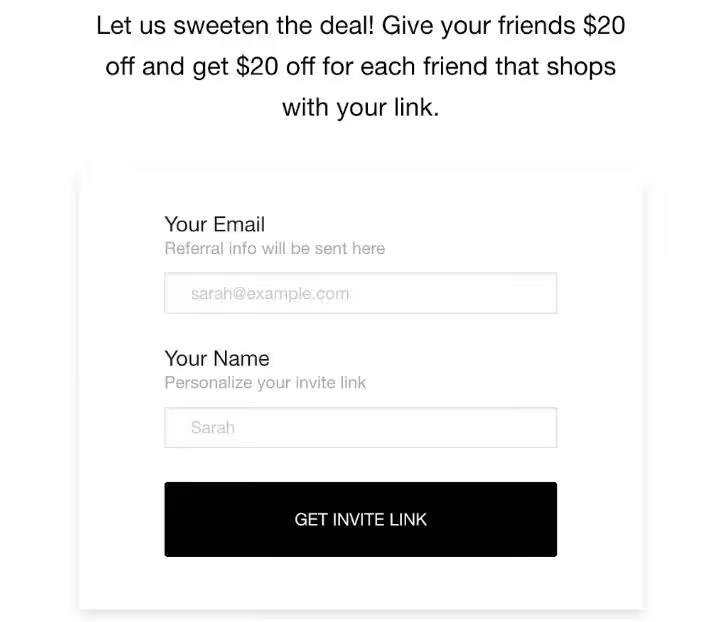
A strong referral marketing program can also mean giving referred customers a welcome reward alongside the existing customer’s gift. This concept, known as social gifting, creates a mutual benefit structure where both the referrer and the referred friends gain something — which gives newly referred customers a genuine reason to sign up rather than just a passive invitation.
Social gifting is one of the most effective referral incentive ideas for word of mouth marketing because it makes the referring customer feel generous rather than self-promotional. When both the existing customer and their referred friends benefit, the referral feels more like a recommendation between friends than a sales pitch. This strengthens relationships, builds customer loyalty, and consistently improves referral conversion rate compared to one-sided referral rewards.
The rewards for both sides do not need to be identical. Prioritize the existing customer’s referral reward, since even satisfied customers need a clear incentive to refer at least one friend.
Example
LinkedIn ran a limited-time referral campaign promotion where existing customers could gift two months of Premium subscription access to anyone who used their referral link. This gave both the referrer and referred friends an upgrade experience, making the refer a friend program feel generous and low-risk for everyone involved.
5. Run a Contest/Sweepstakes for Big Rewards
Most referral programs use discounts and upgrades as their standard referral rewards, and that works well for ongoing programs. But if you want to generate a burst of word of mouth activity and keep your customer base actively engaged, a referral contest with a big one-off prize can create significant momentum.
A “most referrals made” referral contest rewards top referrers with something genuinely exciting — anything from high-value tech to luxury experiences. This format is particularly effective for encouraging customers to share across social media posts, referral emails, and multiple channels at once, extending your referral campaign’s reach well beyond your existing customer base.
If you want to level the playing field, run a sweepstakes instead of a pure volume contest, where all customers who refer at least one friend are entered into a prize draw. This format encourages customers who might only make a single referral to participate, even if they know they will not become one of your top referrers.
Make sure the winner selection process is transparent and fair — your referral campaign’s credibility depends on it.
Example
In 2020, Morning Brew, a newsletter company, ran a referral contest where both the reader who shared their refer a friend link and the new customer who used it could win a MacBook Pro. The high-value prize generated significant social media posts and word of mouth marketing activity, bringing in a large wave of new customers in a short window.
6. Entice Your Customers With Mystery Gifts
Introducing an element of mystery into your customer referral program can create genuine excitement around your brand. You do not need to be cryptic — just make the potential referral rewards sound exciting enough to generate curiosity.
Mystery gifts work particularly well as a supplement to your standard referral rewards rather than as the primary referral incentive. The gifts can range from store credit and percentage discounts to physical swag kits carrying your brand logo. Swag in particular doubles as a word of mouth marketing asset, since customers who receive branded merchandise often share it across their social media posts and wear or display it in their daily lives.
This type of referral program idea is especially effective for keeping current customers engaged between major referral campaigns, and it adds an element of fun that standard referral programs typically lack.
Example
Robinhood previously offered surprise stock as a referral reward to both the referring customer and their referred friends, which created significant buzz and word of mouth marketing around the platform. The mystery element, not knowing which stock you would receive, made the referral incentive feel like a game rather than a transaction.
7. Create Themed and Seasonal Campaigns
Seasonal and themed referral campaigns are one of the most underused referral program ideas available to brands of all sizes. They are time-limited by design, which creates urgency, and they tap into emotional moments when customers are already in a sharing and gifting mindset.
If your brand has a seasonal angle, use it. Educational platforms can tie their referral campaign to Back-to-School promotions. E-commerce brands can push enhanced referral rewards through the December holiday window. Fitness brands can run a New Year referral campaign tied to resolution-setting. The time-limited nature of seasonal referral incentives naturally encourages customers to act quickly rather than postponing the decision.
Seasonal referral campaigns also pair well with social gifting, since the holiday period makes customers more likely to refer a friend as an act of generosity rather than self-interest. This framing can significantly improve your referral conversion rate.
Confirmation pages, referral emails, and social media posts are all effective channels for promoting a seasonal referral campaign. Using multiple channels simultaneously gives your referral marketing ideas the broadest possible reach across your customer base.
Example
A crypto-trading platform called MetalPay ran a seasonal referral program with mutual rewards back in 2018, offering both the referrer and referred friends an incentive during a limited campaign window. The time-limited structure encouraged quick action from existing customers who might otherwise have deferred.
8. Make the Gift a Charitable Donation
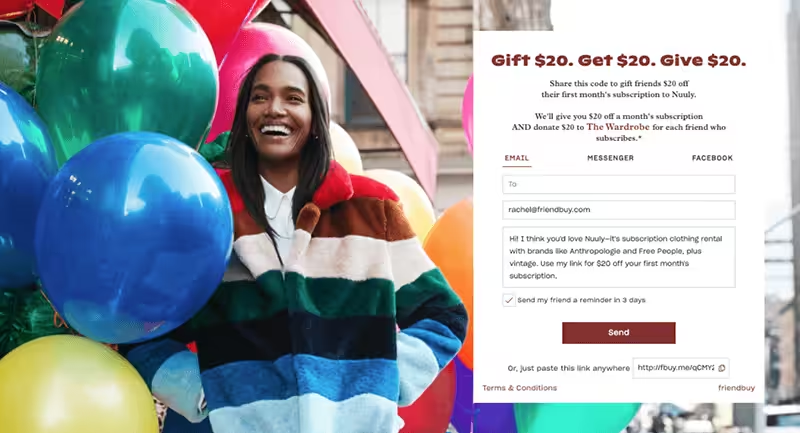
To round out our breakdown of customer referral program ideas, consider offering customers the option of directing their referral reward toward a charitable donation on their behalf. This referral incentive idea is growing in popularity as more consumers want to feel that their everyday actions — including something as simple as sharing a refer a friend link — have a positive impact.
The key word here is option. Leaving charitable donations as a choice rather than a default ensures that customers who prefer a personal referral reward, like store credit or a percentage discount, can still participate comfortably in your referral campaign. A best referral program structure gives customers control over how their referral rewards are used, which itself strengthens relationships and builds customer loyalty.
This customer referral program idea also works well for purpose-driven brands that want to reinforce their values through their referral marketing program, attracting new customers who share those values and are more likely to become loyal long-term members of your customer base.
Example
A Canadian software company called CoLab ran a referral program in 2021 that offered a referral gift + $25 to charity giving customers a meaningful choice about how their refer a friend activity was recognized.
Making the Biggest Impact With Your Referral Marketing Campaign
Now that you have a range of referral program ideas to draw from, here are the strategies that consistently determine whether a referral marketing program succeeds or stalls.
Know What Your Customers Want
Each business has a wildly different customer base, with different motivations. Your team should identify the right incentive for your specific customers before designing your refer a friend program. Your most loyal customers might not be interested in store credit or a percentage discount — they might respond better to VIP access, exclusive events, or early access to new features. Your newly referred customers might convert better with a free trial month or a cash bonus.
For small businesses working without large customer data sets, social media posts and polls are an effective way to gauge what your customer base actually values. This information directly shapes the referral incentive ideas that will drive the highest referral conversion rate for your program.
Use Every Method Available to Reach Your Audience
Your referral campaign can only succeed if your customers know it exists. A refer a friend program buried on a confirmation page will not generate meaningful word of mouth marketing. Promote it across multiple channels: referral emails, social media posts, your website homepage, and even physical handouts for brick-and-mortar businesses.
Use referral program software to automate the process of sharing referral links, tracking referrals, and delivering automated rewards — this removes friction for both your team and your referring customers, and keeps customers engaged throughout the referral process.
You do not need to build your customer referral program from scratch, either. Many referral program software platforms offer templates and best referral program frameworks that small businesses can adapt quickly.
Gather Feedback About Your Referral Program
After your first referral campaign, ask your customer base what they think. Are the referral rewards worth the effort? Is the referral process easy to follow? Do referred friends understand the value immediately? This customer data helps you refine your referral incentive ideas, improve your referral conversion rate, and build a referral marketing program that gets stronger over time.
Tracking how many customers successfully refer at least one friend, how many newly referred customers convert to paying customers, and the lifetime value difference between referred customers and standard new customers are the key metrics that tell you whether your customer referral program is achieving its goals.
Need Help Creating Your Perfect Referral Program?
A successful referral marketing program does not happen by accident. It requires a clear understanding of your customer base, the right referral incentive ideas for your specific audience, and the systems to track, manage, and optimize the referral process over time.
If you are ready to talk about the kind of customer referral program that fits your business needs, book a call with our team at Vivian Agency. You can also contact us for more information on how we help brands design and manage referral and affiliate programs that drive consistent, measurable growth.
Frequently Asked Questions
What is the most effective referral program idea for small businesses?
For small businesses, the most effective customer referral program ideas tend to be the simplest ones.
Cash rewards and percentage discounts work consistently well because they are easy to understand and immediately valuable to your existing customer base. Store credit is another strong option because it encourages referred customers to make their first purchase while giving the referring customer a reason to come back for future purchases.
If your budget is tight, social gifting — where both the referrer and referred friends receive a reward — can generate strong word of mouth marketing without requiring a large cash outlay.
The right incentive depends entirely on your customer base, so if you are unsure where to start, a quick poll through social media posts or referral emails to your current customers is the fastest way to find out what would motivate them to refer at least one friend.
How do you measure the success of a referral marketing program?
The key metrics to track in any customer referral program are referral conversion rate (the percentage of referred friends who become paying new customers), the number of existing customers who actively participate in the referral process, the lifetime value of referred customers compared to customers acquired through other channels, and the total cost per new customer acquired through referrals versus other acquisition methods. Most referral program software platforms provide a dashboard where you can track these metrics automatically.
Research consistently shows that referred customers have higher lifetime value and lower churn than standard new customers, which means a well-run refer a friend program often delivers better long-term returns than its upfront referral rewards cost suggests.
What referral rewards work best for keeping top referrers engaged?
Top referrers, the power users who consistently refer multiple new customers, respond best to tiered rewards and progressive rewards structures that give them something increasingly valuable the more referrals they make. VIP access, exclusive events, early access to new product features, and premium subscription upgrades all work well for this segment because they signal status and recognition beyond a simple cash bonus or percentage discount.
Standard referral programs that offer the same flat reward regardless of referral volume tend to lose top referrers quickly once the initial novelty wears off.
A tiered incentives structure that unlocks new rewards at each referral milestone keeps your most loyal customers engaged, strengthens relationships with your highest-value advocates, and maximizes the word of mouth marketing impact of the customers who are already most enthusiastic about your brand.