
The goal of visiting Pinterest is often to find inspiration—but that’s not the only thing you can do there. I’ve found that 55% of Pinterest users visit the platform to shop via affiliate links, and around 80% discover a new brand or product while they’re there. For brands thinking about pinterest affiliate marketing, these numbers represent a significant opportunity to earn money online through a channel that most competitors are still underusing.
With these many eager shoppers, listing your products on Pinterest through affiliates gives you a fighting chance to make a significant profit. If you have the right pinterest affiliate marketing strategy, you can attract your target audience, drive traffic to your ecommerce site, and generate free traffic that compounds over time through the long lifespan of pins on the platform.
In this post, I’ll reveal how affiliate marketing on Pinterest works. Let’s begin by discussing how it benefits you.
Table of Contents
How Does Pinterest Affiliate Marketing Work?
Pinterest affiliate marketing works the same way as affiliate marketing on other social media platforms, with the main peculiarity being the platform itself. Affiliate marketers promote your product or ecommerce site on Pinterest, earning a commission for every sale or lead they bring through their unique affiliate links.
Understanding how Pinterest affiliate marketing work helps brands set realistic expectations before launching their first affiliate program on the platform.
On other social media platforms like TikTok, you can only add a link to a business account’s bio. Pinterest, however, allows the affiliate marketer to embed direct affiliate links as each pin’s URL, making promoting affiliate links far more convenient than on most other platforms. Affiliates can also use link shortening tools to keep their pin links clean and trackable across multiple pins promoting the same link.
3 Benefits of Pinterest Affiliate Marketing for Your Brand
If you use affiliate marketing on Pinterest, you can expect to enjoy these three major benefits:
1. It Increases Your Traffic and Lead Generation
Running an affiliate program lets you drive some of Pinterest’s traffic to your website. For many visitors, the whole point of using Pinterest is to find inspiration from other users’ pins.
When these visitors find affiliate content that resonates with their intent, they’ll be compelled to click through, right into your website for more ideas.
This gets you new leads that you can drive further down the marketing funnel. Pinterest affiliate marketing is particularly effective for driving free traffic because affiliate pins continue appearing in search results long after they’re first published, unlike paid ads that stop the moment your budget runs out.
2. It Boosts More Sales
Pinterest users love shopping. The platform’s Feed Optimization Playbook notes that 75% of users are more inclined to say they are consistently shopping, while 83% of weekly Pinners made purchases influenced by Pinterest content.
With affiliates that constantly create high-performing pins, you’ll not only drive more traffic but also drive affiliate sales and revenue. Your affiliates may even decide to drive traffic to their blog post or YouTube videos, where they can go deeper on product reviews and embed additional affiliate links. This gives your affiliate program a compounding reach that goes well beyond the Pinterest audience alone.
As a result, you can enjoy multiple affiliate sales of different products from one affiliate.
3. You Enhance Your Brand Awareness
Pinterest affiliate marketing opens your brand to millions of users, many of whom will include your target audience.
As users discover your products through engaging pins and affiliate content, they begin to learn more about your brand. The pinterest algorithm favors fresh, well-optimized pin content, which means a consistent affiliate program on Pinterest can keep your brand visible to the pinterest audience for months without additional paid ads spend.
Even when they’re not purchasing instantly, they will remember your brand when they are ready to buy or recommend you to others.
Why You Should Consider Affiliate Marketing on Pinterest
The convenience of adding affiliate links to your affiliate pins is one reason — but many other outstanding features make Pinterest ideal for pinterest affiliate marketing, including:
Access to a Large Audience
Pinterest has over half a billion monthly active users — making it one of the largest platforms for pinterest affiliate marketing by sheer audience size. Among the US pinterest audience, 46% are between 18 and 24 years old, 40% are within the 25–34 age bracket, and users within 34–44 years make up 39% of the US audience. These categories of people tend to shop more on social media. When it comes to number of users, Pinterest is ranked as the 17th social media network.
Its Visually Appealing Nature

The high-quality images on Pinterest give the platform a visually pleasing appeal.
Visuals are so powerful because they influence emotions quicker than words and aid memory. Also, the visual appeal of Pinterest contributes to its widely recognized positive user experience — which is why visually appealing pins tend to generate significantly higher engagement than pin content on other social media platforms.
Search Engine Optimization (SEO) Benefits
Pinterest is a search engine, much like Google, but it’s a visual search engine. This means that with proper SEO techniques, — including relevant keywords in your pin titles, pin descriptions, and pinterest profile — you can have your affiliate pins in the top search results when the pinterest audience searches for products in your niche.
Pinterest search is a powerful discovery channel because users arrive with high purchase intent, making it ideal for promoting affiliate links to warm traffic.
Optimized pins drive free traffic and organic traffic to your ecommerce site. Additionally, affiliates can run pinterest ads with a pinterest business account to reach a larger pinterest audience beyond their organic following — a useful option for affiliates looking to scale their affiliate earnings faster with paid ads.
Long Lifespan of Pinterest Pins
Your pinterest pins will remain visible on the platform for a long time. If they’re well-optimized with relevant keywords in pin titles and pin descriptions, they will appear in search results on Pinterest and many other search engines. This is one of the biggest advantages of pinterest affiliate marketing over other social media platforms — a well-crafted pin can continue driving affiliate sales and affiliate earnings for months or years after it was first published, with no additional spend on paid ads.
User Engagement
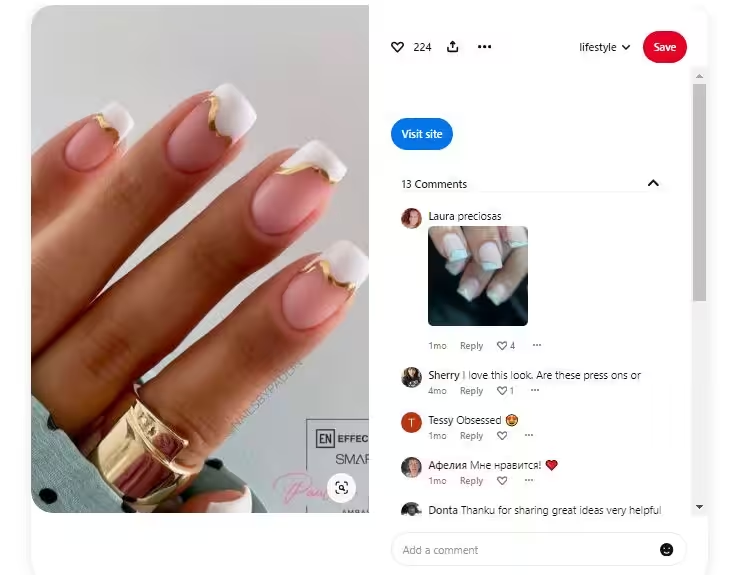
Pinterest allows users to engage with your pins through reactions and comments. Your affiliates can build a loyal following by interacting with other pinterest users, saving affiliate content to relevant niche boards and group boards, and consistently posting pin content optimized for the pinterest algorithm.
Joining relevant group boards and contributing to niche boards is one of the fastest ways for new affiliates to expand their reach to a wider pinterest audience without relying on paid ads. see your offers.
Tips for Setting Up Your Affiliate Marketing Program on Pinterest
Now that you understand the benefits you could gain with a pinterest affiliate marketing strategy, let’s discuss how you can set one up. The first step is to determine your affiliate products. Then, your affiliate network does the majority of the rest of the work.
Before we skip a beat — what are affiliate networks? Affiliate networks are third-party service providers that help you plan an effective affiliate program, join affiliate networks of relevant publishers, source affiliates, set up the program, and monitor it.
For brands just starting to think about how to start affiliate marketing on Pinterest, working with an affiliate network significantly reduces the time and complexity involved.
If you can’t work with a network, the alternative is to:
- Source affiliates yourself,
- Ensure they have a Pinterest business account,
- Provide them with the necessary information on how to excel as affiliates on the platform and
- Use affiliate marketing software to generate affiliate links, onboard affiliates, and track the performance of your affiliates.
If you’re going through the process of onboarding affiliates yourself, II recommend providing marketing tips and resources to boost their affiliate marketing efforts on Pinterest. Your affiliates are part of your team — they contribute to your bottom line. So if they’re armed with knowledge for success, it’s a win for you too.
Here are some tips you can share with your affiliates to use Pinterest effectively. Encourage them to:
- Start creating pins — specifically, create visually appealing pins that stand out in the pinterest search feed and are optimized for the pinterest algorithm
- Provide valuable affiliate content that genuinely helps the pinterest audience make purchasing decisions
- Do keyword research to optimize pin descriptions and pin titles with relevant keywords. Use pinterest search to identify what terms your target audience is already using, and incorporate relevant hashtags where appropriate
- State their affiliate relationships clearly in the pin descriptions to comply with FTC requirements and pinterest’s community guidelines
- Optimize their pinterest profile by adding niche-relevant keywords to improve visibility in pinterest search
- Create multiple pins to promote a product — never use the same link on just one pin. Test static pins against video pins to see which drives more affiliate sales for your specific pinterest audience. Article pins and rich pins are also worth enabling, as they pull in additional metadata from your ecommerce site automatically
- Enable rich pins on their pinterest business account to sync product details from your ecommerce site directly to their pins, keeping pricing and availability information automatically up to date
- Regularly track performance with Pinterest analytics and third party tools. Pinterest analytics shows you which pin content is generating the most affiliate earnings and driving the most traffic from pinterest search and group boards
- Join relevant group boards and niche boards to reach a wider pinterest audience beyond their own followers
- Add a call to action to each pin description to encourage clicks on their affiliate links
- Always post consistently — the pinterest algorithm rewards regular activity. Start creating pins on a weekly schedule and use third party tools like Tailwind to maintain a consistent cadence without manual effort every day
One important note on pinterest’s community guidelines: affiliates must clearly disclose their affiliate relationships in pin descriptions. Amazon affiliate links in particular require FTC-compliant disclosure on every pin where they appear.
Make sure your affiliates understand these requirements before they start creating pins — non-compliant pins can be removed by the platform, and repeated violations can result in account suspension.
Pros and Cons of Pinterest Affiliate Marketing
Before you launch your affiliate marketing program on Pinterest, let’s look at the overall pros and cons.
Pros
- Pinterest has a significant number of monthly active users who visit the platform to discover new products and shop, so there’s little need for extensive paid ads to reach a warm pinterest audience
- The visual appeal of Pinterest influences buying. Particularly, visually appealing pins draw attention and drive traffic to your ecommerce site
- Affiliate marketers on Pinterest can add direct affiliate links to pins, so they don’t need a separate affiliate website or ecommerce site to participate
- With a pinterest business account, affiliate marketers can access Pinterest analytics to monitor their pinterest pins’ performance and track which affiliate content is driving the most affiliate earnings
- Affiliates can enable rich pins to sync product details from your ecommerce site directly to their pins, keeping pricing and availability information automatically up to date
- Pinterest pins can appear in Google search results, extending the reach of your affiliate links well beyond the pinterest audience
- Affiliates can join relevant group boards and niche boards to reach targeted audiences in specific communities, accelerating the growth of their affiliate sales without paid ads
- Optimizing affiliate content for pinterest seo boosts affiliate earnings over time through compounding free traffic from search results
Cons
- Each affiliate marketer must know how to design engaging pins and use design tools to create visually appealing pins — there’s a learning curve for affiliates who are new to the platform
- Consistent pinning is necessary to remain visible and grow on the platform. Fortunately, affiliates can use third party tools like Tailwind to schedule pins in advance.
- Pinterest’s community guidelines require clear disclosure of affiliate relationships in pin descriptions, which means affiliates need to understand FTC rules and platform policies before they start promoting affiliate links — including amazon affiliate links, which have additional disclosure requirements
Use Pinterest for Affiliate Marketing Success
Pinterest affiliate marketing is one of the most underused growth channels available to brands today.
It combines free traffic from pinterest seo, a highly engaged pinterest audience with strong purchase intent, and the compounding value of affiliate pins that continue driving affiliate sales and affiliate earnings long after they’re published.
When affiliates create visually appealing pins optimized for pinterest search, enable rich pins, post to relevant group boards and niche boards, and consistently create multiple pins for each product, the results compound in a way that paid ads simply cannot replicate.
Setting up and managing your affiliate program on Pinterest can be time-consuming, especially if you’re new to pinterest affiliate marketing strategy and don’t yet know how to use Pinterest effectively. But Vivian Agency can step in on your behalf.
We’re a team of marketing professionals that efficiently takes charge of your affiliate marketing program — from getting affiliates and helping them create visually appealing pins to tracking affiliate earnings and reporting progress.
Want to know more? Reach out to us here or book a call for a one-on-one session to discuss more.
FAQs
Do you need a pinterest business account to do affiliate marketing on Pinterest?
Technically, affiliates can add affiliate links to pins on a personal account. However, a pinterest business account is strongly recommended for anyone serious about pinterest affiliate marketing. It gives affiliates access to Pinterest analytics to track which pin content is driving affiliate earnings, the ability to run pinterest ads to reach a wider pinterest audience, and eligibility to enable rich pins, which automatically sync product details from your ecommerce site to each pin.
Most affiliate networks and affiliate programs also require affiliates to have a pinterest business account before approving them, so setting one up from the start saves time and unlocks all the tools needed to use Pinterest effectively.
How do affiliates add affiliate links to Pinterest pins?
Adding affiliate links to Pinterest is straightforward. When creating a pin, affiliates enter their unique affiliate link directly into the URL field of the pin — this makes the pin clickable and sends users to the product page on your ecommerce site. Affiliates can use link shortening tools to keep their pin links clean before adding them.
One important rule: affiliates must disclose their affiliate relationships clearly in the pin descriptions of any pin containing affiliate links, including amazon affiliate links. This is required by both FTC guidelines and pinterest’s community guidelines. Pins that don’t include a clear disclosure can be removed by the platform.
How long does it take to see results from pinterest affiliate marketing?
Pinterest affiliate marketing takes longer to gain traction than paid ads on other social media platforms, but the results compound over time in a way that paid ads cannot. Most affiliates start to see meaningful free traffic from pinterest search within 3 to 6 months of consistent pinning, once the pinterest algorithm has indexed enough of their pin content to surface it in search results.
The key factors are consistency (posting regularly rather than in bursts), pinterest seo (using relevant keywords in pin titles, pin descriptions, and the pinterest profile), and diversification (creating multiple pins for each product, testing video pins against static pins, and joining relevant group boards and niche boards to expand reach).
Brands that enable rich pins and build out their affiliate program with well-briefed affiliates consistently see the fastest results.