If you want affiliates that most brands will never see, you need to look where nobody is looking. The usual “post in Facebook groups” strategy is crowded and not always promising. You need leverage, not noise.
Here are five unconventional but highly effective approaches on how to find affiliates for your brand.
Table of Contents
1. Recruit From Customer Support Complaints
Most brands ignore their most passionate users. You shouldn’t.
Go through:
- 5-star reviewers
- People who send long feedback emails
- Customers who defend you publicly
- Even those who complained but later became loyal
These people already care. They’ve emotionally invested in your product.
Instead of recruiting strangers, invite them into a “Founding Insider Partner” program. You can even give them commission plus insider perks.
Let’s explore how we could grow your affiliate program. Book a free call.
2. Target Micro-Creators Before They Grow

The first instinct of some brands looking to work with affiliates is to look for those with a high follower count. Everyone wants to hire influencers with 100k followers, which makes this saturated and expensive.
Instead of this, search for niche hashtags. Then filter accounts with 1k-5k followers, depending on the scale of the project, and look for consistent posting, not follower count.
Creators here are often ready to put in the work. If you give them structure, scripts, and conversion angles, they often outperform larger accounts.
3. Recruit From Your Competitors’ Comment Sections
Find your competitors’ Instagram posts, TikTok videos, or YouTube reviews. Look for people asking buying questions.
Those people already have buying intent, and some might even run small theme pages or niche communities.
Offer them an exclusive bonus or early access. This is another more effective method if you do proper research, because most brands never think to fish where intent already exists.
4. Turn B2B Service Providers Into Silent Affiliates
There are B2B service providers that operate in adjacent industries to yours. Think about consultants, freelancers, agencies, accountants, and coaches.
If your product helps their clients, they become distribution channels. For instance, if you sell ecommerce software, you might want to talk to web designers.
They might not call themselves affiliates. However, they will recommend your tools if they trust you, especially if there’s a recurring commission attached.
5. Create a “Closed Door Challenge”
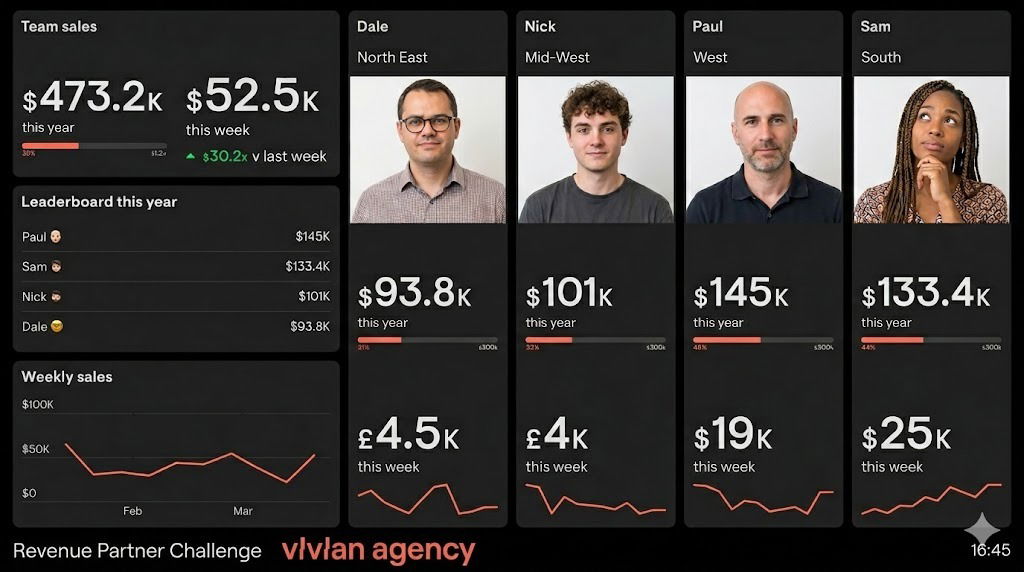
Together with your regular affiliate program, you can run a 30-day “Revenue Partner Challenge.” Make it invite-only, and capped at 20 people with a more generous offer:
- Tiered bonuses
- Public leaderboard
- Weekly strategy calls
- Cash + status rewards.
The entry cap and higher bonuses create an illusion of scarcity, which changes behaviour and drives competition effort.
Frequently Asked Questions
How do we know these unconventional affiliates will actually convert?
Track and test everything. Give each affiliate a unique tracking link, set a 30-60 day evaluation window, and measure these:
- Click-to-sale conversion rate
- Average order value
- Lead quality (if necessary)
How do we approach them without sounding desperate or spammy?
Instead of saying “Join our affiliate program,” say “We’re inviting 20 partners into a private revenue program.”
Position it as a selective partnership opportunity, not a mass invite.
How much commission or incentive is enough to motivate them?
For most digital products, 20-40% is competitive. For physical products, 10-25% is common. However, bonuses often feel more attractive than base commission.
How do we prevent affiliate fraud or low-quality traffic?
You’ll need to set up a proper affiliate structure. Use:
- Clear terms and conditions
- Traffic source rules
- Payout thresholds
- Manual approval before payment
Fraud usually happens when brands are careless with tracking and approvals. Before rolling out your affiliate program, it’s best that you seek professional guidance.
Get a free personalized consultation – start with our affiliate program quiz.
How do we scale this without turning it into chaos?
Chaos happens when there’s no structure. So, create an onboarding guide, swipe files, monthly performance check-ins, and automated tracking dashboards.
With proper organization, you can outperform large, unmanaged networks.
Let Vivian Agency Manage Your Affiliate Program
Most brands fail at affiliate recruitment because they recruit publicly instead of strategically. You don’t necessarily have to work with 500 affiliates to get the desired results. 20 motivated ones can do the job well.
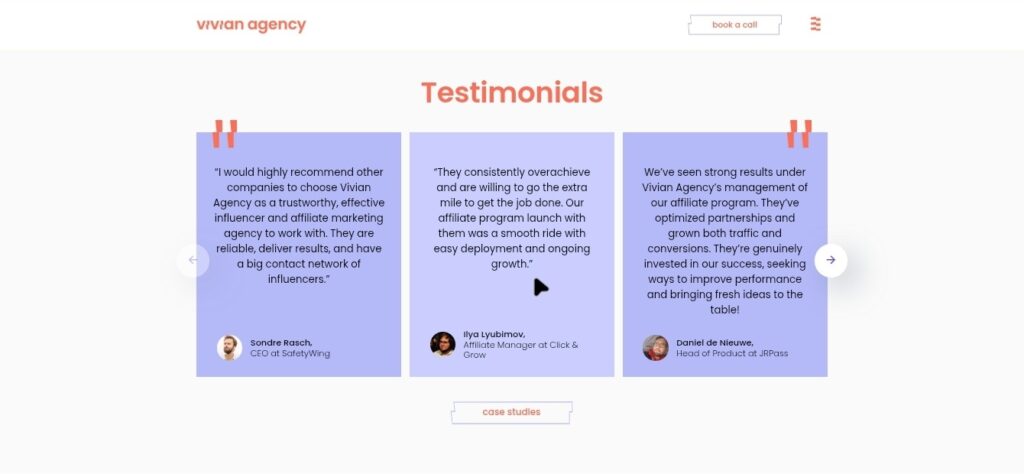
This is why brands interested in building sustainable affiliate campaigns partner with us. We take away the doubt and provide clarity and results as we’ve done for brands like SafetyWing.
Our experts are ready to help you kickstart or elevate your affiliate program—claim your free consultation.