
Like other social media and platforms adapted to affiliate marketing, YouTube can be a powerful engine for businesses to build trust, drive high-quality traffic, and increase sales and long-term revenue.
If you want to earn money through creator partnerships, this guide will show you how to leverage YouTube affiliate marketing effectively. From tagging relevant products to using affiliate links in YouTube Studio, you’ll learn how to turn content into predictable income.
Table of Contents
Key Takeaways
• YouTube affiliate marketing helps brands and creators earn money by promoting relevant products to their audience using affiliate links.
• A strong affiliate program with competitive commissions, clear links, and proper tagging of products maximizes affiliate earnings.
• Short YouTube Shorts boost immediate awareness, while long-form videos like reviews and tutorials provide lasting traffic and drive sales.
• Use YouTube Analytics to track creator performance, optimize campaigns, and scale your program efficiently.
• Platforms like Amazon Associates can be integrated to expand the range of products creators can promote.
• Human management is key: building relationships with creators ensures your affiliate program delivers consistent revenue.
How Youtube Affiliate Marketing on YouTube Works for Brands and Creators

YouTube affiliate marketing involves setting up partnerships between your brand and content creators. The creators promote your products or services to their audience and earn commissions for every purchase that comes through their unique affiliate link.
This is a performance-based model that allows you to earn money only for results, which is why it’s such a low-risk, high-reward affiliate marketing strategy.
It benefits everyone. Your business gains visibility and drives sales without a large upfront investment, while the creator earns passive income from affiliate rewards.
The real power of this model lies in its ability to leverage the existing trust between a creator and their viewers to create genuine, high-converting endorsements for your YouTube products or services.
How to Set Up a Successful YouTube Affiliate Marketing Program
1. Find the Right YouTube Affiliate Marketer for Your Content
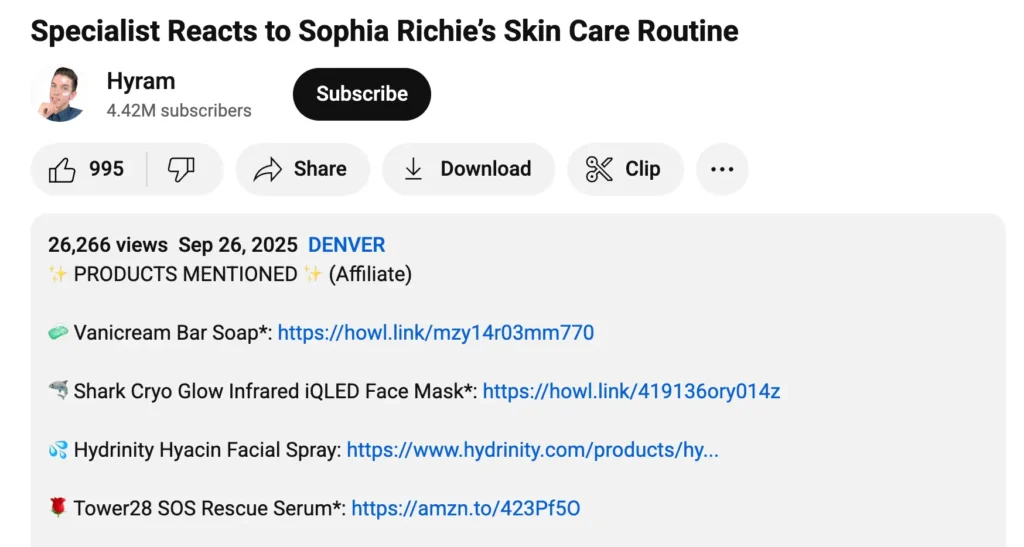
Look for creators with an audience and content that align with your channel.
While you might be tempted to rely on follower count, this simple metric can be deceptive. Evaluate engagement rate, comment quality, and niche relevance to find the perfect fit. Creators who align well with relevant products will help maximize your affiliate marketing success.
2. Design Competitive Affiliate Offers with Strong Affiliate Links
A well-designed affiliate program is the foundation for long-term partnerships to boost your affiliate earnings.
Consider these points when designing your affiliate program:
- Offer competitive commissions to make your program appealing for creators
- Provide promotional assets for quick tagging products and using affiliate links
- Early access to products or special discount codes motivates creators to earn commissions and drive sales
If you’re unsure where to start with your YouTube affiliate strategy, you can take a short quiz we created to get practical advice tailored to your brand’s goals. Take the quiz here.
3. Balance Awareness and Longevity in Your Video Strategy
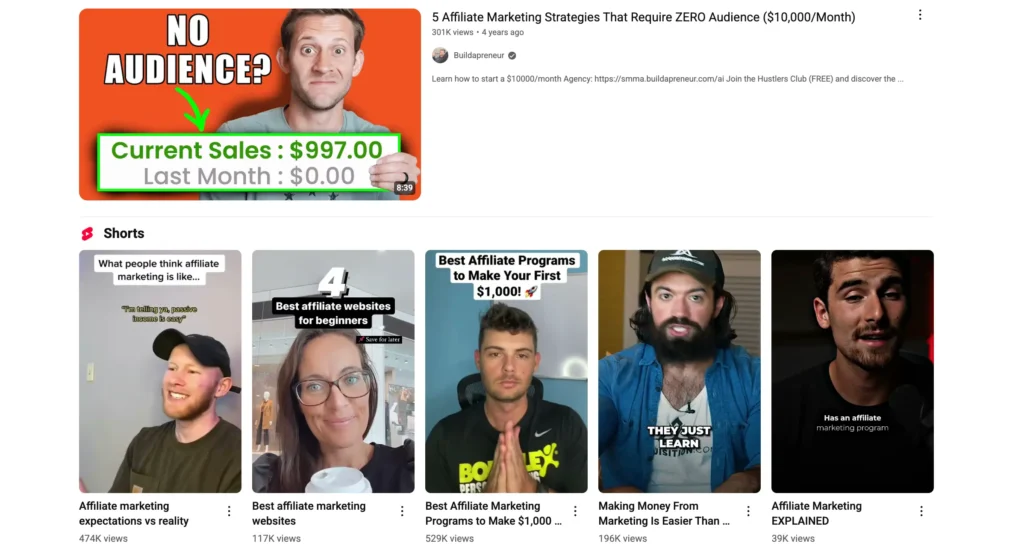
When structuring your YouTube affiliate marketing program, think beyond commissioning a single video. The most effective programs balance short YouTube Shorts with longer tutorials or review videos.
YouTube Shorts are ideal for driving quick awareness around launches, seasonal offers, or limited-time discounts. They give your brand visibility at scale.
Long-form videos (reviews, tutorials, or deep dives) provide lasting value. They rank in YouTube search, continue generating traffic over time, and help convert viewers who need more information before making a purchase. This type of video can be a powerful sales tool.
By encouraging creators to use both approaches, your brand benefits from immediate reach and sustained, long-term conversions.
Encouraging creators to use both approaches helps your channel earn revenue and maximize affiliate marketing success..
4. Track, Optimize, and Scale Your YouTube Affiliate Marketing Plan
To improve, track results using YouTube Analytics and give each creator a unique affiliate link. This shows which creators drive sales, traffic, and engagement, allowing you to scale your program efficiently.
Beyond sales, tracking also reveals engagement patterns, traffic quality, and audience demographics, giving you deeper insights to refine offers, reward top performers, and scale your affiliate program with greater precision.
5. Keep the Human Touch in Your Youtube Affiliate Marketing Strategy
Even with advanced tools, human management is key. A dedicated affiliate manager ensures creators are motivated, programs are running smoothly, and affiliate earnings are maximized.
A recent article from Hostinger on affiliate marketing statistics highlights this, noting that the income gap between beginners and experts can be as much as 100 times. The difference isn’t just tools; it’s their ability to cultivate long-term partnerships and maximize the value of those relationships to drive consistent revenue.
Pros and Cons of YouTube Affiliate Marketing
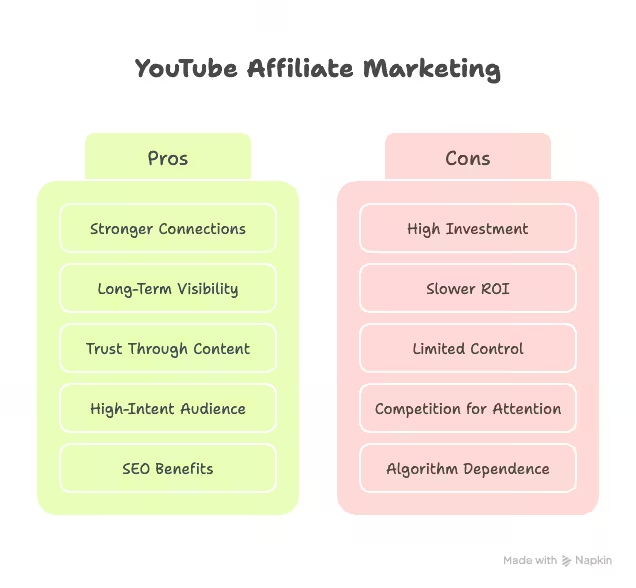
Pros
1. Stronger Connections Through Video
Video allows creators to connect deeply with their audience, showing a product’s value in a way that static images can’t. This builds genuine rapport, making the recommendation feel more authentic. Affiliate marketing on YouTube makes the most of this special effect of video.
2. Long-Term Visibility and Evergreen Value
Unlike short-lived social content, YouTube videos continue driving traffic long after publishing. A single review or tutorial can rank in search for years, delivering ongoing sales and brand exposure without additional spend.
3. Trust Through Long-Form Content
When a viewer watches a 10-minute tutorial, product review video, personalized marketing video, or a lifestyle video, such prolonged exposure is vital for building a real relationship with the creator. This experience can transform a simple recommendation into a credible endorsement, resulting in higher conversion rates for your brand. To share affiliate links successfully, this trust is crucial.
4. High-Intent Audience Reach
When a user searches on YouTube for “best blender for smoothies” or “how to run Google Ads,” they have a high intent to purchase. This makes it a strategic platform to reach customers who are actively seeking the solution that your product provides.
You will be connecting with audiences who are already at the bottom of the marketing funnel, ready to make a purchase. This is a key differentiator from platforms where users are casually scrolling.
5. SEO and Organic Discovery Benefits
As the world’s second-largest search engine, YouTube’s SEO capabilities allow creators to optimize video descriptions for broader discovery.
This organic reach is a major benefit that other platforms can’t match, driving traffic back to your brand over time. A single, well-optimized video can continue to attract new viewers and generate sales for years to come with minimal effort.
Cons
1. High Investment in Creator Partnerships
Producing effective YouTube content often requires significant resources. Brands may need to provide free products, promotional assets, or higher commissions to attract quality creators. This upfront investment can feel risky before results are proven.
2. Slower Time-to-ROI
YouTube campaigns usually take longer to show measurable results compared to fast-moving platforms like TikTok or Instagram. Videos may need weeks to rank in search or gain traction, delaying immediate returns for brands that expect quick sales.
3. Limited Control Over Creator Consistency
While brands can design affiliate programs, they have limited control over how consistently creators post content. If creators are inconsistent, brand visibility and affiliate-driven sales may decline, affecting overall campaign performance.
4. Competition for Creator Attention
Many affiliate marketers work with multiple brands. If your offer doesn’t stand out, your affiliate content risks being overshadowed by competing products within the same niche.
5. Dependence on YouTube’s Rules and Algorithms
Changes in YouTube’s algorithm or affiliate link policies can reduce visibility or limit how your brand is promoted. This reliance on platform rules adds unpredictability to your affiliate strategy.
Build Your YouTube Affiliate Marketing Strategy with Vivian Agency
The challenges of YouTube affiliate marketing are real, from managing creator expectations to measuring ROI, but the rewards are even greater. Done right, this model can generate predictable revenue streams, boost brand trust, and create evergreen exposure that lasts for years.
At Vivian Agency, we help brands move past trial-and-error and build affiliate programs that actually scale. From creator sourcing and negotiation to program management and ROI tracking, we turn YouTube into a powerful growth channel tailored to your business goals.
If you want to see how your YouTube affiliate program could scale, book a call today or reach out via our Contact Us page. This quick call can provide actionable insights and help your program start earning revenue faster.